


Kalabari Foundation Seeks Corporate Support To Promote Unified New Year Festival
 Peacw Osigwe
The Kalabari Renaissance Foundation has called on corporate organisations, governments, traditional institutions and well-meaning individuals to support the Unified Kalabari New Year Festival.
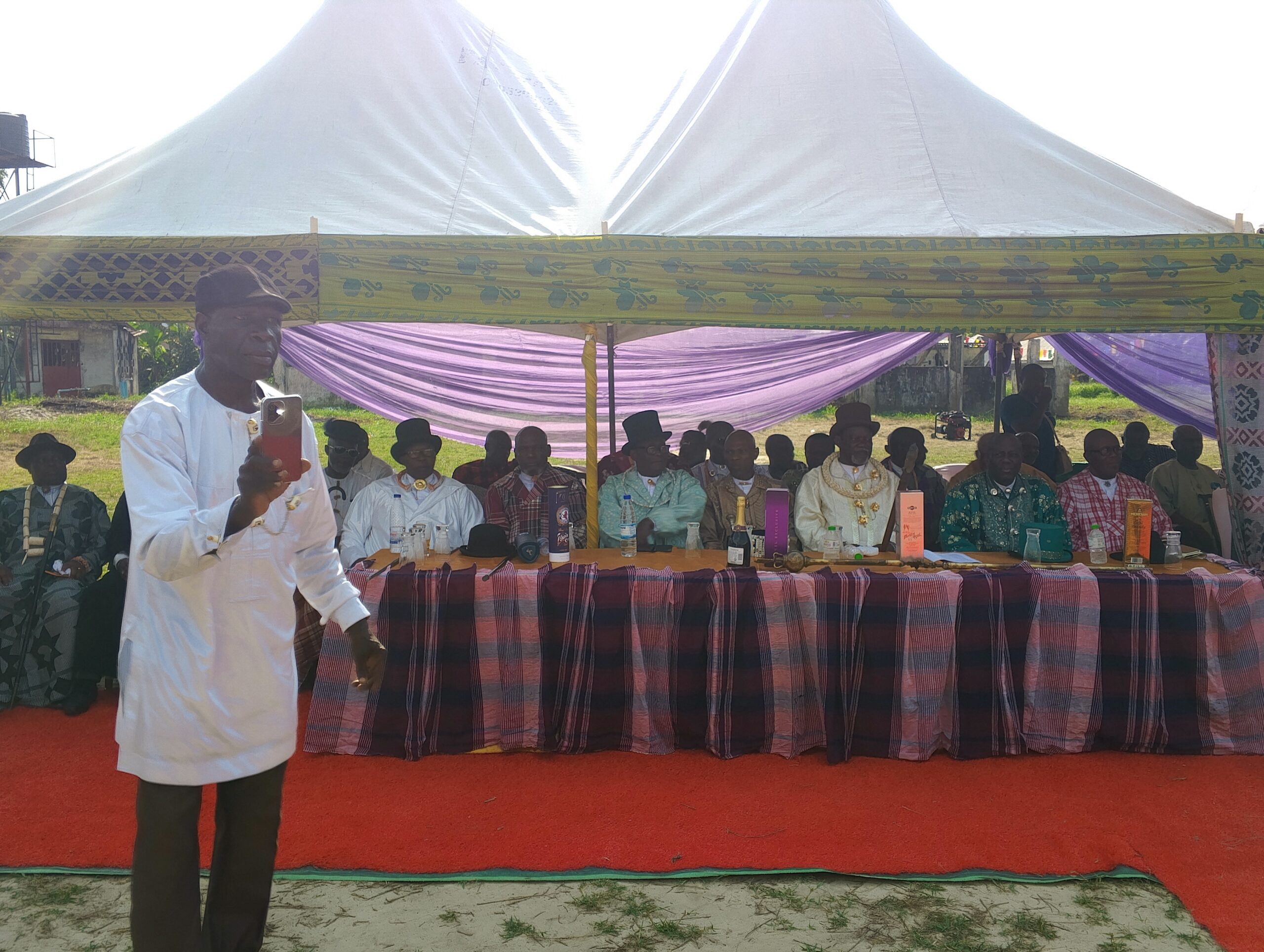
The Foundation made the appeal during the Third Unified Kalabari New Year Festival held on Monday at Minama Community in Asari-Toru Local Government Area of Rivers State, where the community was announced as host of the 2027 edition.
The celebration brought together sons and daughters of the Kalabari ethnic nationality to celebrate their cultural heritage and promote unity among their communities.
Chairman of the Foundation, Mr Harry Awolayeofori MacMorrison, said the festival was established to revive the collective celebration of the traditional Kalabari New Year, preserve the people’s ancestral heritage and create a platform for cultural, economic and social development.
MacMorrison, in his address, described the festival as more than a cultural gathering, saying it represented a homecoming and a demonstration of the people’s determination to preserve their identity, strengthen unity and reposition the Kalabari nation for greater relevance in Rivers State, Nigeria and beyond.
He explained that the Kalabari New Year, celebrated annually on November 16, was rooted in the natural tidal movements within the riverine environment and the people’s traditional fishing economy.
According to him, the seasonal intrusion of freshwater from the River Niger and adjoining waterways into the Sombrero River during the rainy season displaces saltwater, creating difficult fishing conditions for communities whose livelihoods depend largely on saline waters.
He said the reversal of the tides around November 15, when saltwater returns to the fishing grounds, marks a significant environmental transition that restores fishing opportunities and signals a new beginning for the people.
MacMorrison traced the traditional observance to Elem-Kalabari, also known as Torusaramapiri, regarded as the ancestral homeland of the Kalabari people.
He said the tradition had survived generations of migration and the establishment of different Kalabari communities, although the collective celebration gradually disappeared as individual communities continued to observe the occasion separately.
The Foundation, he explained, introduced the Unified Kalabari New Year Festival to restore that common cultural connection. The first edition was held at Abalama in 2024, the second at Elem-Kalabari in 2025 and the third at Minama in 2026.
He commended the Amanyanabo of Minama, His Royal Highness, King Dr Iboroma Pokubo, Loku XII, the Council of Chiefs and the people of the community for hosting the celebration.
The Foundation’s chairman also explained that the adjustment of some traditional activities from Sunday, November 15, to Monday, November 16, was informed by the need to respect Christian worship and promote religious tolerance among the people.
He said the arrangement did not represent a departure from the traditional calendar but demonstrated the importance of peaceful coexistence and mutual respect among people of different religious persuasions.
MacMorrison called on communities, schools, organisations and individuals to embrace tree planting and environmental restoration, noting that mangrove forests were important for fish breeding, shoreline protection and the survival of riverine livelihoods.
He further disclosed the Foundation’s humanitarian intervention involving Madam Ibiene Amachree, who was rescued from the streets around the Air Force Roundabout and was undergoing rehabilitation.
While appreciating the O. B. Lulu-Briggs Foundation for its support towards her upkeep, he appealed to the government, philanthropists, corporate organisations and development partners to assist with accommodation, feeding, medical attention and other rehabilitation needs.
MacMorrison said the Foundation was working towards transforming the festival into an internationally recognised cultural tourism event capable of attracting tourists, investors, researchers and development partners while creating opportunities for local businesses, artisans, fishermen, traders and young people.
He urged oil and gas companies operating in the Niger Delta, banks, telecommunications firms, financial institutions and other corporate organisations to support the initiative through sponsorships, grants, technical assistance and strategic partnerships.
He stressed that the Foundation was not seeking support for a cultural celebration alone but was inviting stakeholders to invest in an institution with the potential to promote cultural preservation, youth empowerment, environmental protection, tourism and community development.
The Foundation also called on its various committees and members to remain active throughout the year, insisting that its activities should extend beyond the annual festival to address the social, economic and developmental needs of Kalabari communities.
MacMorrison maintained that although the Foundation was non-partisan, it would encourage political consciousness and constructive engagement on issues affecting the Kalabari people, particularly as the country approaches the 2027 general elections.
He urged Kalabari people to remain united despite their political and religious differences and to demand equitable development, accountability and greater inclusion in the affairs of Rivers State.
Also explaining the significance of the celebration, Dr Vivian Dabota Ige Elenwo, the anchor leader for the event, said the return of saltwater was particularly important to the Kalabari people because many fish species in their environment thrive in saline conditions.
She noted that freshwater intrusion during the rainy season often affects fish availability and the economic well-being of fishing families, sometimes resulting in severe hardship.
Elenwo maintained that the return of saltwater and the restoration of fishing activities provided a natural reason for thanksgiving and celebration, adding that the traditional New Year was connected to the people’s understanding of their environment rather than idol worship.
She also urged participants to take advantage of the festival to reconnect with old acquaintances, establish new relationships and develop business partnerships.
In her remarks, the Head of Media of the Foundation and member of its Board of Trustees, journalist Ibiba Don-Pedro, expressed optimism about the growing acceptance of the unified celebration.
She said the initiative, which started on a relatively small scale about three years ago, was gradually gaining recognition, expressing confidence that it would continue to grow and achieve its objectives.
Earlier, the Amanyanabo of Minama, King Iboroma Talbot Pokubo, Ibiamaye XII, said the Unified Kalabari New Year Festival was first celebrated at Abalama, which he described as a place where Kalabari people gather to deliberate and take decisions on important issues affecting the ethnic nationality.
He said the second edition was held at Elem-Kalabari, which he described as the ancestral root of the Kalabari people, adding that Minama was significant because many traditional activities associated with the Kalabari people originated from the community before spreading to other parts of Kalabariland.
The monarch urged the people to embrace peace, hope and unity, stressing that collective solidarity was essential for the growth and development of the Kalabari nation.
The festival also featured discussions on environmental sustainability, with the Foundation highlighting its tree-planting initiative as part of efforts to address mangrove destruction, erosion, pollution and other environmental challenges confronting riverine communities.
The 2026 celebration, which brought together traditional rulers, community leaders, professionals, cultural enthusiasts and other stakeholders, reinforced the Foundation’s resolve to use the people’s shared heritage as a platform for unity, cultural preservation and sustainable development.
