


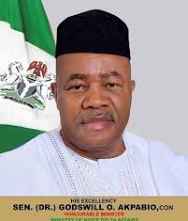
NDDC: Akpabio Challenges Amaechi to Produce Evidence of Alleged 50% Contract Deduction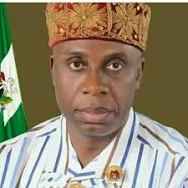
By Our Correspondent
The Senate President, Senator Godswill Akpabio, has challenged former Rivers State Governor and ex-Minister of Transportation, Rotimi Amaechi, to provide documentary evidence to substantiate his allegation that he introduced a 50 per cent deduction from payments due to contractors handling projects for the Niger Delta Development Commission (NDDC).
Akpabio’s challenge followed an allegation made by Amaechi on Saturday, November 14, 2026, during a political rally of the African Democratic Congress (ADC) at the Tafawa Balewa Stadium in Bauchi State.
Amaechi had accused the Senate President of introducing the alleged deduction from NDDC contractors’ payments, questioning his role in the commission’s financial and contractual activities.
However, reacting through a statement issued on Sunday in Abuja by his Special Adviser on Media and Publicity, Eseme Eyiboh, Akpabio described the allegation as weighty and demanded verifiable evidence to support it.
The Senate President maintained that Amaechi had not presented contract documents, payment records, identifiable transactions or other particulars to establish the allegation.
He challenged the former governor to identify the contracts involved, the contractors allegedly affected, when the deductions were made and the payment arrangements through which they were effected.
Akpabio also demanded evidence establishing his personal involvement in the alleged practice, insisting that political statements should not be treated as established facts without supporting documentation.
He urged Amaechi to submit any credible evidence in his possession to the appropriate investigative authorities for examination rather than use the allegation as a tool for political confrontation.
The Senate President said public accountability required allegations to be tested against verifiable evidence, while public expenditure should be assessed against project delivery and measurable outcomes.
AKPABIO TURNS SPOTLIGHT ON AMAECHI’S RIVERS TENURE
In a further response, Akpabio turned attention to Amaechi’s eight-year administration as governor of Rivers State between 2007 and 2015, insisting that his record in office was equally open to public scrutiny.
He specifically cited the Port Harcourt monorail project, which attracted controversy over its reported cost, incomplete implementation and failure to deliver the anticipated public transportation service.
He also referenced the Malaria-Free Rivers State initiative, raising questions about the amount spent, the objectives achieved and the value delivered to the people.
According to the Senate President, public accountability should apply to all political officeholders entrusted with public resources, irrespective of their political affiliations or positions.
He further cautioned political actors against using the approaching 2027 general elections as an excuse to make allegations that cannot be substantiated.
NIGER DELTA DEVELOPMENT AT THE CENTRE OF CONTROVERSY
The latest exchange has again drawn attention to the administration of the Niger Delta Development Commission, an intervention agency established to address the developmental challenges of the oil-producing region.
For communities across the Niger Delta, the controversy raises important questions about transparency in contract administration, the management of public funds, contractors’ payments and the delivery of development projects.
The NDDC remains a critical institution in the region, where communities continue to demand functional roads, bridges, healthcare facilities, schools, environmental remediation and other essential infrastructure.
Consequently, allegations involving deductions from contractors’ payments deserve proper clarification, particularly where they concern funds intended for development projects across oil-producing communities.
While Amaechi’s allegation remains unsubstantiated in the absence of supporting evidence, Akpabio’s response has also placed the wider question of accountability in public institutions back in the spotlight.
The people of the Niger Delta deserve transparency, credible investigations into allegations of financial misconduct and assurances that resources allocated for regional development translate into completed projects and tangible improvements in their living conditions.
The controversy comes as political activities gather momentum ahead of the 2027 general elections, with both men occupying influential positions in the country’s unfolding political realignment.
