


NDIC Urges Bayelsa Students To Cultivate Savings Culture
“Also Financial Discipline And Investment Habits for A Secure Future.
The Nigeria Deposit Insurance Corporation (NDIC), has advised Bayelsa Youths to imbibe the attitude of saving for latter days adding that if they start at this their early stage to save, they won’t run into financial deficit latter in life.
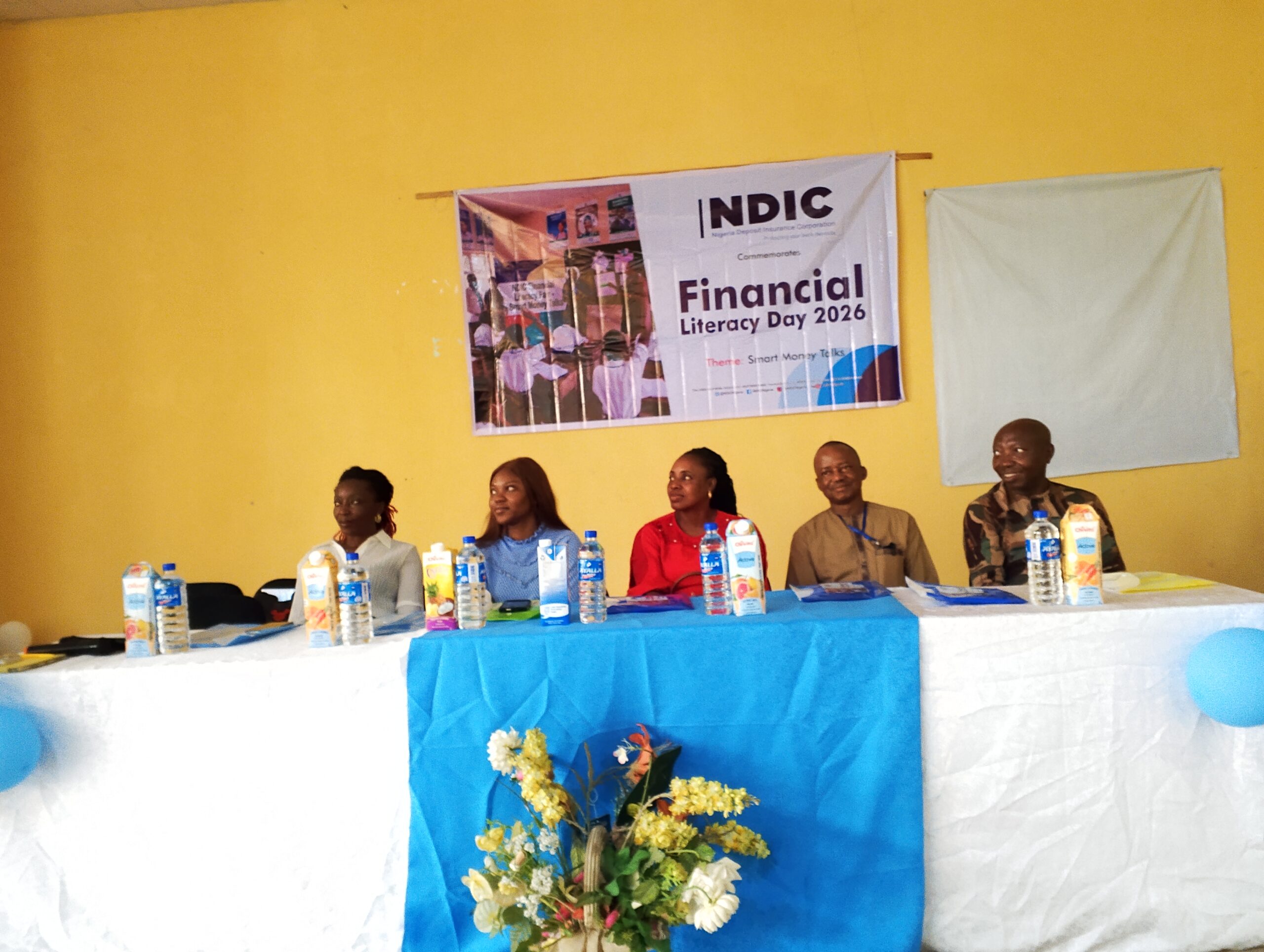
Speaking on Tuesday in Yenagoa, during this year’s NDIC’s Financial Literacy Day, Bokepere Adege, Principal Manager in the Communication & Public Affairs Department of the corporation advised the participants who were mainly secondary school students to learn to save, draw budget before spending and invest no matter how small the amount may be.
She narrated that the programme actually was designed to inform students on financial literacy, to improve their knowledge so that they become better informed on savings and investing.
“And also, we use the second arm of the programme’s public awareness on what NDIC does to let them know that we protect bank deposits. In the event that a bank fails, NDIC is there to reimburse the funds of depositors to a maximum amount.
Maintaining that Saving is intentional, she continued: “If you’re not intentional, you won’t save. You must be determined, even as adults. If you’re not intentional, you will not save. And it’s only when you do it, and you see the little progress that you have the courage to continue.
” We teach children and the general public, on financial prudence. What is money? What is savings? How do you budget? Even as adults, you don’t do it. So it’s not only the students we have taught. Financial literacy is informing people, knowing about finance, and taking better informed decisions with income.”
Also speaking, Miss Phoebe Ugot, Deposit Manager at the Communication and Public Affairs Department of NDIC, disclosed that the purpose of her trip to Bayelsa is just to teach the children about savings and then to tell them about NDIC.
She said that NDIC protects their bank deposits. It protects all your bank deposits in the bank. It’s to encourage you to save. It’s to encourage you not to put your money into any of those fraudulent banks. And then just to create awareness for NDIC. So when you go to a bank and you see our sticker, you know that that bank is insured by NDIC.
” We’re saying that if your money get missing in a bank, because the bank collapsed, NDIC will pay you back that money that you have saved. Now in the case of 419, most times you find out that it’s people that give out this information that they use.
“So we’re also informing that whenever you get a message from the bank, verify the message, go to the bank. Everybody should have a bank officer by now. Go to the bank and ask if they actually sent you any message.
“Don’t give out your details online. Don’t give out your card, your PIN number to anybody. But in a case of a bank failure, NDIC will pay your bank deposits.
“We’re trying to catch them young. We’re trying to imbibe saving culture in Nigeria. Because one thing Nigerians lack is financial literacy..So every year, we do two programmes. We do Financial Literacy Day and World Savings Day, just to imbibe saving culture in the Nigerian system.
“So as they grow old, that’s culture in game. The saving culture is already there. That’s why we started from secondary school.
“Our advice to Nigerians would be, keep your money in the bank. The bank is safe. It’s the safest place because Nigerian Deposit Insurance Scheme covers the banking system.
In his response, Godspower Christopher, from Epie National High School, a student of SS2, said “I learnt a lot today, it’s an opportunity for me to be here. And I learnt that with the NDIC, our money is safe.
“That’s their number one duty, their priority to make sure our money is safe, our deposits are safe. And they taught us the different types of banks, how they function. And they also told us that we should always have a budget, so we can go back to our budget, know how we spent our money.
“For example, they give us money for transport, snacks in school, or people dash us money. From there we can also deposit, then invest. Because like they say, what is safe today, that will save you for rainy days.
“So I think with what we also get from schools and from our uncles, our parents, we can save from there.
“We should always save and invest. It’s a great opportunity for me, an opportunity I’ll never take for granted.
Also speaking Sunday Blessing from St Judes Secondary School, Amarata SS1 student, maintained that she learnt how to budget her money and plan ahead.
“Like the way we budget expenditure. We should list it out so that we can get some out at the end.
By the weekend, I will work make money and save.I will go home and learn a skill.”
The event brought together students from five different secondary schools who were also taught that they can start skills that should not clash with their academics and make some money.
