


Major Jasper Adaka Boro: The Legacy That Still Challenges Nigeria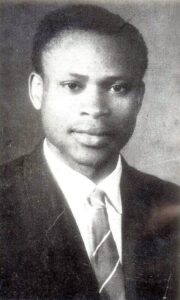 By Hon. Ofoni Daupuamo Williams
More than six decades after his historic struggle for justice, equity and resource control, the name Major Jasper Adaka Boro continues to resonate across the Niger Delta and beyond.
His life remains a powerful reminder that true leadership is measured not by the offices one occupies but by the courage to stand for justice, even at great personal cost.
History is replete with leaders who held high political office but left little impact on society.
Conversely, there are individuals who never occupied the highest positions of power yet transformed the course of history through vision, sacrifice and conviction. Major Jasper Adaka Boro belongs firmly in the latter category.
His advocacy for the rights of the people of the Niger Delta was far ahead of its time.
At a period when the region’s concerns received little national attention, Boro boldly questioned the inequities in Nigeria’s federal arrangement and championed greater autonomy and fairness for oil-producing communities.
His belief in a republic within Nigeria’s quasi-federal structure led to his arrest and imprisonment, yet history would later witness the emergence of another secessionist movement through the Biafra Republic.
That sequence of events underscores a timeless lesson: visionaries are often misunderstood before history vindicates them.
Perhaps one of Boro’s most enduring contributions was his demand for 33.3 per cent derivation from crude oil revenues to promote the development of the Niger Delta.
More than sixty years later, debates over resource control, fiscal federalism and equitable revenue allocation remain central to Nigeria’s political discourse.
While significant progress has been made, many stakeholders argue that the aspirations of oil- and gas-producing communities have yet to be fully realised.
It is equally concerning that the issue of gas revenue has not received the level of policy attention many believe it deserves.
Political calculations have often overshadowed genuine efforts to ensure that communities bearing the environmental and economic burden of resource extraction receive commensurate benefits.
Major Boro’s legacy also reminds us that leadership demands sacrifice. Unlike some of his contemporaries, including Nelson Mandela, Chief Obafemi Awolowo and Ken Saro-Wiwa, he was denied the opportunity to fully demonstrate the breadth of his leadership and humanistic ideals.
Yet his influence remains undeniable, with history acknowledging his role in the struggle that contributed to the eventual creation of Rivers State and the broader awakening of minority rights consciousness in Nigeria.
Today, the Niger Delta continues to grapple with developmental challenges despite its immense contribution to the nation’s economy.
The questions Boro raised decades ago continue to echo: How should Nigeria balance national unity with equity? How can resource-producing communities enjoy meaningful development? What defines responsible leadership?
These are questions that demand sincere reflection rather than political rhetoric.
As Nigeria continues its search for sustainable development and national cohesion, the ideals of Major Jasper Adaka Boro deserve renewed attention. His courage, patriotism and unwavering commitment to justice remain relevant to contemporary governance.
The greatest tribute to his memory will not be speeches delivered on anniversaries or monuments erected in his honour. Rather, it will be leaders who embrace integrity, fairness, selfless service and the courage to defend the interests of the people.
Major Jasper Adaka Boro lived for a cause greater than himself. He died pursuing a vision of justice and better living conditions for his people and for humanity.
His legacy continues to challenge every generation of Nigerians. The question is whether today’s leaders are prepared to walk in his footsteps.
