


1985 Coup: I Found It Difficult to Believe, But I Had No Choice — IB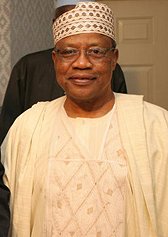
Posted by Admin
Former Nigerian Military President, General Ibrahim Badamasi Babangida (rtd.), has opened up on some of the most controversial and painful moments of his military rule, including the execution of his childhood friend and fellow military officer, the late General Mamman Jiya Vatsa, over an alleged coup plot in 1985.
Babangida, who spoke on Thursday during a special programme monitored by our correspondent on Badeggi 90.1 FM Radio, Minna, said he initially found it extremely difficult to believe that Vatsa, a man with whom he shared a long personal and military history, could have been involved in a plot to overthrow his administration.
The interview was part of activities marking Babangida’s 85th birthday, which is scheduled for Monday, August 17, 2026.
The former military president is expected to mark the occasion with special prayers at his Uphill residence in Minna, Niger State.
Babangida’s comments came nearly four decades after Vatsa was executed in March 1986 following his conviction for treason in connection with the alleged December 1985 coup attempt.
Recounting his relationship with the late general, Babangida said their friendship dated back to childhood, long before their military careers.
According to him, both men grew up together in Bida, attended the same school and eventually joined the military around the same period.
“I initially found it difficult to believe reports linking Vatsa to a planned coup because of our long-standing friendship and shared history,” Babangida said.
“We grew up together and attended the then Bida Middle School, now known as Government College, Bida. We graduated in the same year and joined the military together.
“When I first heard the rumour that General Mamman Vatsa was involved in a plot to overthrow my administration, I could not believe it.
We were childhood friends who grew up together, attended the same school and joined the military at the same time. How could I believe that he would plan a coup against me?”
Babangida recalled that after receiving reports implicating Vatsa, he summoned both Vatsa and General Mohammed Gado Nasko to his office to personally hear their explanations.
He said both officers denied any involvement in the alleged plot.
“ When they arrived, I asked them about the reports that they had been mentioned in a plot to topple my government. Both of them denied any involvement,” he said.
The former military president explained that, despite their denials, his administration proceeded with a formal investigation through a Military Commission of Inquiry.
According to him, the commission was established to examine the allegations and determine the extent of involvement of the military officers named in the alleged coup plot.
He said General Gado Nasko was eventually cleared, while the panel found evidence linking Vatsa to the plot.
Babangida said the findings were personally devastating because of his close relationship with Vatsa.
He stressed, however, that once the military investigation had established Vatsa’s involvement and the appropriate legal process had taken its course, he could not simply intervene to prevent the prescribed punishment.
“When investigations finally revealed General Vatsa’s involvement in the aborted coup, I was shocked, devastated and deeply disappointed.
“There was nothing I could do to exonerate him from the consequences prescribed by military law. My hands were tied. That was how I lost my brother, General Mamman Vatsa,” he said.
Civilian involvement in military coups:
Babangida also used the occasion to revisit the history of military coups in Nigeria, arguing that successful military takeovers had never been solely the product of military conspiracies.
He maintained that civilian actors, particularly wealthy and influential individuals, had historically played important roles in supporting or sponsoring military interventions.
According to him, the relationship between civilian interests and military actors was an important factor that should not be overlooked when discussing Nigeria’s history of military rule.
Babangida on MKO Abiola:
Speaking on the late Chief Moshood Kashimawo Olawale Abiola, Babangida described the businessman and politician as a close personal friend whose generosity extended across ethnic, religious and regional boundaries.
He said Abiola’s wealth was used to assist numerous Nigerians and support causes across the country.
“Chief MKO Abiola was a man who used his God-given wealth to positively impact the lives of Nigerians irrespective of their background.
He built friendships across the country and was exceptionally generous,” Babangida said.
June 12 annulment:
The former military president also addressed one of the most contentious decisions of his administration—the annulment of the June 12, 1993 presidential election, widely regarded as one of Nigeria’s freest and fairest elections.
Babangida described the decision as one of the most difficult moments of his military career.
He, however, maintained that the annulment was not a decision taken by him alone, describing it as a collective decision made by those in authority at the time based on what they believed was the overall interest of the country.
“I must say that it was one of the toughest decisions taken during my military career, but it was made in what we believed was the best interest of the nation,” he stated.
The annulment triggered widespread political unrest and protests across the country and became one of the defining events in Nigeria’s struggle for democracy.
Message on Nigeria’s current challenges:
Babangida also spoke on the current economic difficulties and security challenges confronting the country.
He urged Nigerians not to lose hope, saying the country could overcome its present difficulties if citizens remained committed to national unity and supported efforts aimed at improving the economy and security situation.
He expressed optimism that the ongoing efforts of the administration of President Bola Ahmed Tinubu would eventually produce positive results for the country.
The former military president further appealed to traditional rulers and religious leaders across Nigeria to put the national interest above sectional considerations.
He urged them to use their influence to promote unity, peace and peaceful coexistence among Nigerians, stressing the need for collective efforts to address the country’s challenges.
Babangida’s reflections on the 1985 coup, the fate of Vatsa and the annulment of the June 12 election offer a fresh insight into some of the most controversial chapters of Nigeria’s political and military history, decades after the events that shaped the country’s democratic trajectory.
