


Part 3: Don’t Blame Anyone If You Don’t Succeed in Lif
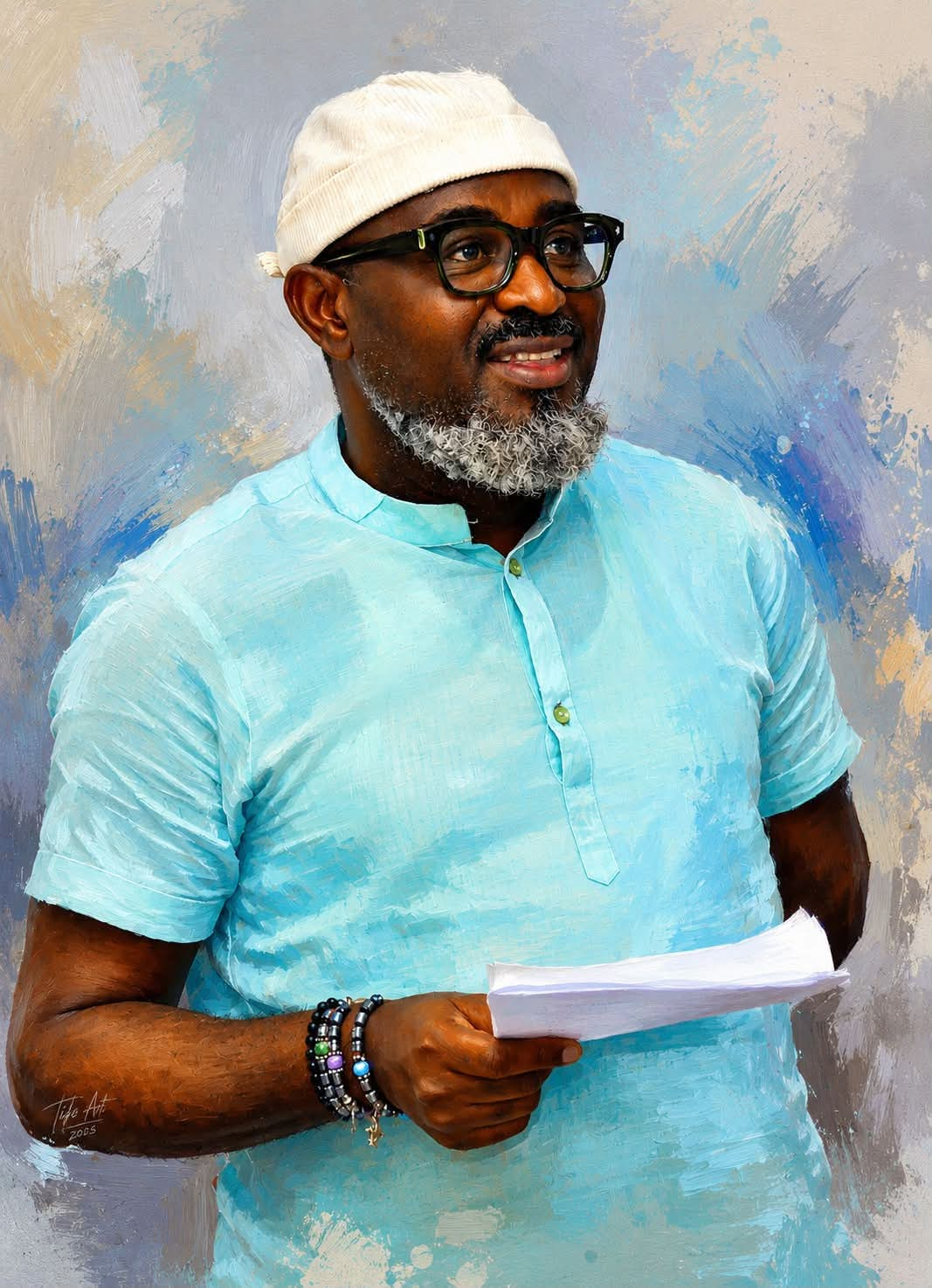
By Tife Owolabi PhD
Before I became a PhD holder, I dropped out of four universities, worked without pay, and witnessed a young boy being burnt alive after a mob accused him of kidnapping a toddler.
That day, I was not looking for a career breakthrough.
I was simply a young cameraman trying to survive.
But the footage I captured would expose a terrible injustice, put my own life in danger, and eventually open the door to journalism.
It would also become part of a much longer struggle—one in which I would leave schools, lose years to a fraudulent institution, and repeatedly question whether education was truly meant for me.
This is where that journey began.
In 2000, I gained admission into Lagos State Polytechnic to study Business Studies.
My elder brother, Lekan Balogun, supported me with tuition and other expenses. Feeding was difficult, but I persevered.
I eventually became the class governor, or HOC, and made friends who became part of my journey through those challenging years.
Getting from Oshodi, where I lived around Kale Close, to the Isolo campus was not easy. But I kept going.
Among the people I met was Olalekan Ogunbowale, who introduced me to his family. The Ogunbowales were another kind-hearted family.
They welcomed me warmly, and that relationship has lasted for 26 years and is still growing stronger.
There were also friends like Murphy Alabi, Olaide, popularly known as Dangote, and many others whose friendship made those difficult years more bearable.
At the time, I was already working as a cameraman for a church around Abimbola Industrial Estate, close to the LASPOTECH campus.
Eventually, I completed my OND.
But then, I made a decision that would change the direction of my life.
I decided I would not return for an HND.
Why?
I was already frustrated by the discrimination between HND and BSc holders in Nigeria.
I could see how certificates were beginning to determine opportunities, regardless of what a person could actually do.
So, I left school and took another camera job at the CPM headquarters, where I completed a one-year attachment.
I thought I was simply postponing my education.
I didn’t know I was beginning a completely different journey.
Later, I gained admission into Lagos State University (LASU) to study English and Communications.
But once again, life had other plans.
After resigning from CPM, I decided to work as a cameraman for Global Impact NG—without pay.
Yes, you read that correctly.
Without pay.
By then, I had also become a father. Survival was difficult, but I kept believing that my sacrifice and service to God would eventually amount to something. I am a Christ lover.
Some people even call me Boy-Samuel.
The church trusted me with a small camcorder.
Then, one early morning, while I was still sleeping, I heard a terrifying sound:
“Gbomogbomo!”
Kidnapping and ritual killings were rampant around that period.
I quickly grabbed my camera and rushed outside.
What I captured that day would change my life forever.
A young boy had been accused of kidnapping a toddler.
He insisted that he was innocent.
He was taken to the Surulere Stadium area, where he pointed to a woman and said she was his mother.
She denied knowing him.
Then the mob descended on him.
They beat him.
They lynched him.
And eventually, they burnt him alive.
I captured everything.
But I didn’t know that recording that injustice would put my own life in danger.
The tape eventually found its way to Channels Television, a leading broadcasting station with several awards.
And then, the trouble started.
Part 4 will tell you what happened after that tape was broadcast—how the police came after the perpetrators, how some members of the Surulere community, particularly around Bankole-Moh and Shitta, came after me, and how that one story opened the door to my journalism career.
