


NCDMB: Nigeria’s Future Depends on Minds That Read, Think — Nwabuikwu Peace Osigwe
The future of Nigeria cannot be built with oil and gas infrastructure alone; it also depends on the quality of minds that produce ideas, ask questions and imagine a better country.
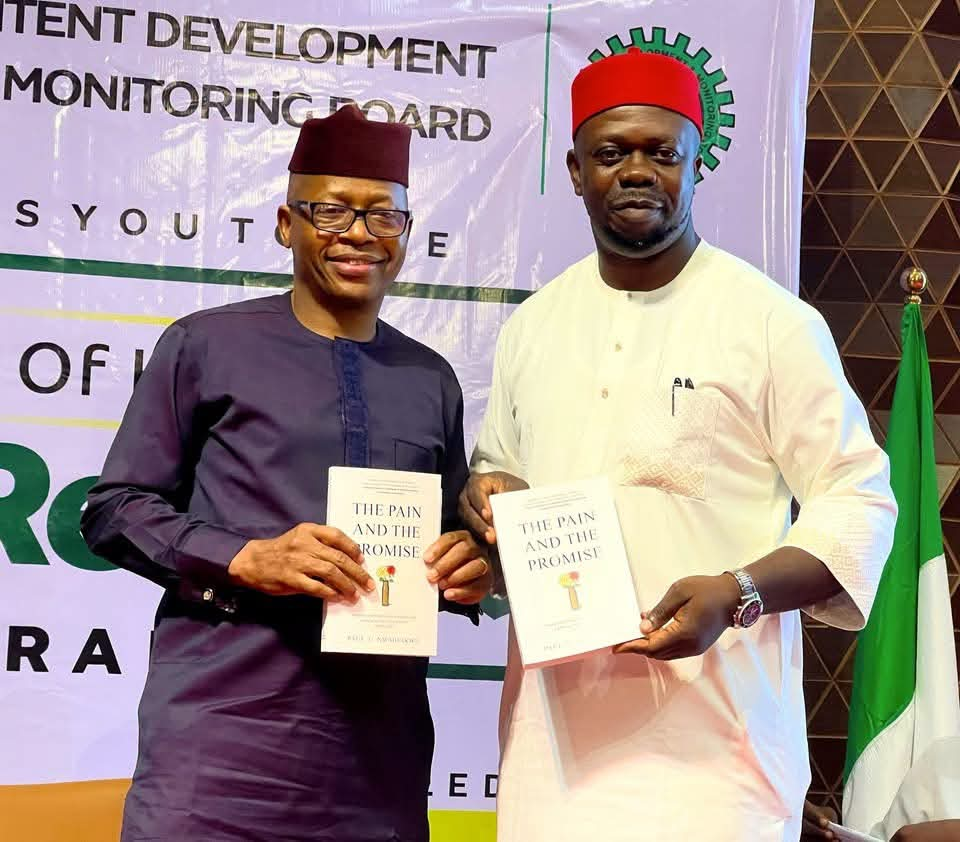
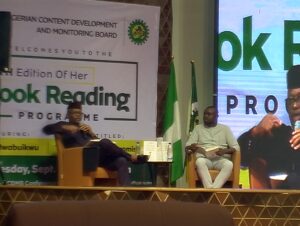
This was the message at the fifth edition of the Nigerian Content Development and Monitoring Board (NCDMB) Book Reading Programme in Yenagoa, where journalist and public policy analyst, Paul C. Nwabuikwu, presented his book, The Pain and the Promise.
The programme brought together writers, journalists, public officials and other stakeholders to discuss Nigeria’s journey, its challenges and the hope that the country can still realise its enormous potential.
Speaking on the motivation behind the book, Nwabuikwu said the work was born out of more than three decades of observing and participating in Nigeria’s political, economic and social development.
Nwabuikwu, who has worked as a journalist, advertising practitioner and public communications specialist, including serving twice as Special Adviser to former Finance Minister, Dr. Ngozi Okonjo-Iweala, said the book was a collection of his thoughts, impressions and experiences about Nigeria and its people.
“What I’ve tried to do in this collection is to capture my thoughts, my impressions, my feelings about different people, different personalities and different issues over the period,” he said.
For Nwabuikwu, however, the book is not simply about documenting Nigeria’s problems. It is also about refusing to surrender hope.
He explained that the “pain” in the title reflects Nigeria’s inability to fully translate its vast potential into development, while the “promise” represents the possibility that the country can still close the gap between what it is and what it can become.
“We can’t hide from the pain. There’s no doubt that Nigeria as a country is not doing very well in many areas, but it’s also a reality that many Nigerians are doing very well,” he said.
According to him, Nigerians must confront the country’s difficulties honestly without losing faith in its future.
“The promise is the hope that we are going to do so, because we can’t give up hope. Once you give up hope, that means you have no chance,” he added.
But beyond Nigeria’s national challenges, the author also turned attention to another concern — the declining reading culture among young Nigerians.
Nwabuikwu said members of Generation Z were growing up in an environment filled with distractions, particularly smartphones and social media, which had fundamentally changed how young people consume information.
He argued that this should not mean abandoning books or assuming that young people no longer want to read.
Rather, books and reading should be presented in ways that connect with their experiences and interests.
The author said some of the encouraging responses he had received from younger readers, including members of his family, showed that young people could still develop an interest in books when they found the content relatable and engaging.
He also stressed the importance of starting early.
Drawing from his experience of raising three children, Nwabuikwu said their reading culture developed because books were made available to them and reading was encouraged from childhood.
At the NCDMB event, the message found support in the Board’s own approach to local content development.
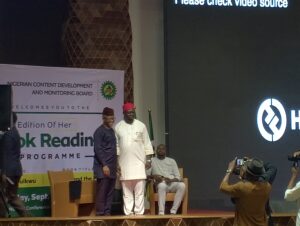
Declaring the event open on behalf of the Executive Secretary of NCDMB, Engr. Felix Omatsola Ogbe, the General Manager, Public Communication, Dr. Obinna Ezeobi, said local content should not be limited to technical skills, physical infrastructure or participation in oil and gas contracts.
According to Ezeobi, developing Nigerian capacity must also include developing the mind.
“Developing human capacities goes beyond human beings in the oil and gas industry. It also includes intellectual abilities in sectors connected to the oil and gas industry,” he said.
He said the Board sustained the book-reading programme because reading and knowledge acquisition were important aspects of human capital development.
“The human mind is important to be developed. The human mind is what we are trying to emphasise here,” Ezeobi said.
He added that reading was a fundamental skill needed across every sector, including the oil and gas industry.
“Reading is a key skill that we need in every sector. We are promoting literature and asking Nigerians to focus on reading books because that ability is also critical to your capacity to work in the oil and gas industry,” he said.
Ezeobi said the books selected for the programme were carefully chosen based on their connection to national development, quality and their ability to stimulate discussions about how individuals and society could become better.
He said The Pain and the Promise was particularly relevant because of its focus on people, development and Nigeria’s quest to fulfil its potential.
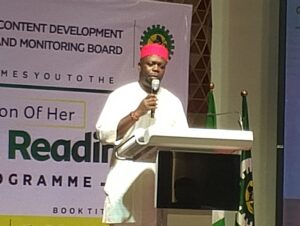
The NCDMB official also described the book-reading programme as an extension of the Board’s local content philosophy, noting that just as local content seeks to ensure that Nigerians take ownership of opportunities in the oil and gas sector, intellectual development should also empower Nigerians to take ownership of ideas and knowledge.
He said the initiative, which is now in its fifth edition, had grown from meetings held in smaller rooms to the NCDMB Conference Hall and was now being streamed to audiences beyond Bayelsa State.
He expressed optimism that the programme would continue to expand and reach more Nigerians.
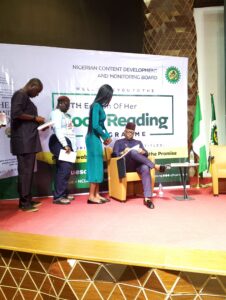
The event also featured readings from The Pain and the Promise, a spoken-word performance and an interactive question-and-answer session with the author.
