


 From Oil and Gas to Books: How NCDMB Is Rekindling the Reading Culture in Bayels
By Crystal news Correspondent
For an institution whose name is closely associated with Nigeria’s oil and gas industry, the Nigerian Content Development and Monitoring Board (NCDMB) may not be the first place many people would expect to find a gathering of authors, journalists, academics and young readers discussing books.
But in Yenagoa, Bayelsa State, something different is gradually taking shape.
What started as a modest book-reading session in a small room has, within a few editions, grown into a platform where writers, students, journalists, public relations practitioners, academics and members of the public converge to read, question and discuss ideas.
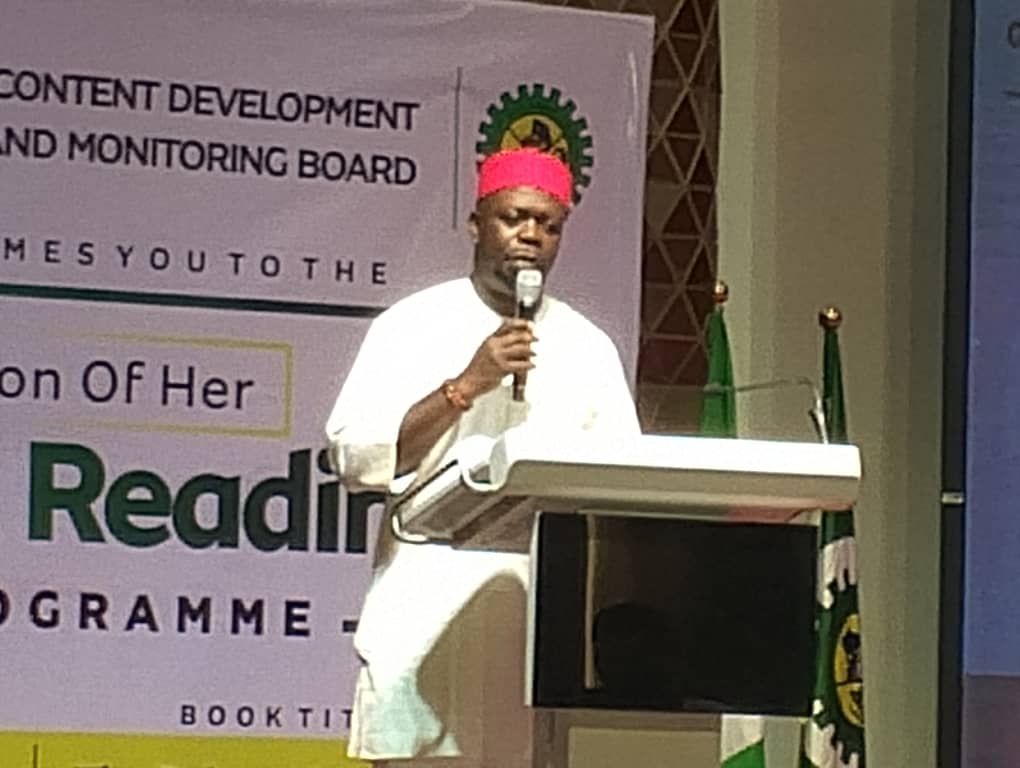
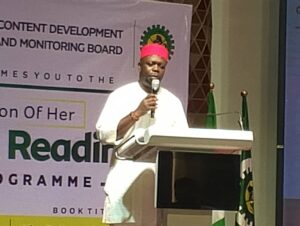
The latest edition, the fifth in the series, held at the Conference Centre of the Nigerian Content Tower, Swali, Yenagoa, was more than a ceremony around a newly published book.
It was, in many ways, a conversation about Nigeria itself — its struggles, its missed opportunities, its people, its history and the hope that the country can still fulfil its potential.
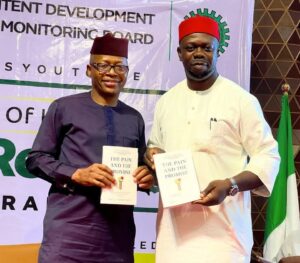
At the centre of the conversation was veteran journalist and strategic communications practitioner, Paul C. Nwabuikwu, whose book, The Pain and the Promise: Insights and Fragments on Nigeria and People, Public and Personal (1990–2025), provided the material for a lively exchange.
Nwabuikwu has spent more than three decades observing Nigeria through journalism, advertising and public communication.
His book gathers his reflections on people and events that have shaped the country over the years.
For him, writing is not simply about putting words on paper. It is about documenting a country’s journey.
“Journalism is the first draft of history,” he said, explaining why he considers it important to give depth to the issues he writes about.
When a book becomes a mirror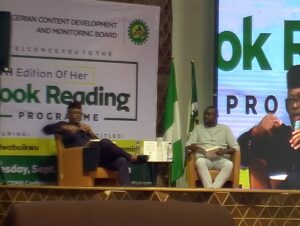
As excerpts from the book were read and discussed, it became clear that The Pain and the Promise is as much about Nigerians as it is about Nigeria.
The “pain”, according to Nwabuikwu, represents the many areas in which the country has failed to realise its potential.
But there is also the “promise” — the possibility that things can change.
“We can’t hide from the pain,” he said.
“There’s no doubt that Nigeria as a country is not doing very well in many areas. But it’s also a reality that many Nigerians are doing very well.”
For him, the promise is the hope that Nigeria can eventually get to where it ought to be.
That message resonated beyond the pages of the book. To Comrade Julius Laye, PhD, a member of the Association of Nigerian Authors, one of the book’s greatest strengths is the author’s ability to describe people and events in a manner that keeps the reader engaged.
He noted that there were moments when the descriptions were so engaging that readers could find themselves laughing while learning.
Laye also saw something else in the programme — an opportunity for younger people to discover the power of writing.
“Everybody is a story,” he said, stressing that a person’s life, struggles and experiences can become an inspiration to somebody else.
In his view, books do not merely preserve information. They can also remind people that their circumstances do not have to define the end of their journey.
The Gen Z question
But there was an elephant in the room.
How do you persuade a generation raised on smartphones, social media, short videos and instant information to sit down and read a book?
The question was put directly to Nwabuikwu.
His response was candid.
Young people today, he observed, have far more distractions than previous generations. Unlike the period when he grew up, smartphones and social media now compete with books for attention.
The answer, therefore, may not simply be to tell young people to read.
Books have to become interesting and relatable.
Nwabuikwu said feedback from some younger readers, including members of his family, suggested that they connected with his book because the stories were presented in a way they could understand.
He also pointed to the importance of starting early.
He recalled ensuring that books were available in his home and encouraging his children to read.
That, he believes, helped to create a culture of reading before they became older.
But he acknowledged that trying to introduce the habit much later can be considerably more difficult.
Why NCDMB is talking about books
For the NCDMB, the book-reading programme is not a departure from its mandate.
It is an extension of it.
The Board’s General Manager, Corporate Communications Division, Dr. Obinna Ezeobi, who represented the Executive Secretary, Engr. Felix Omatsola Ogbe, explained that human capacity development goes beyond technical skills required in the oil and gas industry.
The human mind, he stressed, must also be developed.
According to him, reading, knowledge and intellectual development are important elements of human capacity.
The Board’s argument is simple: a country cannot build local capacity in the oil and gas industry while neglecting the intellectual capacity of its people.
“We must read widely, think critically,” the Executive Secretary stated in his address, stressing that human capital development must extend beyond technical and professional skills.
The Board therefore sees literature as part of the wider local-content conversation.
If Nigerians are expected to develop the capacity to participate meaningfully in the energy sector and other areas of the economy, they must also have opportunities to learn, think and engage with ideas.
That is where books come in.
From a small room to a growing platform
The growth of the programme itself tells part of the story.
The inaugural edition was held in August 2024 and featured the Senior Vice Chairman and Editor-in-Chief of Leadership Newspapers, Azu Ishiekwene, as guest author.
The second edition featured former Editor of The PUNCH, Dayo Oketola, in August 2025.
King Bubaraye Dakolo, Agada IV, was the guest author at the November 2025 edition, while Dr Dakuku Peterside featured at the April 2026 edition.
The fifth edition brought Nwabuikwu and The Pain and the Promise into the conversation.
What began on a smaller scale has now expanded into an event capable of attracting writers, academics, media practitioners, students and other members of the public.
The latest session was also streamed beyond the physical venue, giving the programme an audience beyond Yenagoa.
For Ezeobi, the growth demonstrates that the initiative is gradually finding its place.
The Board, he said, intends to continue the programme and feature books that meet its criteria of quality, relevance and connection to national development.
Remembering Nigeria through books
One of the most striking aspects of Nwabuikwu’s book is its attempt to preserve memories of events that younger Nigerians may know little about.
His reflections include Nigeria’s involvement in the Economic Community of West African States Monitoring Group (ECOMOG) operations in Liberia and Sierra Leone.
For people who lived through that period, the events may remain part of their memories.
For younger Nigerians, however, they can seem like distant history.
This is where the journalist becomes a chronicler.
Laye noted that reading such accounts helps people understand how Nigeria participated in events beyond its borders and how those decisions affected the country.
In that sense, the book is not merely a collection of newspaper columns and personal reflections. It becomes a record of a period.
Writing without pretending to be someone else
Nwabuikwu also had advice for aspiring writers.
His message was straightforward: be yourself.
Rather than trying to imitate another writer, he urged young people to write about subjects that genuinely interest them.
“Whatever you are passionate about,” he advised.
His own use of humour, he explained, was also part of his survival and communication strategy, particularly during periods when journalists operated under military rule.
“Humour is like an escape valve,” he said.
It allowed him to communicate difficult ideas in ways that readers could understand.
The intellectual capacity behind development
Engineer Dokubo Philip Obongo, Manager, Institutional Strengthening and Capacity Building at NCDMB, believes initiatives such as the book-reading programme have an important role to play in rebuilding the intellectual culture of society.
Books, he noted, are tools for human development — socially, politically and culturally.
He said Nwabuikwu’s work provides a chronology of Nigeria’s social, economic and political development while drawing attention to people and institutions that played significant roles.
But Obongo is also concerned about the effect of the digital age on reading habits.
With young people increasingly immersed in technology and social media, he said there is a need for greater sensitization to encourage them to open books, acquire new knowledge and develop intellectually.
The challenge, therefore, is not simply to produce books.
It is to produce readers.
Beyond oil and gas
Perhaps the most significant message from the fifth NCDMB Book Reading Programme is that local content is not only about contracts, fabrication yards, equipment, jobs or participation in the oil and gas industry.
It is also about people.
People who can think.
People who can write.
People who can question.
People who can preserve history.
People who can learn from the experiences of others and use that knowledge to shape the future.
That may explain why an institution established primarily to deepen Nigerian participation in the oil and gas industry is making room for authors and readers.
The NCDMB is, in effect, making a case that developing Nigerians must include developing their minds.
And perhaps that is the promise hidden inside The Pain and the Promise.
Nigeria has its pain.
But as long as its people continue to read, write, question, remember and imagine a better future, the promise remains alive.
