


Uzodimma Demands End to ‘Silo’ Development in Niger Delta, Seeks Joint NDDC-State Framew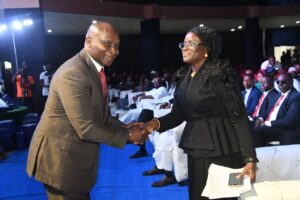
 rk
By Peace Osigwe
Governor Hope Uzodimma of Imo State has called for an end to fragmented development in the Niger Delta, urging the Niger Delta Development Commission (NDDC), state and local governments, communities and the private sector to adopt a joint framework for planning and executing development projects.
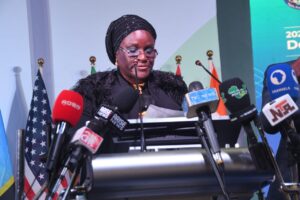
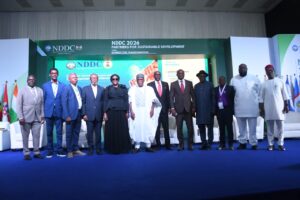
Uzodimma made the call on Wednesday in his keynote address at the 2026 NDDC Partners for Sustainable Development (PSD) Conference held at the Obi Wali International Conference Centre, Port Harcourt.
The conference was themed, “Synergy for Transformation — Aligning Regional Development, Local Governance and Sustainable Partnership in the Niger Delta.”
Represented by his Deputy, Lady Chinyere Ihuoma Ekomaru, the governor said years of interventions had failed to fully transform the region because development efforts were often implemented independently by different levels of government and institutions.
“For too long we have operated in silos. The Federal Government had its plan, the NDDC had its master plan, States had their development plans, Local Governments were often forgotten, and communities were treated as mere beneficiaries rather than partners,” he said.
Uzodimma argued that the NDDC master plan should be domesticated into state and local government development plans, while local governments should be empowered to take ownership of projects and ensure their maintenance.
He also called for a shift from project-based partnerships to broader development ecosystems, saying interventions should go beyond constructing facilities to include training, renewable energy and opportunities for beneficiaries.
The governor further stressed the need to place communities at the centre of development planning.
Citing Imo’s experience, he said his administration introduced the OKOBI — One Kindred, One Business — initiative, anchored on the Igbo philosophy of Igwebuike, with 65 kindred-owned businesses currently awaiting registration with the Corporate Affairs Commission.
He also highlighted the state’s partnership with the NDDC under the FGN/NDDC/IFAD LIFE-ND Project, through which, he said, 1,403 rural youths and women had received agribusiness training and starter capital.
According to him, Imo was the first state to pay its counterpart funding for the programme.
Uzodimma also listed road rehabilitation, streetlights, health outreaches and youth development programmes among areas of collaboration between the state and the NDDC.
He specifically cited the reclamation of abandoned road projects, including Avu-Etekwuru, Nkwerre-Umudi and Eziama-Abba roads, as examples of joint interventions.
The governor proposed the establishment of a Joint Alignment Framework that would bring together the NDDC, state governments, local governments, private sector and communities every quarter to identify between three and five priority projects in each state and track their implementation.
He declared Imo’s readiness to “co-plan, co-fund and co-implement” development projects with the NDDC and other stakeholders.
“The Niger Delta has waited long enough. The time for working in silos is over. The time for synergy for transformation is now,” Uzodimma said.
Also speaking, the Minister of Regional Development, Abubakar Momoh, said no single agency could address the challenges of the Niger Delta alone.
He called for greater collaboration and collective responsibility to bridge infrastructure gaps and unlock the economic potential of the region.
The Chairman of the Senate Committee on NDDC, Senator Asuquo Ekpenyong, said stakeholders must shift attention from generating development ideas to measuring their actual impact.
He said the National Assembly would continue to strengthen the legal framework and scrutinise budgets to promote effective project delivery.
The NDDC Managing Director, Dr Samuel Ogbuku, attributed the commission’s achievements to collective responsibility and urged stakeholders to sustain their contributions.
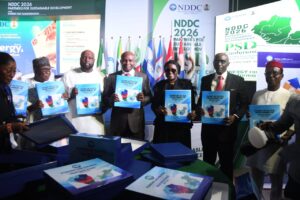
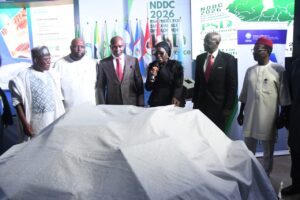
Ogbuku also unveiled a new framework document designed to guide the conception, planning and execution of NDDC projects and called on stakeholders to study and contribute to the document.
The event was attended by representatives of state governments, the National Assembly, traditional institutions, civil society organisations, private sector operators, international development partners, women and youth groups.
The Governor of Bayelsa State, Senator Douye Diri, was represented by the Secretary to the State Government, Prof. Nimibofa Ayawei.
The framework document was formally unveiled by Deputy Governor Ekomaru on behalf of Governor Uzodimma.
