


 Bayelsa @30: Diri Urges Bayelsans to Turn Statehood Into Platform for Greater Developmen
By Crystalnews Admin
Thirty years after Bayelsa was carved out as a separate state, Governor Douye Diri has urged Bayelsans to look beyond the struggle that produced the state and focus on building the human capacity, institutions and infrastructure needed to secure its future.
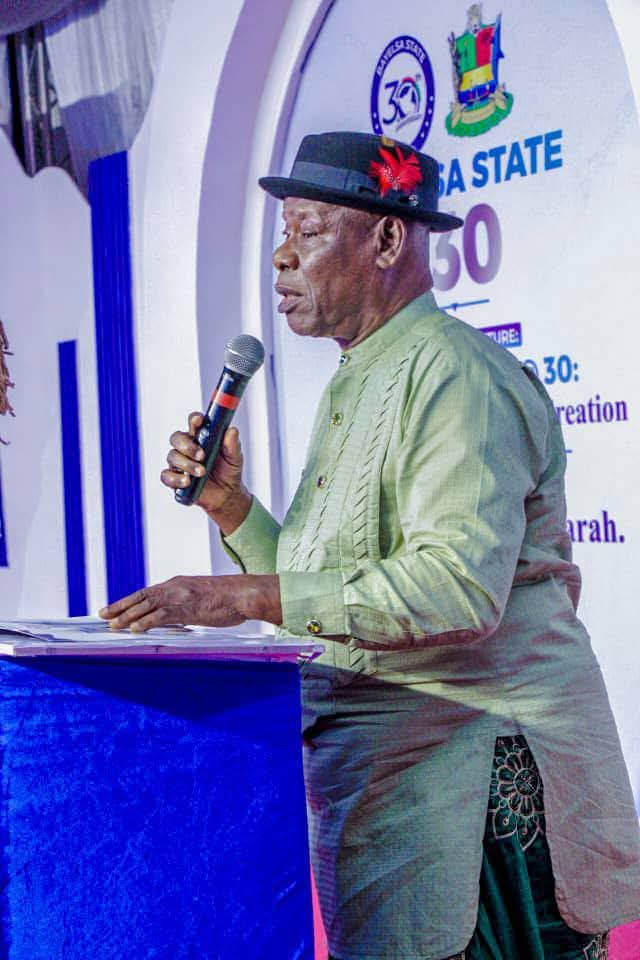
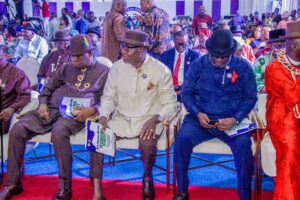
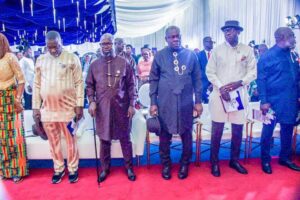
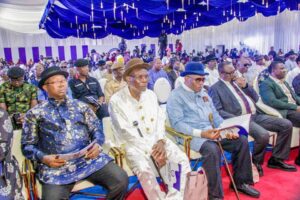
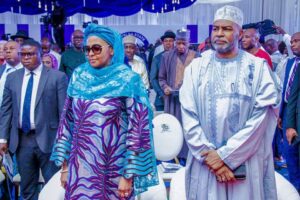
Diri made the call on Wednesday at an anniversary lecture and exhibition held at the Government House Banquet Hall, Yenagoa, as part of activities marking the 30th anniversary of the state’s creation.
The governor said the creation of Bayelsa on October 1, 1996, was a defining moment in the political history of the Ijaw people, giving them a stronger platform to pursue their aspirations and determine the direction of their development.
Reflecting on the long campaign for state creation, Diri recalled the sacrifices of generations of Ijaw leaders, activists and intellectuals, including Major Isaac Jasper Adaka Boro, Chief Harold Dappa-Biriye, Chief Melford Okilo and Chief Diepreye Alamieyeseigha.
He also paid tribute to the late military Head of State, Gen. Sani Abacha, whose administration created the state, acknowledging the controversies surrounding his regime but stressing that, for Bayelsans, the creation of the state remained historically significant.
“Bayelsa was given to us through a military regime, and through one that some might say was a dictatorship. But to us in Bayelsa, Sani Abacha was a blessing.
“We can raise our heads; we have a state of our own.”
According to Diri, the significance of Bayelsa’s creation went beyond the acquisition of political territory, as it gave the Ijaw people an opportunity to produce leaders who could rise to national prominence.
He noted that one of the most remarkable outcomes of the struggle was the emergence of an Ijaw man, Goodluck Jonathan, as President of Nigeria.
Diri, who said he was among the younger people who witnessed and participated in the struggle for the state’s creation, described it as a rare privilege to have followed the birth of Bayelsa and later become its governor.
He said the past 30 years had produced both achievements and lessons, stressing that the challenge before the present generation was to ensure that the sacrifices of the state’s founding fathers were not wasted.
The governor urged Bayelsans to stop regarding the state’s difficult terrain of creeks, rivers and swamps as an excuse for underdevelopment.
Rather, he said the environment should be transformed into an economic advantage through innovation, education, technology and appropriate infrastructure.
Diri said his administration was therefore placing greater emphasis on practical education, particularly science, technical and vocational training, rather than concentrating solely on certificates.
He disclosed that plans were underway for every local government area to have a science, technical and vocational school to equip young people with skills capable of making them self-reliant and reducing unemployment.
The governor also highlighted roads, bridges, electricity projects, the proposed 100-megawatt Independent Power Project and the nine-storey Secretariat Complex among projects expected to form part of his administration’s legacy.
He challenged future generations to assess today’s leaders not merely by the amount of money received by the government, but by the value created with public resources.
“Today, how we had so much money come in as a result of the movement of oil subsidy… for me, the question is, so much money is coming to the state government. What is the value of the money?” he asked.
‘Knowledge Must Drive Bayelsa’s Next 30 Years’
In his anniversary lecture, Professor Godini Gabriel Darah said the next phase of Bayelsa’s development must be driven by knowledge, technology, industrialisation and greater control of the resources of the Niger Delta.
Darah urged the state and other Niger Delta governments to invest heavily in education, research and human capital while continuing to pursue greater resource control.
He argued that the region’s vast oil, gas, waterways, mangroves, clay, sunlight and other natural resources should be converted into industries, products and jobs instead of being exported mainly as raw materials.
The professor called for specialised institutions in areas including marine engineering, oceanography, oil and gas, fisheries and commercial aquaculture, saying such institutions would equip young people with skills suited to the peculiar environment and economic opportunities of the Niger Delta.
He also advocated stronger investment in scholarships, research institutions and international education, urging young Bayelsans who acquire knowledge abroad to return and contribute to the development of the state.
Darah said Bayelsa’s next 30 years should be defined by a shift from dependence on raw resources to knowledge-driven production and industrial development.
At the anniversary event were former President Goodluck Jonathan and his wife, Dame Patience Jonathan; Diri’s wife, Dr Gloria Diri; Deputy Governor Peter Akpe; members of the National and State Assemblies; commissioners; traditional rulers; political leaders; members of the Abacha family; founding figures of the state and other distinguished Bayelsans.
The anniversary programme also featured the unveiling of a book, “Bayelsa @30: History of Its Founding and Progress,” documenting the state’s journey from its creation in 1996 to its present stage of development.
