



 Bayelsa at 30: From a Homeland Won to a Future Still Being Buil
By Peace Osigwe
Thirty years ago, the story of Bayelsa was not yet a story of roads, universities, airports, hospitals, bridges or political power.
It was a story of a people scattered across different administrative boundaries, living in the difficult terrain of creeks, rivers and mangrove forests, yet carrying a strong sense of a common Ijaw identity.
On October 1, 1996, that story changed.
The creation of Bayelsa State by the military administration of the late General Sani Abacha brought together predominantly Ijaw communities carved out of the old Rivers State to form a new political entity.
For many Bayelsans, it was more than the creation of another state on the map of Nigeria.
It was the emergence of what Governor Douye Diri described as a political home for a people who had long felt marginalised and divided across different states.
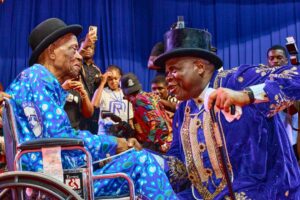
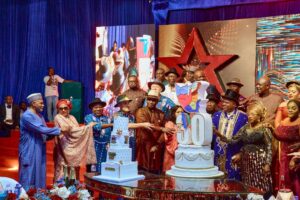
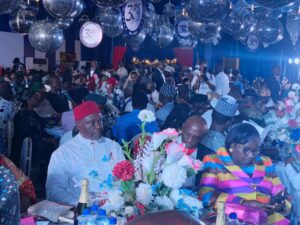
Three decades later, that history was brought back to life in Yenagoa as Bayelsa marked its 30th anniversary with a celebration of the people, institutions and individuals whose contributions helped shape the state.
At the grand finale of the anniversary celebrations on Thursday night, Governor Diri repeatedly returned to one name: Abacha.
‘He freed us from oppression’
For Diri, the significance of Bayelsa’s creation could not be separated from the man who made it possible.
Addressing dignitaries at the anniversary Dinner and Awards Night at the Chief Diepreye Alamieyeseigha Memorial Banquet Hall, Government House, Yenagoa, the governor said Bayelsans owed a debt of gratitude to the late Head of State.
“If at every point in my remarks I keep calling him, it is because of what God used him to do for the Ijaw ethnic nationality,” Diri said.
He acknowledged that Abacha meant different things to different people but said Bayelsans viewed his creation of the state through the prism of their own historical experience.
“To Bayelsans, he is the one who freed us from oppression. He freed us from injustice and gave a homogenous state for a people that had been balkanised into various states, and making us minority in some,” the governor said.
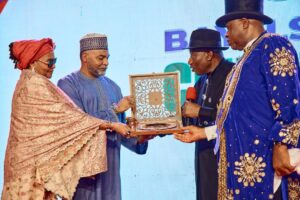
Abacha was represented at the ceremony by his son, Abba Abacha, and his sister, Fatima Gumsu Abacha.
For a state whose creation is still deeply connected to questions of identity, belonging and political representation, the presence of members of Abacha’s family gave the anniversary an added historical dimension.
From one road to a network
But 30 years after its creation, the question confronting Bayelsans is no longer simply whether the state should exist.
It is what has been achieved with the opportunity that statehood created.
Diri argued that the transformation could be measured against the condition of the state at birth.
At creation, he said, Bayelsa had no tertiary institution.
Today, the state has universities, polytechnics and a college of education, among other institutions.
The road network has also changed dramatically.
The governor recalled that Bayelsa inherited essentially a single-lane Mbiama-Yenagoa road as its major connection to the outside world.
Three decades later, he pointed to dualised highways, major road projects and the three senatorial roads opening up different parts of the state.
Healthcare, he added, had also witnessed substantial transformation.
These changes are significant in a state where geography has always been one of the biggest obstacles to development.
Bayelsa’s landscape is dominated by rivers, creeks, wetlands and mangrove forests. Communities that appear close on a map can be separated by waterways and difficult terrain.
For decades, travelling between communities meant relying heavily on boats and waterways.
The gradual expansion of road infrastructure has therefore represented more than physical construction. For many communities, roads mean easier access to schools, hospitals, markets, government services and economic opportunities.
The Jonathan story
Perhaps no moment at the anniversary dinner captured the personal meaning of Bayelsa’s political history more powerfully than the testimony of former President Goodluck Jonathan.
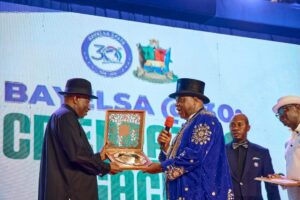
Jonathan, who was among the 63 people honoured at the ceremony, did not present his award simply as a personal achievement.
He dedicated it to the man who gave him his first major opportunity in politics.
Chief Diepreye Solomon Peter Alamieyeseigha, Bayelsa’s first civilian governor, appointed Jonathan as his deputy.
When Alamieyeseigha’s political journey ended, Jonathan eventually became governor.
Years later, he became Vice-President of Nigeria and, subsequently, President.
Standing before the gathering of Bayelsans and other dignitaries, Jonathan acknowledged the connection between his journey and the state’s political history.
“For me, my own award, I have dedicated it to my friend and my boss, Chief DSP Alamieyeseigha. If I did not start that journey as a deputy governor, no way I would have gone to where I am,” he said.
The statement was more than an acceptance speech.
It was a reminder of how the political history of a young state became intertwined with the personal journey of one of Nigeria’s most prominent political figures.
‘We have gained tremendously’
Yet Jonathan did not pretend that Bayelsa had completed its journey.
Instead, he acknowledged the frustrations of young people who sometimes ask what the state has achieved after 30 years.
His response was measured.
Bayelsa, he said, had not reached where it ought to be, but the state had made significant gains.
“Although we have not reached where we are supposed to be, I am happy where we are. I am happy that Bayelsa State was created, and we have gained tremendously,” he said.
For Jonathan, development should not be viewed as a single administration’s responsibility.
One government begins a project; another completes it. One generation lays the foundation; another builds on it.
“As long as we have a vision, as long as we have leaders, governors that have a plan for the state, one will do and hand over to the other one, and hand over to the other one,” he said.
“God willing, we’ll get to where we want to go.”
It was a message particularly directed at the younger generation, many of whom were born after Bayelsa was created and therefore know the state largely through what it has become rather than what it was.
A state still defining its legacy
Jonathan also recalled that while serving as governor in 2006, he initiated an essay competition for secondary school students.
The students were asked to articulate their vision of what Bayelsa should become over the following 25 years.
The exercise now carries a different meaning.
Those children who wrote about the future of Bayelsa in 2006 would today be young adults, some possibly working in the public sector, private businesses, professional fields or politics.
Their imagined future has become part of the present reality of the state.
But the anniversary also raised another question: whose contributions should be remembered when a state celebrates three decades?
The Bayelsa@30 awards committee attempted to answer that question by honouring 63 recipients across different fields.
Remembering those who built the state
The late Alamieyeseigha was honoured. So was the late Abacha.
Major Isaac Adaka Boro, Chief Harold Dappa-Biriye, former military administrator and the immediate past governor, Senator Seriake Dickson, were among those recognised.
The list extended beyond politicians.
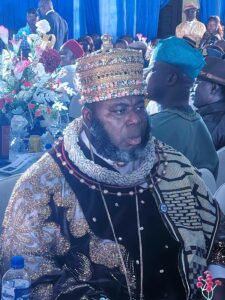
Academics, sports personalities, businessmen, musicians, public servants, traditional rulers, journalists and cultural icons were also honoured.
Among them were Olympians Daniel Igali and Blessing Oborududu; former Super Eagles players and coaches Samson Siasia and Finidi George; musicians including the late King Robert Ebizimor, Timaya and Timi Dakolo; former Head of Service of the Federation Dame Didi Walson-Jack; academics such as Professors Ebiegberi Alagoa, Dimie Ogoina and Youpele Beredugo; and a number of Bayelsa-born entrepreneurs and professionals.
The Bayelsa State Cultural Troupe also received recognition.
So did the late former National Security Adviser, General Owoeye Azazi, former Speaker and Minister of State for Petroleum Resources, Heineken Lokpobiri, pioneer Daily Times editor Ernest Ikoli and teenage chess sensation Deborah Quickpen.
The diversity of the recipients reflected the broader argument behind the anniversary: a state’s history is not written only by governors and politicians.
It is also written by teachers, athletes, businessmen, artists, civil servants, journalists, community leaders and young people.
Why remember the dead?
Chairman of the Bayelsa@30 Award Committee, His Royal Majesty King Bubaraye Dakolo Agada IV, Ibenanaowei of Ekpetiama Kingdom, said the committee deliberately included people who were no longer alive.
According to him, their recognition was also a way of giving their families a sense of pride and assuring them that the contributions of their loved ones had not been forgotten.
“It was not an easy task for the five-man committee, but 63 categories were identified and then men, women, and youths were carefully selected for each,” he said.
The committee’s decision points to an important feature of anniversary celebrations: they are not only about looking forward.
They are also moments when societies decide what they want future generations to remember.
The difficult beginning
Secretary to the State Government, Prof. Nimibofa Ayawei, recalled that Bayelsa’s beginning was far from easy.
Created on October 1, 1996, the new state, like other states created during the period, did not receive a take-off grant from the Federal Government, according to him.
The new administration therefore faced the challenge of building a state virtually from scratch.
Government structures had to be established. Institutions had to be created.
Roads and other infrastructure had to be developed. A new political and administrative identity had to take shape. The task was complicated by Bayelsa’s geography.
Yet, three decades later, the state has evolved from a new administrative creation into an established political entity with its own institutions, leaders, universities, businesses, cultural identity and growing infrastructure.
Beyond the celebration
The anniversary dinner was glamorous. There were former presidents, governors, lawmakers, diplomats, traditional rulers, business leaders and members of the diplomatic community.
But beyond the lights and ceremonies was a simpler story. It was the story of a people who, 30 years ago, received a state of their own and have spent the years trying to determine what to do with it.
Bayelsa’s journey has not been without challenges. Jonathan himself acknowledged that the state has not reached where it should be.
That admission perhaps makes the anniversary more meaningful, rather than less.
Thirty years is long enough to celebrate what has been achieved, but also short enough to recognise that the work of building a state is never finished.
For Bayelsa’s founders, the dream was political identity.
For the generation that followed, the challenge became infrastructure and institutions.
For today’s young Bayelsans, the expectations are broader: quality education, jobs, reliable electricity, healthcare, economic opportunities and a future that does not require them to leave home to find a meaningful life.
That is the unfinished chapter of the Bayelsa story.
As Jonathan put it, one generation must build and hand over to another.
And so, at 30, Bayelsa is not simply celebrating where it has come from.
It is also asking what kind of state the next generation will inherit.
