


 .
From Yenagoa to Brazzaville: How NCDMB Is Rewriting Africa’s Local Content Stor
Peace Osigwe
Introduction:
As Congo looks to Nigeria for lessons in oil and gas development, NCDMB’s projects in Bayelsa offer a glimpse of how local content is moving beyond policy to factories, power and opportunities for young Nigerians
For decades, Nigeria’s enormous oil and gas resources have generated billions of dollars, yet much of the equipment, expertise and services required to exploit those resources came from outside the country.
Today, there is a deliberate attempt to change that story.
And in Bayelsa State, the transformation is beginning to take physical shape.
From the Nigerian Content Development and Monitoring Board (NCDMB) headquarters in Yenagoa to the Nigerian Oil and Gas Park at Emeyal-1 and the 10-megawatt gas-fired power plant at Elebele, the message is becoming clearer: oil should not only generate revenue for government; it should also create industries, businesses, skills and jobs for Nigerians.
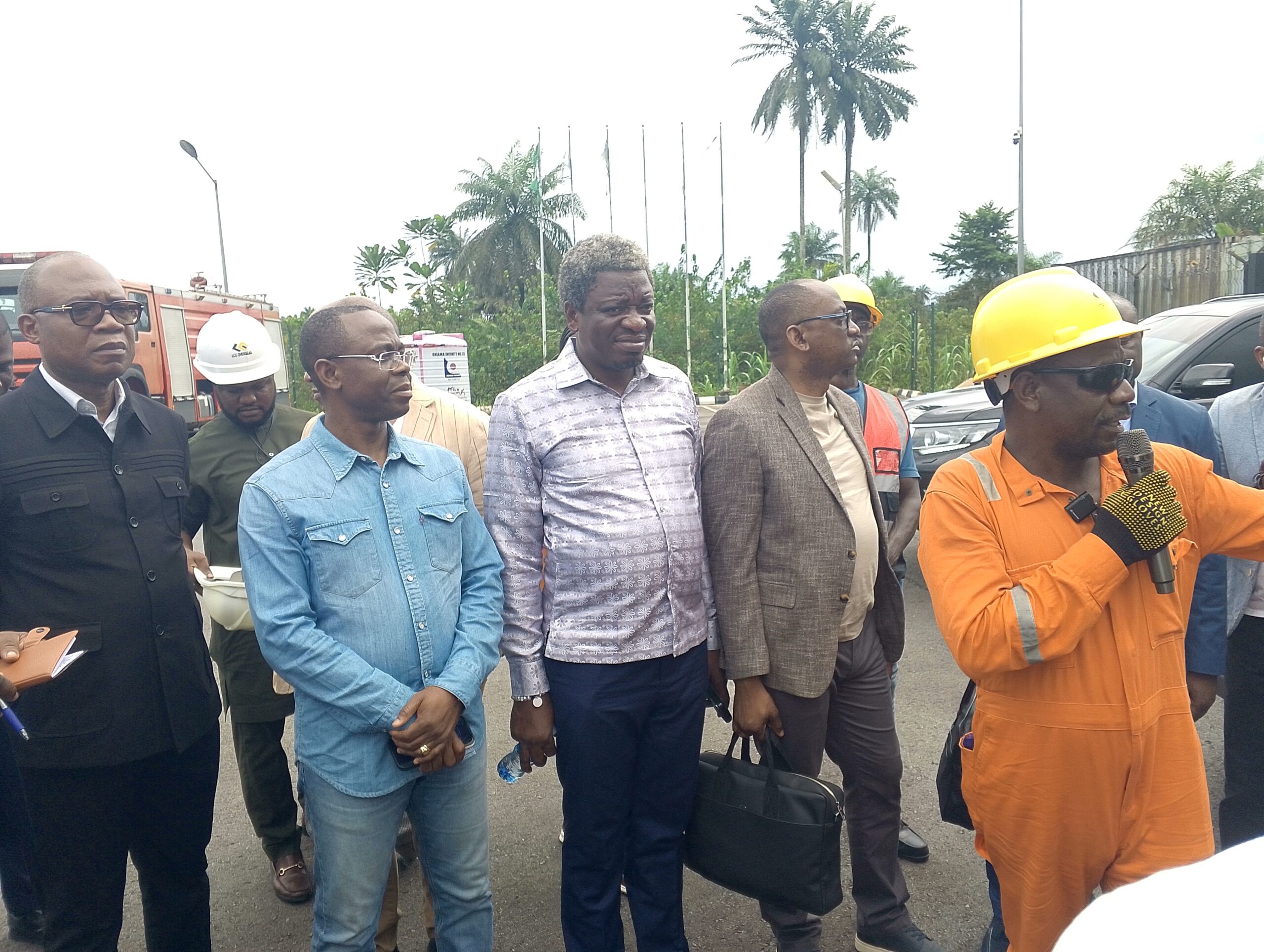
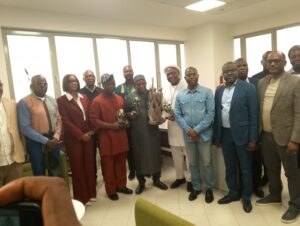
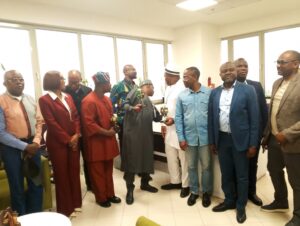
That emerging story was brought into sharper focus when a delegation from the Republic of Congo arrived in Bayelsa to study Nigeria’s local content experience.
The Congolese team did not come simply to listen to presentations.
They came to see.
They wanted to understand how Nigeria moved from having oil in the ground to building institutions and infrastructure designed to ensure that more Nigerians participate in the industry.
For Congo, the Nigerian experience offers a possible template as it seeks to strengthen local participation in its own oil and gas sector.
For Bayelsa, however, the visit offered something else: an opportunity to look at what local content could mean on the ground for the people living in the heart of Nigeria’s oil-producing region.
Speaking at the NCDMB headquarters in Yenagoa, the Board’s Director of Corporate Services, Abdumalik Halilu, explained that Nigeria’s thinking about oil had changed over time.

He said the country had moved from treating hydrocarbons mainly as a source of government revenue to seeing the sector as an instrument for industrialisation and national development.
Nigeria’s local content programme began as a policy before becoming law in 2010 with the enactment of the Nigerian Oil and Gas Industry Content Development Act.
The objective was straightforward but ambitious: ensure that Nigerians increasingly participate in the ownership, employment, manufacturing, provision of services and other activities associated with the oil and gas industry.
For a country like Nigeria, with a long history of petroleum production, the change is significant.
The question is no longer only how much oil is produced.
It is also about how much value remains in Nigeria after the oil has been produced.
That is where local content becomes important.
Halilu told the Congolese delegation that local content should be an enabler of investment and industrial development, rather than a bureaucratic obstacle.
The philosophy is simple: if an item can be produced locally by a company with the required capacity, there should be an opportunity for that Nigerian company to participate.
Perhaps nowhere is that ambition more visible in Bayelsa than at Emeyal-1 in Ogbia Local Government Area.
There, the NCDMB’s Nigerian Oil and Gas Park Scheme is taking shape as an industrial hub designed to bring manufacturers closer to the oil and gas value chain.
The idea is to create a low-cost environment where companies can manufacture oil and gas equipment, components, spare parts and other products that would otherwise have to be imported.
Walking the Congolese delegation through the facility, NCDMB Assistant Manager, Strategy and Transformation Project, Blessing Ekpe, explained that the concept goes beyond constructing buildings.
The real objective, he said, is to create an environment where Nigerian businesses can produce, train workers and compete in the regional market.
The park is designed around shared infrastructure.
Manufacturers will have access to facilities such as internal roads, water supply, waste treatment, training facilities and other common services.
There are manufacturing shop floors, warehouses, hostels, a capacity-building centre, administrative facilities and other supporting infrastructure.
The idea is to reduce the cost of setting up and operating a manufacturing business.
For a young Nigerian entrepreneur who has an idea but lacks the enormous capital required to build an industrial estate from scratch, such shared infrastructure could make the difference between an idea remaining on paper and becoming a functioning business.
And that is where the human story lies.
Behind every factory is a worker.
Behind every warehouse is a business.
Behind every machine is a technician.
Behind every successful manufacturer are young people who need to be trained and employed.
According to Ekpe, about 2,000 jobs were created during the construction phase of the park, while a similar level of employment is envisaged during its operational phase.
For Bayelsa’s young population, those numbers matter.
The NOGaPS concept is also about changing the economic character of the region.
Bayelsa is one of Nigeria’s major oil-producing states, but oil production does not automatically translate into broad-based industrial development.
The challenge has always been how to connect the resources beneath the soil and waterways to sustainable economic opportunities for the people living around them.
The Emeyal park is designed to become one of those links.
If manufacturers establish operations there, the benefits could extend beyond those directly employed by the companies.
Transporters will be needed.
Suppliers will be needed.
Security services will be needed.
Food vendors, cleaners, technicians, artisans and other small businesses can potentially emerge around the industrial activity.
That is how an industrial ecosystem begins.
And the wider ambition goes beyond Bayelsa.
Ekpe explained that the concept could be replicated across the Niger Delta, creating several industrial hubs that would strengthen activities along the oil and gas value chain.
Such a network could gradually help Nigeria retain more of the economic value generated by its petroleum industry.
But factories need power.
That is where another NCDMB project at Elebele enters the story.
At the NCDMB gas-fired power plant in Elebele, the Congolese delegation saw another example of an attempt to use Nigeria’s own natural resources to support local industrial activity.
The 10-megawatt gas-fired facility was developed to provide power to NCDMB facilities and designated government facilities.
The plant uses dry gas to generate electricity, illustrating another dimension of the local-content argument: the country should not only extract its natural resources but also build systems that enable those resources to support economic activity within Nigeria.
For the Congolese delegation, the visit helped connect the theory they had heard in Abuja with physical examples in Bayelsa.
Their Director-General of Upstream Hydrocarbon, Frank Muzabagani, said the delegation was impressed by what it had seen.
After visiting the industrial park, the gas-to-power facility and the NCDMB headquarters, he said the team could now connect the presentations received earlier with practical examples.
“We are now touching the reality of local content development in Nigeria,” he said.
Congo’s interest in Nigeria’s local content model is itself significant.
The Congolese delegation said Nigeria was chosen because of its more than 15 years of experience and international recognition in local content development.
But the visit is not simply about Nigeria teaching Congo.
It also provides Nigeria with an opportunity to examine its own journey.
Policies can be written.
Buildings can be constructed.
Industrial parks can be commissioned but the ultimate test is what happens when the machines begin to work and businesses begin to produce.
How many Nigerian companies will emerge?
How many young people will acquire technical skills?
How many products currently imported will eventually be manufactured locally?
How many businesses will survive beyond government support?
And how much money would previously have left the country as capital flight will remain within the Nigerian economy?
These are the questions that will ultimately determine whether the local-content journey has delivered on its promise.
The relationship between Nigeria and Congo may also be entering a new phase.
According to NCDMB, discussions are not limited to knowledge-sharing.
The Board wants businesses from Congo to consider opportunities in Nigeria, including the Nigerian Oil and Gas Park, while Nigerian companies could also explore opportunities in Brazzaville through joint ventures.
That would take the relationship beyond government-to-government exchanges to business-to-business cooperation.
It could also create a regional African oil and gas supply chain in which expertise, technology, capital and services move between African countries rather than automatically flowing from outside the continent.
For Nigeria, that would represent another dimension of local content.
The young person at the centre
Ultimately, however, local content is not really about buildings.
It is about people.
It is about the young graduate looking for a first job.
The technician who wants somewhere to apply his skills.
The entrepreneur is searching for affordable industrial space.
The Nigerian company trying to win a contract against foreign competitors.
The apprentice who needs training.
The community that wants economic activity to emerge around the resources produced from its environment.
That is why the development at Emeyal deserves attention beyond the walls of the industrial park.
If the vision is fully realised, a young person in Bayelsa may no longer have to travel to Lagos, Port Harcourt or even outside Nigeria to find opportunities connected to the oil and gas value chain.
There could be a factory close to home.
There could be a training centre.
There could be a company looking for skilled hands.
There could be a supply contract for a small business.
And there could be an opportunity to build something that does not depend entirely on government employment.
That is the promise embedded in Nigeria’s local-content journey.
The Congolese delegation came to Bayelsa looking for lessons.
What they found was more than a policy framework.
They found an industrial park waiting for manufacturers, a power plant turning gas into electricity and an institution attempting to build an ecosystem around Nigeria’s oil and gas resources.
The bigger question now is whether those facilities will translate into the jobs, businesses and indigenous industries that ordinary Nigerians can see and feel.
Because when local content finally moves from government policy to a young Nigerian’s payslip, a local company’s production line and a Made-in-Nigeria product entering the market, that is when the real story begins.
