


 Bayelsa at 30: How Diri Is Rewriting the State’s Development Stor
By Johnny Ayiba-ebi
Thirty years after the creation of Bayelsa State, the quest for development and prosperity among its people remains as strong as ever.
From almost three years of military administration to successive civilian governments led by the late Chief DSP Alamieyeseigha, Dr. Goodluck Jonathan, Chief Timipre Sylva and Senator Henry Seriake Dickson, Bayelsa have continued to evolve.
The incumbent Governor, Senator Douye Diri, who assumed office in 2020, quickly keyed into the vision and aspirations of the people, taking steps to consolidate previous achievements while charting a new course for development.
It is a clear case of continuity in governance.
In six years, Governor Diri has demonstrated what appears to be a strong commitment to his Assured Prosperity Agenda, with investments spanning infrastructure, education, healthcare, agriculture, security, sports, power, youth and women empowerment, as well as the civil service.
The administration’s legacy projects have significantly changed the infrastructure landscape of the state.
Beyond the massive road construction projects across the eight local government areas, the government has pursued reforms and investments in sectors considered critical to the long-term development of Bayelsa.
Education: From Certificates to Skills
One of the notable interventions of the Diri administration is the transformation of secondary education from an emphasis on paper qualifications to science and technical education, with students exposed to practical and hands-on skills.
To drive this vision, the state government has established, constructed and equipped Science, Technical and Vocational Colleges across the eight local government areas.
The introduction of technology-driven learning in primary schools through BayelsaPRIME is also aimed at laying a stronger foundation for pupils.
The employment of additional teachers across primary, secondary and tertiary institutions, coupled with the accreditation of programmes, faculties and colleges in state-owned tertiary institutions, has further boosted the education sector.
Recent rankings placing Bayelsa’s education policies favourably among other states could be seen as an indication that investments in the sector are beginning to yield results.
Healthcare and Social Development
The health sector has also received considerable attention.
The expansion of the Bayelsa State Health Insurance Scheme, renovation and construction of primary healthcare centres, deployment of Zipline drones for medical supplies and the establishment of a new haemodialysis centre are among the interventions designed to improve access to healthcare, particularly for residents of riverine communities.
For a predominantly riverine state where access to healthcare can be challenging, these interventions are significant.
Power and Infrastructure
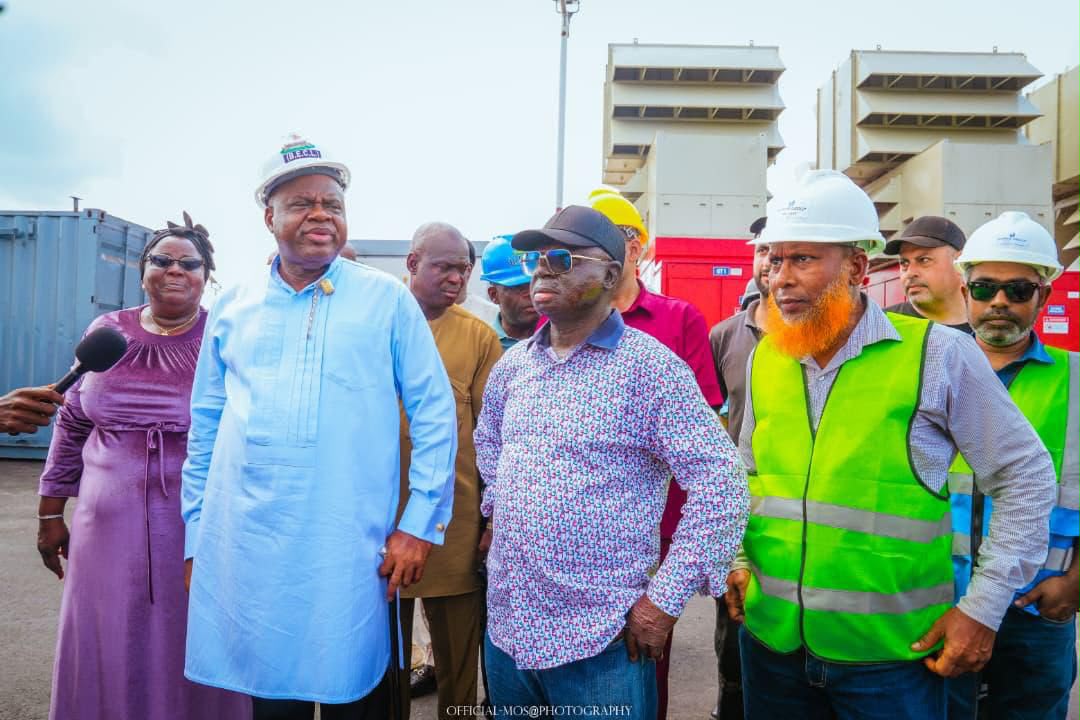
As Bayelsa marks its 30th anniversary, three major projects stand out: the new ultra-modern 25,000-capacity stadium, the iconic nine-storey Secretariat Complex and the 60MW gas turbine power project.
The power project, in particular, has generated optimism among residents of Yenagoa, with expectations that improved electricity supply will stimulate businesses, attract investment and create jobs.
For a state seeking industrial growth, an independent power supply, complemented by relative peace and security, could provide an important foundation for economic expansion.
Agriculture and Food Production
Agriculture remains another major pillar of the Assured Prosperity Agenda.
With Bayelsa’s comparative advantage in rice, plantain, banana, cassava, sugarcane and fish farming, the government has increasingly focused on developing the sector.
Over 1,000 youths and women have reportedly received training in different aspects of agriculture, including modern farming and soilless farming techniques.
The partnership with the South Korean Government, which resulted in the provision of agricultural equipment, including rice mills, has also strengthened the state’s drive to increase rice production and processing.
The administration’s grants to farmers and distribution of improved seedlings are further aimed at increasing productivity and strengthening food security.
Sports: A New Era
The period since 2020 has also witnessed increased investment in sports.
Bayelsa’s performances at the National Sports Festival and Niger Delta Sports Festival, alongside the achievements of its athletes at national and international competitions, demonstrate the state’s growing sporting profile.
The achievements have also gone beyond Bayelsa United and Bayelsa Queens football clubs.
The construction of a 30,000-capacity stadium at Igbogene and another 5,000-capacity facility at Sampou is expected to further expand the state’s sporting infrastructure.
Opening Up the Riverine Communities
Perhaps one of the most significant areas of the administration’s infrastructure programme is road construction.
Former President Olusegun Obasanjo once said, “Leadership is about making bold decisions, even in the face of uncertainty.”
That philosophy appears to define the administration’s decision to continue with the capital-intensive three senatorial district roads despite the state’s financial limitations.
The Sagbama-Ekeremor-Agge Road, Yenagoa-Oporoma-Ukubie Road and Nembe-Brass Road are designed to open up communities and improve movement across the state.
The construction of bridges across several rivers has also connected previously isolated communities to the road network.
Residents of communities including Angiama, Oporoma, Aguobiri, Otuan, Angalabiri, Ofoni, Ayamasa, Aleibiri, Isampou, Amanagbene, Ekeremor, Igbedi, Sabagreia/Okoloba and Okodi have witnessed the impact of these projects.
Projects Across the State
The administration has also completed a number of inherited and abandoned projects while initiating new ones.
Among the projects are the Kaiama Referral Hospital, Ernest Ikoli Media Complex, New Yenagoa City roads, Nembe Unity Bridge, Elebele Bridge, 630-metre Angiama-Oporoma Bridge, Aguobiri Bridge, Igbedi Road, Igbogene-AIT/Elebele Outer Ring Road, Glory Drive Phase Two, Polaku-Sabagreia Road and Bridge, the new Finance House, Isaac Boro Expressway, Transport Terminal, Igbogene projects and the new Bayelsa State Health Insurance Scheme Administrative Complex.
At the New Yenagoa City, the transformation is particularly visible, with dualised roads and the construction of new Commissioners’ and Assembly Quarters.
The vision, evidently, is to build a modern state capital capable of matching Bayelsa’s aspirations for the future.
Security and Political Stability
Security has also remained a major component of the administration’s agenda.
The establishment of the State Community Safety Corps and support for existing volunteer and vigilante groups have complemented the efforts of conventional security agencies.
The deployment of technology for security surveillance has further strengthened the state’s security architecture.
The administration has also benefited from a relatively stable political environment, which has allowed it to pursue its development agenda without prolonged political disruptions.
The Road Ahead
At 30, Bayelsa stands at another defining moment in its history.
The Diri administration’s six years have been characterised by an ambitious infrastructure programme and interventions across multiple sectors.
The challenge now is not only to complete ongoing projects but also to ensure that these investments translate into sustainable economic opportunities, better livelihoods and improved living standards for ordinary Bayelsans.
Governor Diri’s supporters see his administration as a continuation of the development journey started by previous governments, while his legacy will ultimately be measured by the durability and impact of the projects and policies being implemented.
As Bayelsa celebrates three decades of statehood, the responsibility of building a more united, secure and prosperous state cannot rest on government alone.
It requires the collective commitment of all Bayelsans, regardless of political affiliation, social status or location.
For supporters of the Assured Prosperity Agenda, Governor Diri’s six-year tenure represents a significant chapter in Bayelsa’s 30-year journey—and, perhaps, a defining moment in the state’s continuing search for sustainable development.
Johnny Ayiba-ebi is a media practitioner and public affairs analyst based in Bayelsa State.
