


Dangote Identifies Power, Long-Term Financing as Keys to Africa’s Industrial Growt
By Crystalnews Admin
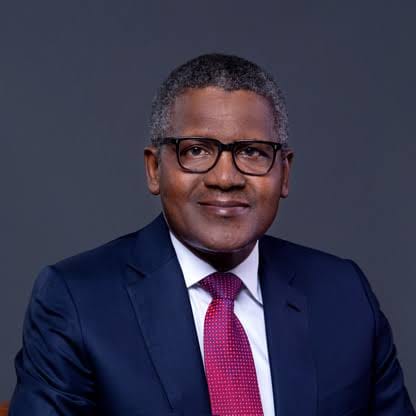
President and Chief Executive of Dangote Industries Limited, Aliko Dangote, has said that Africa’s ambition to emerge as a global industrial powerhouse depends on access to long-term financing, reliable electricity supply and policies that promote local manufacturing and value addition.
Dangote, who has unveiled a $50 billion investment programme for 2026 to 2030, said Africa must strengthen its financial institutions, expand power infrastructure and implement sound agricultural and industrial policies to unlock its economic potential.
The industrialist made the remarks in London while speaking with David Pilling, Africa Editor of the Financial Times, at the 2026 FT Africa Summit, which brought together policymakers, business executives, financiers and other influential figures to discuss Africa’s role in shaping the future of the global economy.
Addressing the question of why Africa had produced relatively few globally competitive industrial enterprises despite its vast resources and economic opportunities, Dangote said the continent needed deliberate policies and institutions capable of supporting large-scale, long-term investments.
“I think the number one thing that the continent has to concentrate on doing is having very strong financial institutions, their own financial institutions, and also to have very strong agricultural policy, and also industrial policy,” he said.
He identified electricity as the most urgent infrastructure requirement for accelerating industrial development, stressing that inadequate power supply continued to undermine the continent’s manufacturing capacity.
“For Africa, what we need the most today is actually power,” Dangote declared.
According to him, unreliable electricity has made it difficult for African countries to process their mineral resources locally, forcing them to export raw materials instead of developing industries that could generate greater economic value.
He cited the mining sector as an example, explaining that inadequate power supply frequently discouraged companies from establishing processing plants close to extraction sites.
Dangote estimated that about 650 million Africans still lacked access to electricity, describing the situation as a major obstacle to the continent’s industrial ambitions.
He said addressing the power deficit would improve manufacturing prospects, attract investments in mineral processing and create jobs across African economies.
The Dangote Group chief also highlighted the challenges of securing financing for major industrial projects in Africa, drawing on the experience of developing the Dangote Petroleum Refinery in Lagos.
He disclosed that the Group had to finance the refinery largely from its own balance sheet because conventional project financing was extremely difficult to obtain for an investment of that scale.
According to him, prolonged financing negotiations can delay project execution, increase costs and expose investors to changing economic conditions, potentially undermining otherwise viable industrial ventures.
He explained that the refinery project was further complicated by the sharp depreciation of the naira during its development.
The exchange rate, he said, moved from approximately ₦136 to the dollar to as high as ₦1,800, while about 90 per cent of the Group’s revenue was denominated in naira.
Dangote said the experience demonstrated the financial risks African businesses faced when undertaking capital-intensive projects without adequate access to long-term funding.
He added that the Group’s proposed $50 billion investment programme for 2026 to 2030 was intended not only to expand its operations but also to demonstrate the capacity of African businesses to execute large-scale industrial projects.
“The legacy we are trying to set up is how do we industrialise our continent?” he asked.
He said the Group hoped its investments would inspire other African entrepreneurs and investors to take advantage of opportunities across the continent, creating a broader industrial ecosystem that supports businesses, generates employment and retains more economic value within Africa.
Dangote also called on African governments to adopt policies that protect emerging domestic industries from unfair external competition.
He warned that allowing cheap imported goods to overwhelm local manufacturers could weaken domestic production, discourage investment in factories and undermine the continent’s long-term industrial development.
However, he distinguished between protecting local industries and restricting trade among African countries, advocating stronger regional economic cooperation under the African Continental Free Trade Area.
He said African economies should promote freer trade among themselves while developing a coordinated framework to protect their industries against unfair competition from outside the continent.
The industrialist further questioned why Africa continued to experience widespread poverty despite its abundant agricultural land, mineral resources and youthful population.
He argued that the continent’s economic difficulties were not primarily caused by a lack of resources but by insufficient investment in productive capacity, manufacturing and industrial infrastructure.
“Why should we remain poor?” he asked.
Dangote expressed optimism that Africa was entering a new phase in which governments, entrepreneurs and investors were increasingly determined to build domestic industries, strengthen productive capacity and create sustainable economic prosperity.
He maintained that with reliable electricity, stronger financial institutions and consistent industrial policies, African countries could move beyond exporting raw materials to become competitive manufacturers and significant contributors to the global economy.
