


The Politics of Falsehood: Why Lies Multiply and Accountability Matter
By Hon. Ofoni Daupuamo Williams
The saying, “Lies multiply but have a limited lifespan,” offers a profound reflection on truth, morality, human behaviour, leadership and justice. It suggests that falsehood can spread rapidly, deceive many people and appear successful for a time, but sustaining it indefinitely becomes increasingly difficult.
The statement is particularly relevant to politics and governance, where falsehood can be deployed to gain power, discredit opponents, manipulate public opinion and evade accountability.
Why Lies Multiply
A lie rarely exists in isolation. Often, one lie creates the need for several others to defend it. The original falsehood may require four additional lies to sustain it; those may generate even more, creating a chain of deception that becomes increasingly difficult to control.
For example, a public official who misappropriates public funds may initially deny wrongdoing. When confronted with evidence, the official may offer false explanations, blame innocent people or manipulate records to conceal the original offence.
In this way, the liar gradually becomes a prisoner of their own falsehoods, compelled to create further explanations to protect the initial deception.
Several factors contribute to the multiplication of lies.
Fear: People sometimes lie to escape punishment, embarrassment or the consequences of their actions.
Self-interest: Individuals may resort to falsehood to acquire money, power, positions or public recognition.
Political ambition: Falsehood can be deployed to discredit opponents, manipulate voters or unjustly portray a potential competitor as unfit for leadership.
Ignorance: People sometimes spread misinformation because they fail to verify the facts before sharing them.
Group loyalty: Individuals may defend falsehood because admitting the truth could embarrass their political party, religious group, family or institution.
In some circumstances, a determined liar may even transform false allegations into formal petitions to relevant authorities, hoping that the mere existence of a petition will damage the reputation of the person concerned.
When the authorities fail to investigate credible complaints or take appropriate action against demonstrably false allegations, their inaction can inadvertently encourage the continuation of this unhealthy practice.
Why Lies Have a Limited Lifespan
Truth possesses an important advantage over falsehood: it corresponds to what actually happened.
Although a lie may survive for a considerable period, various factors can eventually expose it.
Evidence: Documents, financial records, photographs, scientific findings and credible testimony can contradict false claims.
Time: As events unfold, inconsistencies may emerge between what a person claims and what their actions reveal.
Human memory and conscience: Witnesses may eventually speak out, particularly when they realise that their silence allows injustice to continue.
Investigation: Independent journalists, courts, auditors, researchers and credible investigative institutions can uncover facts that were previously concealed, whether deliberately or unintentionally.
Consequences: A public official may claim that a road, hospital or school has been completed, but the condition of the facility may eventually contradict that claim.
However, an important qualification is necessary: not every lie is automatically exposed, and some falsehoods survive for generations. Truth does not always prevail without effort. It often requires courageous individuals, credible evidence and institutions capable of holding people accountable.
Lies in Politics and Governance
The relevance of this principle becomes particularly evident in developing countries, including Nigeria, where political deception can have far-reaching consequences.
During election campaigns, politicians may make promises they have little intention of fulfilling. They may exaggerate their achievements, make misleading accusations against opponents or present propaganda as established fact to secure temporary political advantages.
Such tactics may produce electoral success in the short term. However, when citizens continue to experience unemployment, insecurity, poor infrastructure and inadequate public services, the gap between political promises and everyday realities becomes increasingly difficult to ignore.
Yet the situation is more complicated than the saying suggests.
Political falsehood does not always lead to electoral defeat. Some politicians continue to prosper despite repeated controversies because of poverty, ethnic or religious loyalties, weak institutions, misinformation and the absence of credible alternatives.
Consequently, the central issue is not merely whether lies will eventually be exposed. It is whether society possesses the institutions, courage and collective determination to impose appropriate consequences when falsehood is established.
Where deception repeatedly produces political rewards rather than consequences, the problem extends beyond the individual liar to the structures that permit such behaviour to flourish.
Falsehood, Morality and Justice
Lies damage more than the reputation of the person who tells them. They can destroy relationships, deprive innocent people of their rights and undermine public confidence in institutions.
Consider a petition containing deliberate false allegations against an innocent person. Even if the allegations are eventually disproved, the victim may already have suffered reputational damage, financial loss, emotional distress or professional setbacks.
The eventual discovery of the truth does not automatically restore everything that was lost.
This is particularly troubling in politics, where allegations can be used as weapons against perceived opponents. The practice makes it increasingly difficult for politics to develop into a profession grounded in public service, integrity and accountability.
Although political engagement may be a lifelong undertaking for many practitioners, its legitimacy depends on the values and standards they uphold.
A political environment in which falsehood is rewarded and honesty is punished discourages principled participation and weakens the moral foundation of governance.
Truth Exposed Is Not the Same as Justice Achieved
There is an important distinction between exposing a lie and achieving justice.
Truth exposed means that the falsehood has been discovered and the facts established.
Justice achieved means that the victim receives appropriate redress and the responsible person is held accountable where the evidence and the law justify such action.
A society that exposes lies but fails to correct the resulting injustice has fulfilled only part of its responsibility.
It is therefore not enough for the public to discover that an allegation was false. Where appropriate, the victim must be protected, reputations must be restored as far as possible, and those responsible must face lawful consequences.
Without these measures, falsehood can remain an effective weapon even after it has been disproved.
Can a Lie Become More Powerful Than the Truth?
Unfortunately, yes, at least temporarily.
A lie repeated frequently can become familiar, and familiarity may cause people to mistake a claim for the truth. When repetition is combined with emotional appeals, propaganda and social pressure, falsehood can influence public opinion even in educated societies.
Furthermore, some individuals continue believing a lie after it has been disproved because accepting the truth would threaten their interests, loyalties or identity.
This demonstrates that education alone is insufficient. Society also needs critical thinking, moral courage, access to reliable information and institutions that reward honesty rather than manipulation.
The danger, therefore, is not simply that lies multiply. It is that people may become so accustomed to falsehood that they stop demanding the truth.
When citizens no longer question dubious claims, demand evidence or insist on accountability, deception becomes easier to sustain.
The Alameyesigha Example and the Challenge of Falsehood
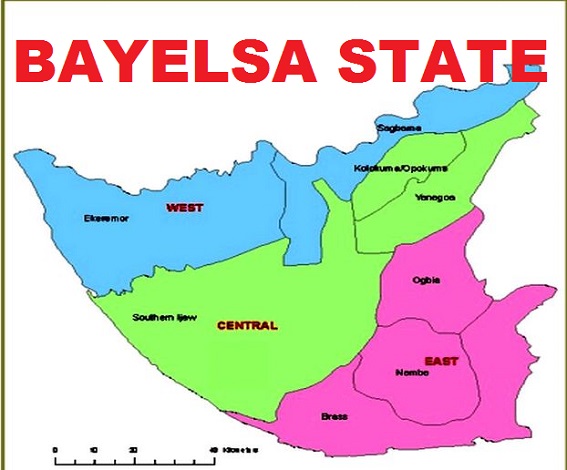
The late Chief Diepreye Solomon Peter Alamieyeseigha, former Governor of Bayelsa State, is recalled by Hon. Williams for what he describes as his prompt approach to addressing falsehood.
The reference raises a broader question about leadership: how should public officials respond when they believe that false allegations are being circulated against them?
A responsible response should involve presenting verifiable facts, correcting misinformation and allowing credible institutions to examine disputed claims where necessary.
Promptness matters, but so do evidence, transparency and respect for due process. The objective should not simply be to silence critics, but to distinguish legitimate criticism from demonstrably false allegations.
In a democratic society, public officials must remain open to scrutiny while individuals must equally be protected against deliberate defamation and malicious falsehood.
The Limitations of the Saying
Although the statement that lies multiply but have a limited lifespan is compelling, it should not be interpreted as an absolute law.
Some lies are exposed quickly, while others remain concealed for decades. Some truthful people suffer serious consequences, while dishonest individuals prosper. History also contains examples of false accusations that continued to damage innocent people long after they were discredited.
The saying is therefore best understood as a moral principle and a warning rather than a guarantee that truth will triumph within every person’s lifetime.
The responsibility for exposing falsehood rests not only on individuals but also on communities, the media, the judiciary, public institutions and all those committed to justice.
Journalists, in particular, have an important responsibility to verify claims, investigate allegations fairly, distinguish facts from opinions and avoid amplifying unsubstantiated accusations.
Similarly, authorities must not allow political considerations, personal relationships or institutional interests to determine whether credible allegations are investigated.
The failure to act can create an environment in which dishonesty becomes normalised and accountability increasingly difficult to achieve.
When Society Becomes Complicit in Falsehood
One of the most troubling aspects of persistent deception is the indifference it can generate.
When false allegations are repeatedly made, exposed or challenged without meaningful consequences, society may gradually become desensitised. People begin to regard dishonesty as an ordinary feature of public life rather than a serious moral failure.
In political circles, this can become particularly dangerous. Falsehood may acquire the protection of organised interests, powerful personalities and networks of loyal supporters.
Under such circumstances, the problem is no longer confined to the individual who tells the lie. It becomes a collective failure involving those who promote it, those who benefit from it and those who possess the authority to address it but choose not to act.
This does not mean every unproven allegation is necessarily a lie or that every failure to prosecute amounts to complicity. Allegations must be assessed on their evidence and merits. However, deliberate falsehood should not be allowed to thrive merely because its perpetrators enjoy influence or political protection.
Conclusion: The Real Test Is Accountability
The saying, “Lies multiply but have a limited lifespan,” reminds us that falsehood often requires continuous defence, whereas truth can be established through credible evidence.
Lies may secure temporary advantages, but they weaken trust, damage relationships and undermine institutions. Their consequences can extend far beyond the original deception, affecting innocent people and eroding confidence in leadership.
Nevertheless, truth does not always emerge by itself, and its discovery does not automatically produce justice.
Honesty must be supported by courage. Truth must be supported by evidence. Justice must be supported by institutions capable of holding wrongdoers accountable without fear or favour.
Ultimately, the greatest victory is not merely to expose a lie after it has caused damage. It is to build a society in which falsehood is difficult to sustain, deliberate deception carries appropriate consequences, and integrity is valued above political convenience.
A familiar expression captures the challenge: a lie may travel around the world before the truth puts on its shoes. But whether the truth eventually catches up depends, in part, on whether society is willing to pursue it.
This leaves us with a fundamental question:
**In a society where falsehood is repeatedly exposed but its perpetrators continue to prosper
