


ZONING AND THE CONSTITUTION: THE BAYELSA POLITICAL DILEMMA AND THE QUEST FOR EQUIT
By Hon. Ofoni Daupuamo Williams
Zoning and constitutionalism are recurring subjects in Nigeria’s political discourse, particularly in discussions about equity, fairness, national unity and the distribution of political power.
The relationship between zoning and the Constitution remains an important issue in Nigeria’s democratic development, especially as political stakeholders continue to debate the principles guiding access to elective and appointive positions.
This raises a fundamental question: Is political zoning a constitutional requirement, a political convention or merely an arrangement among political parties?
UNDERSTANDING POLITICAL ZONING
Zoning is a political arrangement through which specific political offices are allocated or rotated among geographical areas, regions or interest groups to promote equitable participation in governance.
In Nigeria, zoning is commonly associated with:
The six geopolitical zones.
Rotation of the presidency between the North and South.
Distribution of political party leadership positions.
Allocation of governorship and legislative leadership positions.
Balancing political appointments among different interests.
The underlying philosophy is to prevent political dominance by one section of the country and promote a sense of belonging among the various components of the Nigerian federation.
WHAT DOES THE NIGERIAN CONSTITUTION SAY?
Some provisions of the 1999 Constitution of the Federal Republic of Nigeria, as amended, are particularly relevant to the debate on equitable representation.
Section 14(3): Federal Character Principle
This provision requires the composition of the Federal Government and its agencies to reflect Nigeria’s federal character, thereby preventing the dominance of persons from a few states or sectional interests.
Section 14(4): Diversity and Representation
This provision extends the principle of equitable representation to state and local government administration.
Section 147(3): Ministerial Appointments
The Constitution requires the President to appoint at least one minister from each state of the federation, subject to the constitutional provisions governing such appointments.
These provisions provide constitutional backing for the principles of inclusion, diversity and equitable representation.
IS ZONING EXPRESSLY PROVIDED FOR IN THE CONSTITUTION?
Here lies the critical distinction.
The 1999 Constitution does not expressly recognise the six geopolitical zones as constitutional units, nor does it prescribe compulsory rotation of the presidency between the North and South.
Presidential qualification is principally governed by Section 131 of the Constitution.
Consequently, zoning is better understood as a political convention and party arrangement rather than an express constitutional requirement.
This represents a significant constitutional and political gap, particularly given the importance attached to zoning in Nigeria’s power-sharing arrangements.
However, political parties have incorporated zoning and rotation into their constitutions and internal regulations.
Interestingly, the Peoples Democratic Party (PDP) was among the major political parties that championed the zoning and rotational presidency arrangement in Nigeria.
Unfortunately, the implementation of such arrangements has frequently generated disagreements over their relationship with constitutional provisions and the rights of eligible citizens to seek elective offices.
Nevertheless, the arguments in favour of zoning remain compelling.
THE ARGUMENTS IN FAVOUR OF ZONING
Zoning has several important justifications.
1. EQUITY: It provides different sections of the country with opportunities to participate in leadership and governance.
2. NATIONAL UNITY: It can reduce feelings of exclusion, marginalisation and political alienation among different regions.
3. POLITICAL STABILITY: It can minimise unnecessary competition and tensions between competing regional interests.
4. INCLUSIVENESS: It recognises Nigeria’s pluralistic political, ethnic and cultural composition.
Indeed, these considerations give zoning the potential to serve as an instrument for promoting peace, political stability and national cohesion.
THE ARGUMENT AGAINST ZONING
There are, however, equally important objections to the practice.
It may sacrifice competence on the altar of geographical entitlement.
It may restrict the political rights of otherwise qualified citizens.
It may encourage mediocrity where political entitlement replaces competitive selection.
It may strengthen regional and ethnic consciousness at the expense of national identity.
It may create political expectations that are difficult to enforce constitutionally.
These concerns demonstrate why zoning must be carefully balanced against the fundamental principles of constitutional democracy.
THE FUNDAMENTAL CONSTITUTIONAL DILEMMA
The debate presents two competing principles that must be carefully reconciled:
Zoning versus constitutional democracy.
Equity of representation versus equality of citizens.
Regional inclusion versus individual political rights.
Power-sharing arrangements versus electoral competition.
Political consensus versus constitutional procedures.
Collective entitlement versus individual eligibility.
It is extremely important to note that the attributes of one principle should not be used to undermine or override the other.
A democratic society must find a balance between collective interests and individual rights without compromising the rule of law.
THE BAYELSA STATE EXPERIENCE
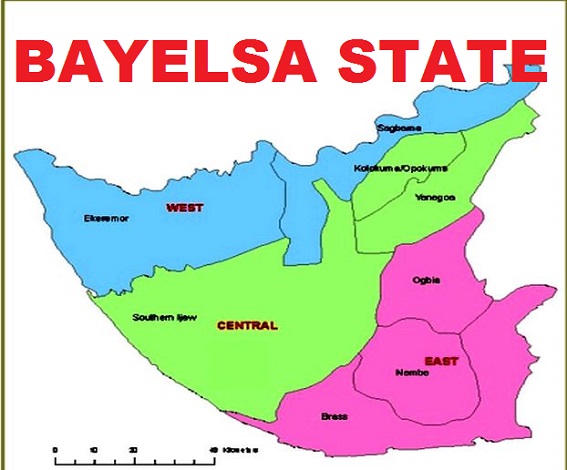
In Bayelsa State, zoning is generally recognised as a political arrangement, but its implementation has been inconsistent and, in some instances, loosely observed.
The East Senatorial District appears to have maintained a relatively more consistent pattern, particularly in National Assembly elections, where political representation has largely followed a one-tenure-per-location arrangement.
However, the experience in the Central and West Senatorial Districts presents a different picture, with some political officeholders recording second and even third tenures.
This has generated concerns about the equitable distribution of political opportunities across the state.
The situation is particularly significant when viewed against the backdrop of Sagbama and Ekeremor Local Government Areas, which, according to the political account presented in this debate, have collectively accounted for approximately 20 years of senatorial and House of Representatives representation out of Bayelsa’s 28 years of the current democratic dispensation.
This development raises questions about the consistency and fairness of zoning in the state.
It also suggests that, in the Central and West Senatorial Districts, the implementation of zoning has sometimes been influenced more by prevailing political interests and the decisions of powerful political actors than by a clearly established and consistently respected principle.
BAYELSA WEST: THE RECORD OF REPRESENTATION
In Bayelsa West Senatorial District, the history of representation includes several political figures from Sagbama and Ekeremor.
Sagbama has produced Senator Emmanuel Diffa, Senator J.K. Brambiafa, Senator Foster Ogola, Senator Lawrence Ewhrudjakpo and Senator Seriake Dickson, while Ekeremor has produced Senator Heineken Lokpobiri.
The development presents an interesting political contradiction.
On the one hand, the affirmation of zoning in Bayelsa West under the political leadership of former Governor Seriake Dickson was a significant development.
On the other hand, the political experience that followed has raised questions about the consistent application of the same zoning understanding.
Of particular concern is the position of Senator Seriake Dickson, who was at the centre of the political arrangements and discussions surrounding zoning during his time as governor.
Being familiar with the agreement and the circumstances surrounding its emergence, his subsequent political position has generated questions about political consistency, integrity and respect for collective agreements.
This raises serious concerns about the credibility of political agreements and their implications for the relative peace and political stability Bayelsa State has enjoyed.
A political agreement should not become binding only when it favours one party or individual.
“AN AGREEMENT IS AN AGREEMENT”
This brings to mind a popular political statement associated with the Minister of the Federal Capital Territory, Chief Nyesom Wike:
“An agreement is an agreement.”
The statement captures an important principle of political relationships: agreements reached through mutual understanding and consensus should be respected by the parties involved.
While zoning agreements may not automatically acquire the force of constitutional law, political morality, integrity and accountability demand that political actors demonstrate respect for commitments freely entered into.
Taking refuge in constitutional provisions whenever a political agreement becomes inconvenient raises questions about sincerity and consistency.
The fundamental issue is not whether the Constitution should be respected. It must be respected.
Rather, the question is whether political actors should exploit constitutional provisions to undermine agreements they voluntarily entered into.
As Bayelsa approaches another political season, particularly the January 2027 electoral cycle, these issues are likely to generate considerable interest and political debate.
The experience of the PDP, which once championed zoning and rotational arrangements but subsequently experienced internal disagreements over their implementation, offers an important lesson for political parties and stakeholders.
The failure to honour political agreements can undermine trust, weaken party cohesion and create unnecessary political instability.
Political actors must therefore cultivate the discipline of respecting agreements and recognising that political integrity is as important as the pursuit of elective office.
Respect, after all, is reciprocal.
A CALL FOR CONSTITUTIONAL CLARITY
It is not out of place to call on the National Assembly to urgently examine the constitutional and institutional gaps surrounding zoning, particularly as they relate to executive offices and equitable political representation.
A clear legal and institutional framework could help address recurring disagreements, strengthen inclusiveness and promote participatory democracy.
Such an intervention must, however, carefully balance the principles of equity, competence, equal citizenship, constitutionalism and democratic choice.
Nigeria’s democracy must not be reduced to a contest between constitutional legality and political convenience.
Ultimately, zoning should serve as an instrument for justice, fairness, national cohesion and political stability, rather than a mechanism for entrenching the interests of a privileged few.
The Bayelsa experience provides an important reminder that political agreements are meaningful only when those who make them demonstrate the willingness and integrity to respect them.
