



Bayelsa Journalists: Reporting Through Illness, Hardship and Neglec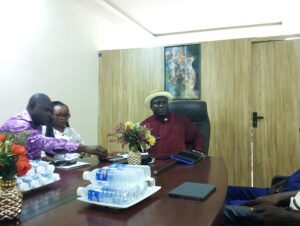
As journalists battle poor welfare, rising healthcare costs and dwindling professional support, Dr Wisdom Ikuli calls for stronger government-media partnership and promises a more conducive working environment
By Peace Osigwe
Background: Every day, across Bayelsa State, journalists leave their homes in search of stories, armed with notebooks, cameras, recording devices and mobile phones. Some travel long distances to cover government activities, community disputes, accidents, political developments and other events that shape public life.
They chase breaking news, attend late-night assignments, work through weekends and remain available even when most people have retired for the day.
But behind the headlines, photographs and news reports is a less visible struggle: the struggle to survive in a profession where financial insecurity, inadequate welfare and limited access to healthcare have become major concerns.
For many journalists in Bayelsa, the demand to keep the public informed comes with personal sacrifices that are rarely acknowledged. Some struggle to pay their medical bills, meet family responsibilities and maintain the basic tools required to practise their profession.
More painfully, the deaths of several journalists in the state over the years have raised concerns about the consequences of poor welfare and the inability of some practitioners to access timely medical attention.
Some reportedly succumbed to illnesses that might have been treated if they had the financial means to seek adequate healthcare.
It is against this background that the recent interaction between journalists and Dr Wisdom Ikuli, Technical Adviser to Governor Douye Diri on Media and Public Affairs, assumes particular significance.
Rather than merely discussing the achievements of the present administration, the engagement brought to the fore an important question: who takes care of the people whose responsibility it is to inform society?
A Profession That Never Sleeps
Journalism is a demanding profession. Unlike many other occupations, it does not operate strictly within official working hours.
A journalist may receive an assignment in the morning, attend an event in the afternoon, write a report late at night and still be expected to respond to breaking news in the early hours of the following morning.
Phones must remain switched on. Transport must be arranged. Data must be purchased. Equipment must be maintained, while food and other basic expenses must be covered.
Yet, for many practitioners, these responsibilities are not matched by commensurate financial rewards.
During the interaction, Ikuli acknowledged the difficult conditions under which journalists operate, noting that they work around the clock and are constantly on the move.
He also drew attention to the deaths of journalists in Bayelsa, expressing concern that some had lost their lives because they could not afford medical treatment.
“The number of journalists who are dying in Bayelsa are too many. And sometimes they die as a result of just small illness. Because of lack of money, they die,” he said.
The statement exposed a painful reality about the profession and reinforced calls for a functional health insurance arrangement for journalists in the state.
For a profession that plays a central role in public accountability, governance and democratic development, the inability of practitioners to access basic medical care presents a serious welfare challenge.
When Medical Bills Become a Matter of Life and Death
One of the major issues raised during the engagement was the need for a healthcare scheme for journalists, particularly veteran practitioners who have spent years serving the public.
Ikuli proposed exploring a partnership with healthcare providers to ensure that journalists could undergo basic medical examinations, check their vital signs and receive medical attention when necessary.
He suggested that the arrangement could cover journalists, especially older practitioners, through an organised healthcare programme.
“What is wrong if we partner maybe with Family Care or one of these hospitals that any journalist, especially the veterans, the elder ones and all of them, go there, your vitals, the basic things and all of that?” he asked.
He added that the government could support the arrangement through an agreed payment structure.
The proposal is significant because many journalists, particularly those working for smaller media organisations, do not enjoy the medical benefits available to workers in more established institutions.
For some, a visit to the hospital is postponed until an illness becomes serious because the money required for consultation, laboratory tests and medication is simply unavailable.
A properly structured health insurance scheme would therefore represent more than a welfare gesture. It could help prevent avoidable deaths and give practitioners some measure of security.
However, journalists will expect the proposal to move beyond discussions to a clearly defined programme with an implementation timeline, funding arrangements and transparent eligibility criteria.
The Forgotten Economic Burden of Journalism
Beyond healthcare, journalists also face the financial burden of practising their profession.
From transportation to data subscriptions, feeding, accommodation during assignments and equipment maintenance, the cost of gathering and disseminating news continues to rise.
Ikuli recalled that previous administrations, including those of former Governor Diepreye Alamieyeseigha, operated a monthly financial support arrangement for accredited journalists.
He said the complaints he had received included calls for the restoration of such assistance.
According to him, even a monthly stipend distributed to accredited practitioners could make a difference in addressing some of the difficulties journalists encounter.
“Every day you are on the road. Journalists don’t sleep. In the midnight, you are writing. As you are writing, your phone is on,” he said.
He noted that journalists could not simply switch off their phones because emergencies and breaking news could occur at any time.
While the suggestion of financial assistance may generate debate about the appropriate relationship between government and the media, the underlying concern about journalists’ economic conditions deserves serious attention.
Any support programme must, however, be transparent, professionally administered and structured in a way that does not compromise editorial independence.
Journalists must be able to hold government accountable without fear that asking difficult questions could jeopardise their welfare.
Traditional Journalism and the Rise of Social Media Platforms
Another challenge confronting the journalism profession in Bayelsa is the changing media landscape.
The growing influence of social media has created opportunities for information dissemination, but it has also raised questions about professionalism, verification and the distinction between trained journalism and casual online publishing.
There are concerns among traditional media practitioners that government communication increasingly relies on social media platforms and online content creators, sometimes at the expense of established media organisations and trained journalists.
Government House events are sometimes reported through selected platforms, with stories circulated online without adequate opportunities for other journalists to witness proceedings, ask questions or obtain firsthand information.
This has created a sense of exclusion among some practitioners who believe that professional journalists should have fair access to government activities and official information.
The issue is not whether social media should be used. It has become an important communication tool in modern society.
Rather, the concern is that social media communication should complement, not replace, professional journalism.
Trained journalists are expected to apply verification, balance, accuracy, fairness and accountability in their reporting. These standards remain essential, particularly when public institutions communicate policies and decisions that affect millions of citizens.
A healthy media-government relationship must therefore recognise the contributions of traditional newspapers, radio and television stations alongside digital platforms.
The Unfinished Business of Government-Media Relations
During the interaction, Ikuli admitted that there might be gaps in the relationship between the Bayelsa State Government and journalists, particularly regarding motivation and welfare.
He maintained that the governor values the media and that the government wants a stronger partnership with practitioners.
He also rejected the suggestion that journalists who raise concerns about inadequate information or poor collaboration should automatically be regarded as antagonists.
According to him, asking questions and expressing reservations are essential components of democracy.
“I don’t see any journalist in Bayelsa that is being antagonistic. But people in democracy, one of the ingredients of democracy is that people must ask questions. People must talk,” he said.
The statement was an important acknowledgement that constructive criticism should not be confused with hostility.
A government that welcomes professional journalism must also be prepared to answer difficult questions, provide timely information and create equal opportunities for media organisations to cover its activities.
The relationship cannot be built solely around the expectation that journalists should promote government achievements. It must also accommodate scrutiny, investigation and the publication of issues that require official attention.
A Working Space and Free Internet for Journalists
As part of efforts to improve engagement, Ikuli announced plans to make his office available to journalists who need a quiet environment to write, conduct research and hold informal meetings.
He also promised to provide free Wi-Fi and other facilities to make the environment more convenient for media practitioners.
He described the office as a meeting point where journalists could gather, interact and undertake professional assignments.
“This is a place where, from time to time, we will gather as a family. If you want to have some private time to write, this place is always quiet. Just come here, identify yourself to my secretary, sit down and do your work,” he said.
He added that arrangements were being made to provide free internet services.
The gesture, if fully implemented, could offer some relief to journalists who often spend considerable amounts on internet subscriptions and struggle to find suitable working spaces.
However, practitioners will expect the proposed facilities to be accessible, properly equipped and sustained beyond the initial announcement.
Beyond Press Conferences: The Need to See Government Projects Firsthand
Ikuli also addressed concerns about the communication of government projects, arguing that some of the achievements of the Diri administration were underreported.
He attributed this partly to what he described as an inadequate relationship between the government and journalists.
In defending the administration’s record, he highlighted investments in road construction, bridges, electricity restoration, education, sports, aviation and the opening up of previously isolated riverine communities.
He maintained that Bayelsa’s difficult terrain had historically restricted development, but argued that the present administration had made considerable progress in overcoming those challenges.
According to him, the state, which was previously about 75 per cent riverine in terms of accessibility, had witnessed significant improvements in road connectivity, with about 75 per cent now accessible by road.
He cited projects including the Nembe-Brass Road, Angiama-Oporoma road and bridge infrastructure, as well as the Ekeremor-Agge Road.
He also referenced the 630-metre Angiama-Oporoma Bridge, describing it as a major engineering achievement by the state government.
On electricity, he recalled that the collapse and vandalisation of 19 transmission towers had plunged the state into darkness, explaining that the facilities belonged to the Transmission Company of Nigeria.
He said the state government had provided logistical and financial support to facilitate restoration efforts despite the infrastructure being under federal responsibility.
To enable journalists to independently assess the projects, Ikuli offered to organise visits to project sites using government vehicles, with feeding and transportation arrangements provided.
The offer could provide an opportunity for journalists to verify government claims, assess the actual state of projects and report their findings to the public.
Such visits would be most valuable when journalists are allowed to make independent observations, ask questions and report both progress and shortcomings.
Journalism Needs More Than Appreciation
Perhaps the most important lesson from the interaction is that appreciation of journalists must translate into practical welfare policies.
Journalists need more than commendations at public functions. They need access to healthcare, fair remuneration, professional training, security during assignments and an environment that allows them to perform their duties without unnecessary obstacles.
They also need a government that recognises the difference between public relations and journalism.
While government has a legitimate responsibility to communicate its achievements, the media has an equally important responsibility to report facts, scrutinise policies and give citizens the information they need to make informed decisions.
Ikuli described his preferred approach to media engagement as the CAC principle: commendation, appreciation and constructive criticism.
He urged journalists to acknowledge genuine achievements while offering constructive criticism where necessary.
His call for partnership is timely, but partnership must be built on mutual respect, openness and a shared commitment to the public interest.
The Test Is in the Action
For Bayelsa journalists, the promises of a conducive working environment, free internet facilities, health insurance and improved government-media engagement represent issues that have remained important for years.
The proposed healthcare arrangement, in particular, deserves urgent attention because the loss of journalists to illnesses they could not afford to treat is a painful reminder that those who inform society are also human beings with families, personal struggles and health needs.
The profession cannot continue to celebrate its members only when they receive awards, break major stories or die and are remembered in tributes.
Their welfare must matter while they are alive.
As Bayelsa continues to pursue its development ambitions, the government must recognise that a strong media is not an inconvenience to governance but an essential partner in building an informed and accountable society.
For the journalists who spend their lives telling the stories of others, it is time their own story received the attention it deserves.
