


NDEBUMOG/ OXFARM Urge Inclusion of Women in Management of PIA 3% Host Community Funds
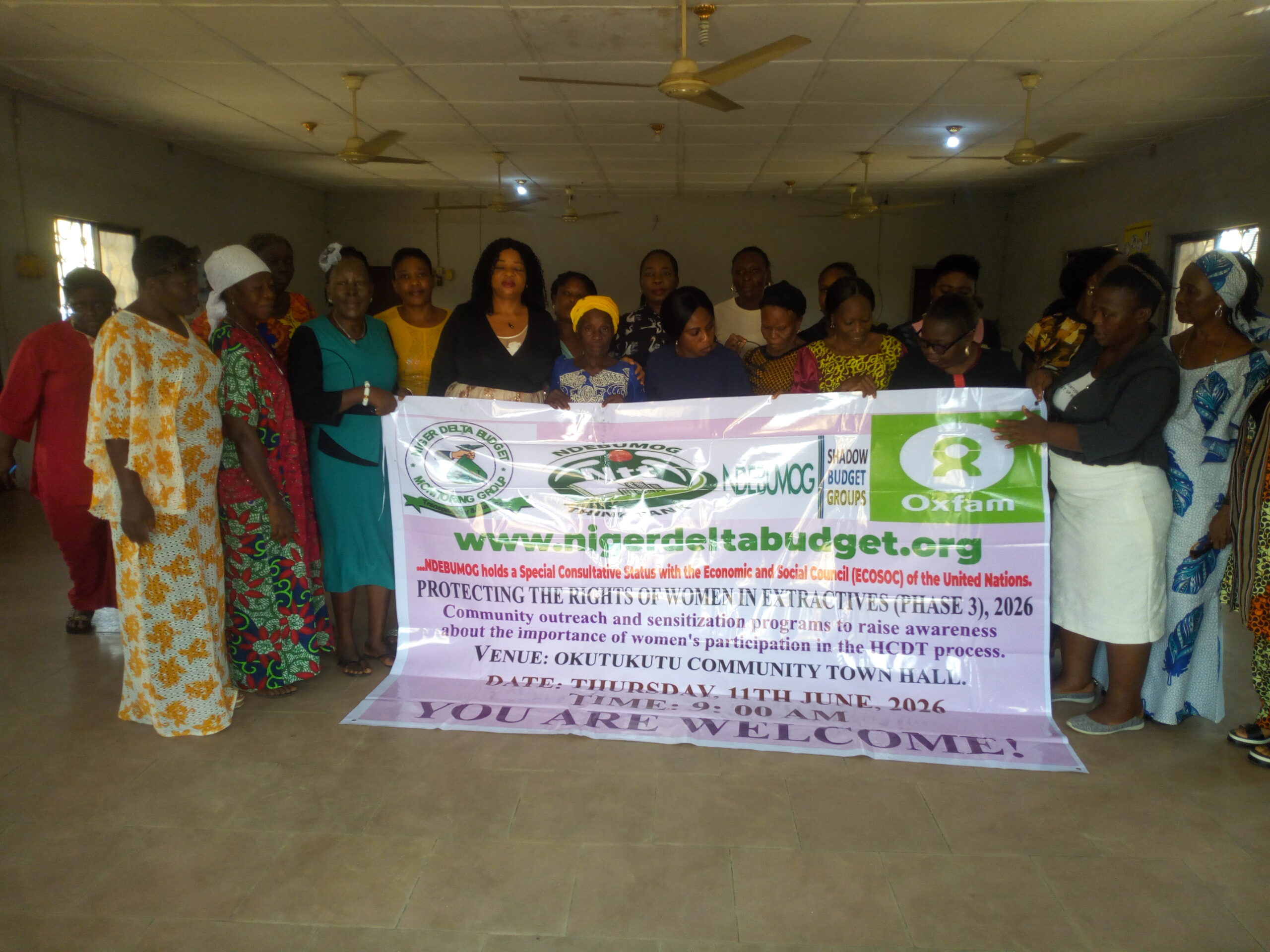
A group, the Niger Delta Budget Monitoring Group (NDEBUMOG) in partnership with OXFARM have called on stakeholders involved in the management of the three percent Host Community Development Trust (HCDT) funds under the Petroleum Industry Act (PIA) to ensure the inclusion of women in decision-making processes.
Recall that Section 240(2) of the Petroleum Industry Act mandates oil companies, known as settlors, operating in the Niger Delta region to contribute three percent of their annual operating expenditure to host communities through the Host Community Development Trust (HCDT).
However, NDEBUMOG/OXFARM, observed that many of the trusts established under the Act have not adequately included women in their management structures, which comprise the Board of Trustees, Advisory Committee, and Management Committee.
Speaking during a stakeholders’ sensitization meeting for women on the implementation of the PIA, the Executive Director and Chief Executive Officer of NDEBUMOG, Mr. George-Hill Anthony, urged women to engage more closely with the boards and managers of the trust funds, stressing that the benefits are meant for all members of host communities, not just men.
According to him, many people are unaware that the law provides direct benefits to host communities through the Host Community Development Trusts.
“If people do not ask questions or have the right information, they will not know what is happening. We do not want only men to be in charge of making decisions concerning these funds.
“We want gender equity. We want our mothers, sisters and daughters to be consulted, participate in decision-making and also benefit from the funds,” he said.
Anthony noted that some communities have been unable to access the funds due to litigation, bureaucratic bottlenecks and other administrative challenges.
He explained that where there are no legal disputes, communities are expected to identify and nominate projects for implementation, after which funds are released.
He encouraged women to seek information from community leaders and demand accountability regarding how the funds are being utilized, how projects are selected and who is involved in making decisions.
“We want women to have a voice and be fully involved in the process. They must know what is happening in their communities and ensure that they are not sidelined,” he added.
Earlier, the Chairperson of the Bayelsa Women Economic Inclusion Committee on the Petroleum Industry Act, Princess Elizabeth Egbe, urged women to actively position themselves for participation in the management and implementation of PIA-related programmes.
She stressed the need for women to build their capacity and acquire the necessary knowledge and skills to effectively engage in the administration of the funds.
“It is important for women to be involved in the implementation of the PIA. We should not wait to be invited before participating. We must build our capacity and ensure our voices are heard in matters that affect our communities,” she said.
Princess Egbe lamented the environmental and health challenges faced by women in oil-producing communities, including pollution-related diseases, and argued that women deserve a greater role in decisions affecting their welfare and development.
Also speaking, one of the participants emphasized the vital role women play in community development, noting that their inclusion in economic and leadership activities would contribute significantly to family and community growth.
Another participant, Karinagbo Benibo, described the sensitization programme as a wake-up call for women across the state and appealed for sustained awareness campaigns and educational programmes to strengthen women’s participation in PIA implementation.
