


Bille Gas Spill: Reps Fault Stakeholders’ Absence, Demand Urgent Remediatio
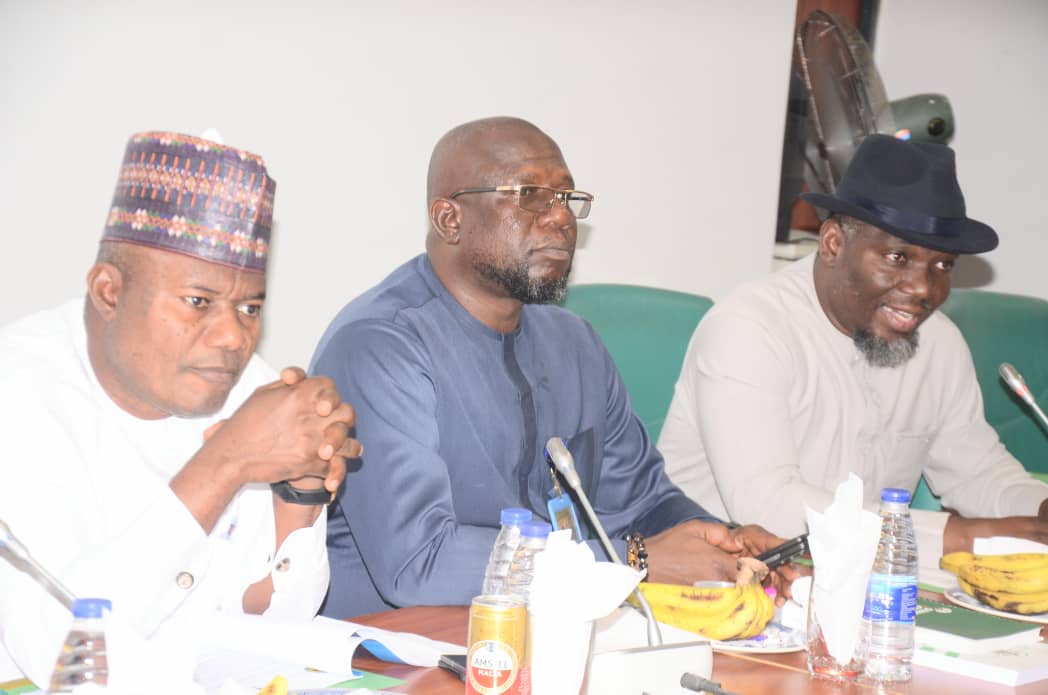
The House of Representatives Committee on the South-South Development Commission (SSDC) has criticised the absence of the Rivers State Government, leaders of the affected Bille community and other key stakeholders from its ongoing investigation into the persistent gas seepage in Rivers State.
The committee also expressed concern over the continued environmental and humanitarian impact of the incident, nearly one year after it was first reported.
Chairman of the committee, Hon. Julius Pondi, made the remarks on Thursday at the National Assembly while questioning officials of the National Oil Spill Detection and Response Agency (NOSDRA) and the Nigerian Upstream Petroleum Regulatory Commission (NUPRC) over the delayed response, conflicting regulatory accounts and the prolonged suffering of residents.
Pondi said the investigation was intended to determine the cause of the gas emissions, evaluate the adequacy of emergency response efforts and ensure justice for the affected community.
“The committee approaches this engagement with an open mind. Our objective is neither to prejudge any individual or institution nor to apportion blame without due process.
Rather, we seek to establish the facts, identify operational or regulatory shortcomings, ensure every stakeholder is held accountable and make practical recommendations that will strengthen environmental governance and improve regulatory oversight,” he said.
Presenting NOSDRA’s report, the agency’s Director of Oil Field Assessment, Cyrus Nkangwang, said it first became aware of the unusual gas emissions in October 2025 following reports from residents of Bille community.
According to him, investigations confirmed elevated levels of methane, hydrogen sulphide and carbon dioxide, contamination of groundwater, poor air quality and potential health risks.
Nkangwang told lawmakers that the gas seepage is still ongoing.
“It’s still leaking.
This incident is not the regular incident that attracts reportage. It is not from any facility. It is gas bubbling that enveloped the community. It started gradually and the community brought it to public attention before we became aware of it,” he said.
Representing the NUPRC, Mr. Jishep Olushola told the committee that the commission became directly involved after a stakeholders’ meeting convened by the Ministry of Petroleum Resources on February 4, 2026.
He said joint investigations involving Renaissance Africa Energy, Newcross Exploration and Production, NNPC Eighteen Operating Limited and host community representatives detected methane emissions across about 1.5 kilometres of the community.
Olushola explained that field inspections, laboratory analyses and geological studies found no evidence linking the emissions to existing oil and gas facilities.
“There is no relationship between the pipeline, the facility, the signature and the structure of the gas seepage,” he said.
He added that preliminary findings indicate the gas is migrating from deep underground reservoirs rather than surface infrastructure.
“This began to give an indication that this gas may be coming from deep reservoirs up to the surface. We therefore commenced detailed geological and geophysical investigations to determine the source, the trigger and the migration pathways,” he stated.
The NUPRC described the incident as unprecedented in Nigeria’s petroleum industry.
“This is novel. We have studied similar seepages around the world, but the expanse, the duration, the pressure of the bubbling and the fact that it is linked to almost every borehole and water well in Bille Community makes this a special occurrence,” the official said.
Expressing concern over the continued hardship faced by residents, Pondi questioned why the affected community had continued to suffer while investigations remained inconclusive.
“From December to February when you got involved till now, what happened to the Bille people? Whose water has been affected? Who does not have clean water to drink? Whose farmland has been devastated? What remedial measures have you taken?” he asked.
In response, the NUPRC said it had adopted a two-pronged intervention involving technical investigations and humanitarian support.
“No operator has been found culpable, but the industry decided to rally round as part of its corporate social responsibility,” the commission said.
The regulator disclosed that relief materials had been delivered to the community, while a medical outreach programme would commence within two weeks.
It also confirmed that both water and air quality in Bille had been compromised.
“The water is contaminated. Air is polluted. We visited and we felt it. You smell the odour,” the official said.
The commission explained that temporary safety measures had been introduced to vent the gas above rooftop level to reduce fire risks, but maintained that permanent remediation could only begin after the source of the seepage had been identified.
“Any attempt to conduct remediation now will be like plastering over cracks. We cannot begin remediation until we identify and stop the source,” the official added.
