


Bayelsa’s Unanswered Questions: A Publisher’s Agony Over Roads, Hospitals, Jobs and Broken Promise
Posted by Admin
“I come in peace, but I will not be silent” — Francis Dufugha challenges Diri’s administration
For Francis Dufugha, the publisher of Niger Delta Herald Newspaper, the story of Bayelsa State is no longer simply about political speeches, government projects or statistics.
It is about the ordinary Bayelsan who leaves home each morning uncertain about the condition of the road ahead, the graduate carrying a certificate without a job, the student whose education is interrupted, the patient who must travel outside the state to seek specialised medical care and families who continue to ask what became of government promises.
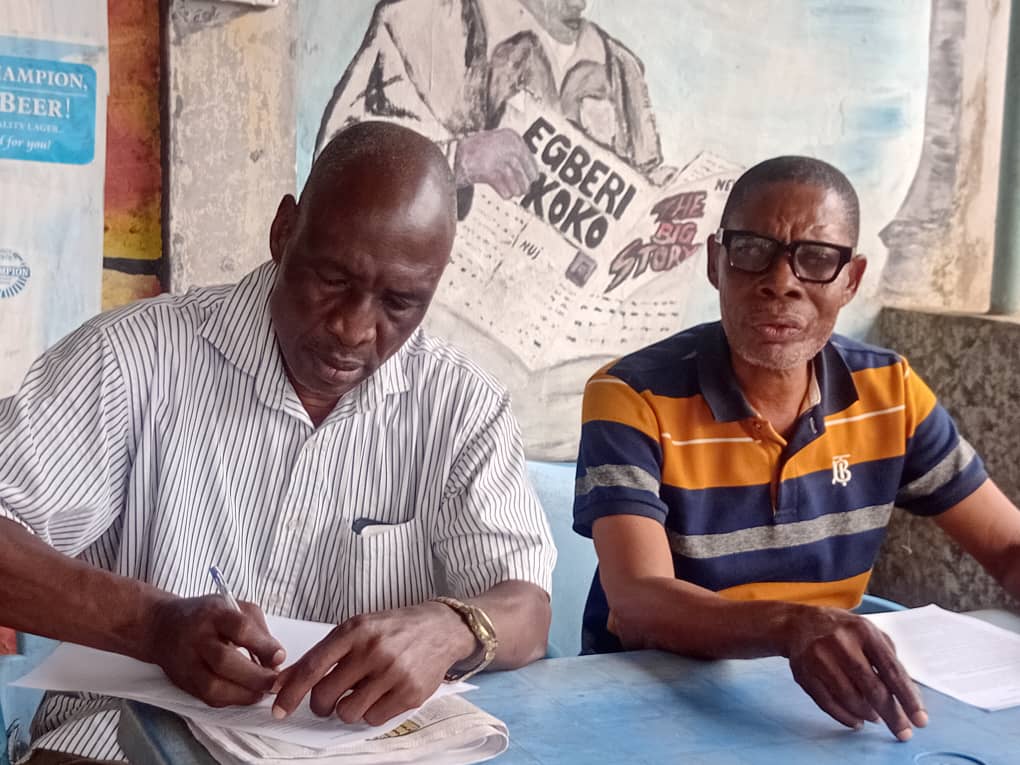
That was the human story behind Dufugha’s message on Wednesday in Yenagoa, where he addressed journalists at a press conference on what he described as the “failure of governance” in the state.
He came with a message he said was neither motivated by hatred nor personal interest.
“I come in peace,” he declared.
But he quickly added that peace, in his view, should not mean silence.
A State Rich in Revenue, Yet Citizens Still Asking Questions:
Dufugha’s central question was simple: What has the ordinary Bayelsan gained from the resources available to the state?
As an oil-producing state receiving federal allocations, derivation revenue and other interventions, he argued that Bayelsans should be seeing greater improvements in their daily lives.
Instead, he painted a picture of young graduates struggling to find employment, businesses battling to survive, farmers and fishermen facing economic difficulties, and communities still demanding better infrastructure and public services.
For him, the word “prosperity” should not remain a slogan.
“Do not tell us about prosperity. Show us prosperity,” he said, arguing that government should ultimately be judged by the quality of life of its citizens.
The Death That Raised Questions About Bayelsa’s Roads:
Perhaps the most emotional part of the publisher’s address centred on the death of Isaac Ombe, who died in a motor accident at Toru-Orua in Sagbama Local Government Area.
Dufugha urged Bayelsans not to allow the death to become another newspaper report that disappears after a few days.
For him, Ombe was not merely an accident statistic.
He was somebody’s son, brother, friend and member of a community.
His death, Dufugha argued, should force the state to confront difficult questions about road construction, maintenance, supervision and emergency medical response.
When accidents occur, he asked, how quickly can victims receive emergency care? Are the roads safe?
Are contractors properly supervised?
What happens to an injured person between the scene of an accident and a properly equipped hospital?
Behind those questions, he said, is a bigger issue—the responsibility of the government to protect human lives.
“Where Is the Cancer Centre?”
Another issue that Dufugha brought into sharp focus was cancer treatment.
He recalled the proposed cancer centre associated with the late mother of former Governor Seriake Dickson and questioned the present status of the project.
His questions were direct: Where is the centre? What happened to the project? What funds were received and spent? Who managed the money? What is the current state of the facility?
For families battling cancer, such questions are not abstract political arguments.
They are questions of life and death.
A patient who cannot receive specialised treatment locally may have to travel to Port Harcourt, Lagos, Abuja or even outside Nigeria. For a family already struggling with the financial and emotional burden of cancer, such journeys can become another battle.
Dufugha therefore called for transparency over the project and urged the government to explain its current status.
Students Caught in the Middle:
Dufugha also turned his attention to Bayelsa’s education sector, particularly the challenges confronting tertiary institutions.
He expressed concern over disruptions in academic activities and disputes involving staff unions, warning that students should not become casualties of administrative and political disagreements.
Behind every delayed academic calendar, he noted, is a young person whose plans are being pushed further into the future.
A student waiting to graduate is also waiting to enter the labour market, begin a career or support a family.
“When a student loses time, Bayelsa loses time,” was the essence of his argument.
He said a state seeking prosperity must protect its education system and give young people confidence that their future is secure.
For the Sick, Healthcare Cannot Wait
Perhaps nowhere is the impact of governance more immediate than in healthcare.
A person who falls ill cannot postpone treatment until government finishes a political argument.
Dufugha asked whether Bayelsans can confidently walk into public hospitals and expect emergency care, proper diagnosis, surgery, medicines and specialised treatment.
He questioned why citizens should continue travelling outside the state for medical services that, in his view, should be available in a modern oil-producing state.
For a sick person and the family members caring for them, the journey outside Bayelsa is more than a geographical trip.
It can mean transport costs, accommodation, hospital bills, lost income and emotional exhaustion.
Dufugha said Bayelsa should develop a healthcare system capable of keeping its citizens at home for quality treatment.
When Politics Overshadows the People:
The publisher also criticised what he described as the growing emphasis on political calculations ahead of governance.
Defections, endorsements, party meetings, appointments and 2027 permutations, he argued, may dominate political conversations, but they do not address the immediate needs of ordinary citizens.
For the mother in a rural community, the pressing issue may be access to healthcare.
For the unemployed graduate, it is a job.
For the student, it is a functioning institution.
For the trader, it is an environment in which business can survive.
For the farmer, it is access to markets.
Dufugha’s argument was that these everyday struggles should be at the heart of politics.
“Criticising the Governor Is Not Criticising Bayelsa”
A significant part of his message was directed at the relationship between the government and its critics.
Dufigha rejected the idea that criticism of Governor Douye Diri should be interpreted as hatred of Bayelsa State or the Ijaw people.
He argued that citizens, journalists and civil society organisations have a legitimate right to question those entrusted with public resources.
“Governor Diri is not Bayelsa State,” was the thrust of his argument.
To him, the governor is the current occupant of the Government House, while Bayelsa belongs to its people.
That distinction, he said, is important because governments change, political parties change and office holders leave, but the state and its people remain.
The Governor, He Says, Must Own Both Success and Failure.
Dufigha also challenged Governor Diri to accept responsibility for both the successes and shortcomings of his administration.
His argument was that leadership cannot claim credit when things go well and distance itself when things go wrong.
If institutions fail, projects are abandoned, public funds are questioned or citizens suffer, the government must provide answers.
For Dufigha, accountability is not an attack on the governor. It is part of the responsibility that comes with occupying public office.
“The Pen Is Not for Sale”
As a newspaper publisher, Dufigha reserved some of his strongest words for the media.
He promised that Niger Delta Herald would continue to report, investigate, question and scrutinise the government.
But he also said the newspaper would commend the administration whenever it performed well.
His concern, he said, was that journalism should not become political patronage.
“We will not turn our newspapers into a government bulletin,” he declared, insisting that the media must retain its independence.
For him, the responsibility of the journalist is not to make those in power comfortable but to make sure that the voices of citizens are heard.
A Challenge to Diri: “Match Words With Actions”
At the heart of Dufigha’s press conference was a challenge to Governor Diri to turn promises into measurable results.
He called for greater transparency, improved healthcare, a stronger education system, better roads, job creation and broader economic development.
He also urged the government to open its books and explain the status of projects that have generated public concern.
His message was not presented as a personal battle with the governor.
Rather, he framed it as a citizen’s demand for a government that listens.
“Bayelsa Is Bigger Than Any Governor”
As he brought his address to a close, Dufigha returned to the words with which he began: “I come in peace.”
But this time, the declaration carried a warning.
Bayelsa, he said, is bigger than Governor Diri, bigger than the PDP, bigger than the APC and bigger than every political personality.
Governors will come and go, he said, but the state will remain.
And when they are gone, history will ask what they did with the opportunity to serve.
For Dufugha, that is why he says he will continue to ask questions.
He said he will continue to criticise where he believes that the government has failed.
And he said he will continue to speak—not because he hates Governor Diri, but because, in his words, “we love Bayelsa more than we fear anybody in government.”
His final message was therefore both a declaration and a challenge:
“I come in peace. But I will not be silent.”
