


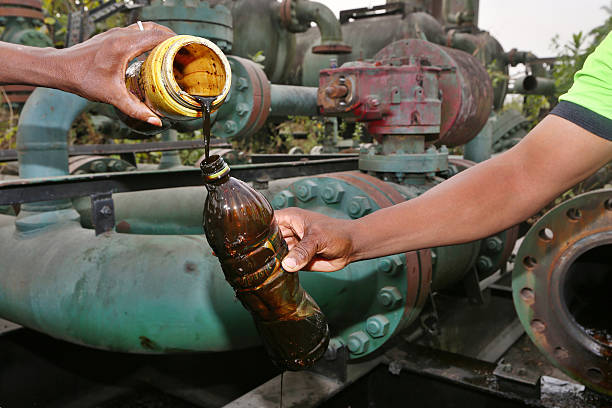
Ijaw Oil-Bearing Communities of Akwa Ibom: The Wealth Beneath the Waters and the Battle Over Recognition

By Our Correspondent
For decades, the story of Nigeria’s oil industry has been told largely through the names of states and major oil-producing communities.
Yet beneath the statistics lies a more complicated reality: oil-producing states are made up of individual local government areas and communities whose lands, creeks, rivers, swamps and offshore territories host some of the country’s most valuable petroleum resources.
Akwa Ibom State occupies a particularly important position in this story.
Known as one of Nigeria’s major oil-producing states, Akwa Ibom has several oil-bearing local government areas spread across its coastal and inland territories.
Among them are Ibeno, Eastern Obolo and Mbo, areas associated with the Ijaw population and with significant petroleum activities.
The concentration of petroleum resources in these coastal communities has made them economically important to Akwa Ibom and Nigeria.
It has also placed them at the centre of a long-running conversation about identity, boundaries, ownership, host-community benefits and the distribution of oil wealth.
For the Ijaw communities in the state, the argument goes beyond the question of how much oil is produced.
It is also about whether the communities from which petroleum resources are extracted receive adequate recognition and benefits from the wealth generated from their environment.
Akwa Ibom and Nigeria’s Oil Economy
Akwa Ibom is widely recognised as one of Nigeria’s leading oil-producing states, with petroleum activities stretching across a number of local government areas.
The state’s oil-producing LGAs commonly identified in official and industry discussions include Esit Eket, Eket, Onna, Mkpat Enin, Ikot Abasi, Ibeno, Mbo and Eastern Obolo.
This distribution is significant because it demonstrates that Akwa Ibom’s petroleum wealth is not concentrated in a single community or ethnic area.
Rather, the state’s oil economy is spread across different communities, particularly along its coastal belt.
The geography of the state is therefore central to understanding its petroleum story.
Rivers, mangrove forests, creeks, wetlands and offshore waters form part of the environment in which oil and gas exploration and production take place.
And within that coastal geography are communities with long histories of fishing, farming, trading and interaction with the waters.
The Ijaw Connection:
The Ijaw are one of the major ethnic groups of Nigeria’s Niger Delta, with communities spread across several states, including Bayelsa, Rivers, Delta, Ondo and Akwa Ibom.
In Akwa Ibom, Ijaw communities are particularly associated with Ibeno, Eastern Obolo and parts of Mbo.
These areas occupy strategically important locations along the state’s coastal frontier.
Their location has also made them important to the petroleum industry.
Ijaw leaders in Akwa Ibom have repeatedly argued that a substantial proportion of the state’s petroleum resources comes from areas inhabited by Ijaw communities.
One of the arguments frequently advanced by Ijaw representatives is that Eastern Obolo, Ibeno and Mbo are oil-producing local government areas and therefore deserve appropriate recognition in discussions about petroleum resources, host communities and development benefits.
The argument has become particularly important because petroleum production is not merely an economic activity. In the Niger Delta, it is closely connected to land, community identity, environmental rights and political representation.
Ibeno: A Major Centre of Petroleum Activity:
Among the Ijaw areas of Akwa Ibom, Ibeno occupies a particularly prominent position in the state’s oil story.
The coastal local government is situated on the Atlantic coastline and has for many years been associated with major petroleum operations.
Ibeno has hosted oil industry activities involving major international and Nigerian petroleum companies, and its waters and surrounding territory have been connected with some of the state’s most important oil assets.
The presence of the petroleum industry has brought employment opportunities, business activities and infrastructure projects, but it has also generated concerns over environmental degradation, pollution, compensation and community development.
For residents, the paradox is familiar across the Niger Delta: communities can sit beside enormous natural wealth while significant portions of their populations continue to face challenges involving roads, electricity, potable water, healthcare, education and employment.
That contradiction has remained one of the defining issues in the politics of oil-producing communities.
Eastern Obolo and the Offshore Petroleum Frontier:
If Ibeno represents one of the most visible faces of oil production in Akwa Ibom, Eastern Obolo represents another important part of the state’s petroleum frontier.
The local government is a predominantly coastal area with extensive waterways and proximity to offshore petroleum operations.
Various oil assets associated with the area have involved companies including Seplat Energy, TotalEnergies and Sterling Oil, among others.
The significance of Eastern Obolo lies not only in the number of petroleum assets associated with the area but also in its geographical position.
The offshore environment has increasingly become important to Nigeria’s petroleum industry as companies pursue production from fields located away from the traditional onshore oil-producing communities.
For Eastern Obolo residents, however, offshore production does not necessarily mean that the challenges of the host community disappear.
Questions remain about how communities connected to offshore assets should be recognised, how benefits should be distributed and how environmental impacts affecting coastal livelihoods should be addressed.
Mbo: Another Piece of the Ijaw Oil Story:
Mbo Local Government Area is another coastal area identified among Akwa Ibom’s oil-producing LGAs and is associated with Ijaw communities.
Its location gives it strategic importance in the state’s coastal economy and petroleum geography.
Mbo is also significant because its story illustrates the difficulty of drawing simple boundaries around ethnicity, local government administration and petroleum ownership in the Niger Delta.
The region’s communities have historically interacted through waterways, fishing routes, trade and kinship networks. Administrative boundaries created by governments do not always correspond neatly with traditional community boundaries.
This becomes particularly sensitive when petroleum resources are discovered or produced in areas where questions of traditional ownership and political jurisdiction overlap.
Who Owns the Oil?
At the heart of the debate is a fundamental question: When oil is found beneath a community’s land or waters, who should be regarded as the beneficiary?
Under Nigeria’s constitutional and petroleum laws, petroleum resources are vested in the Federal Government.
This means that the legal ownership of crude oil cannot simply be equated with traditional ownership of the land or with ethnic identity.
However, the fact that the Federal Government controls petroleum resources does not eliminate the question of host communities.
The Petroleum Industry Act (PIA) 2021 introduced a new framework for host-community development through the establishment of Host Communities Development Trusts.
The idea is to ensure that communities affected by petroleum operations receive a defined share of industry-related benefits and participate in development initiatives.
Consequently, the argument in oil-producing areas has increasingly shifted from simply asking, “Who owns the oil?” to also asking, “Who should benefit from the extraction of the oil, and how?”
The Politics of Local Government Boundaries:
In Akwa Ibom, the issue is complicated further by disagreements surrounding boundaries and the identification of communities and territories.
Ijaw groups have, at different times, expressed concerns about what they describe as attempts to alter or redraw administrative boundaries in ways they believe could affect their political representation and access to oil-related benefits.
The state government and other stakeholders have their own administrative and legal positions on the matter.
This makes the dispute more than an ethnic disagreement. It is also a question of cartography, governance, local government administration, petroleum jurisdiction and the distribution of resources.
A line drawn on a map can determine which local government is recognised as a host community, which institution receives development benefits and which political authority has jurisdiction over an area.
That is why boundary disputes in the Niger Delta can become emotionally and politically charged.
The Environmental Cost of Oil:
The debate over oil wealth cannot be separated from the environment.
For generations, many coastal communities in the Niger Delta have depended heavily on fishing, farming and other activities connected to the natural environment.
Oil exploration and production can place pressure on these livelihoods through oil spills, gas flaring, industrial infrastructure, dredging and other activities.
For a fishing community, the loss of a productive fishing ground can be economically devastating even when the wider state records billions of naira in petroleum revenue.
This creates one of the central contradictions of the Niger Delta: the communities closest to petroleum production can also be among those most exposed to its environmental consequences.
Ibeno, Eastern Obolo and Mbo therefore form part of a broader national conversation about how Nigeria can exploit petroleum resources while protecting the ecosystems and livelihoods of the people living in producing areas.
The Question of Host-Community Benefits:
The introduction of the PIA’s Host Communities Development Trusts was welcomed in many quarters as an attempt to address longstanding grievances.
The framework provides for contributions by oil companies to host-community development trusts.
For communities in oil-producing areas, the importance of these trusts goes beyond financial transfers.
If properly implemented, they can support projects such as schools, healthcare facilities, roads, water systems, electricity projects and economic empowerment programmes.
But implementation remains crucial.
Community leaders frequently insist that development should be transparent, participatory and based on the actual needs of residents.
They also argue that communities should not merely be consulted after decisions have been taken. They want a meaningful role in determining how development funds are spent.
Why the Ijaw Question Matters to Akwa Ibom:
The Ijaw question in Akwa Ibom is not simply an ethnic issue.
It touches on the broader question of how a multi-ethnic state manages natural resources that are unevenly distributed geographically.
Akwa Ibom is home to several ethnic groups, including Ibibio, Annang, Oro and Ijaw communities.
Its petroleum economy therefore involves multiple communities and identities.
The challenge for the state is to ensure that discussions about oil-producing areas do not become a competition in which one ethnic group is portrayed as the sole owner of the state’s wealth.
At the same time, the concerns of communities directly hosting petroleum operations cannot simply be dismissed.
The central issue should be how to create a system in which all citizens of Akwa Ibom benefit from the state’s resources while communities bearing the direct environmental and social consequences of extraction receive fair recognition and development support.
Beyond the “Who Produces More?” Argument:
It is tempting to reduce the debate to a competition over which ethnic group produces the most oil.
But petroleum production is more complicated than that.
Oil fields can cross geographical areas. Offshore assets can be located far from population centres. Production figures can change from one field and year to another.
Administrative boundaries can also differ from traditional boundaries.
For this reason, saying that the Ijaw areas “own all the oil” would oversimplify the situation.
Similarly, dismissing Ijaw oil-producing communities as insignificant would ignore their strategic role in the state’s petroleum economy.
The more accurate conclusion is that Ibeno, Eastern Obolo and Mbo constitute an important part of Akwa Ibom’s oil-producing coastal belt and are central to the state’s wider debate about petroleum resources and host-community rights.
A State Rich in Oil, but Still Facing Development Challenges:
Akwa Ibom’s petroleum wealth has helped finance public infrastructure and government programmes over the years.
Yet, as in many oil-producing parts of Nigeria, the existence of natural resources does not automatically translate into prosperity for every resident.
Communities continue to demand better roads, reliable electricity, healthcare, schools, potable water, jobs and environmental protection.
This raises a larger question for policymakers: What should an oil-producing community look like after decades of petroleum extraction?
For many residents, the answer is not simply more money.
They want sustainable development that will remain after the oil reserves decline.
The Future After Oil:
Nigeria’s petroleum industry is entering a period of transition.
The global movement towards cleaner energy, changing investment patterns and the need to diversify the Nigerian economy have increased pressure on oil-producing states to prepare for a future in which crude oil may no longer dominate government revenue.
For coastal communities such as Ibeno, Eastern Obolo and Mbo, this transition could be particularly important.
Investment in fisheries, agriculture, maritime industries, tourism, renewable energy, education and small businesses could help reduce dependence on petroleum.
The future of these communities should therefore not be defined solely by how many barrels of crude oil are extracted from their waters.
It should also be measured by whether the people living there can build sustainable livelihoods when the oil economy eventually changes.
The Larger Niger Delta Lesson:
The story of Ijaw oil-producing communities in Akwa Ibom mirrors a much larger Niger Delta experience.
For decades, the region has supplied enormous quantities of crude oil to Nigeria’s economy.
Yet questions about environmental damage, resource control, community participation, compensation and equitable development have remained unresolved.
The lesson is clear: petroleum production cannot be separated from the people and environment surrounding it.
A sustainable oil policy must therefore balance three interests — national economic development, state-level prosperity and the rights and welfare of host communities.
Conclusion:
The Wealth Beneath the Waters
Ibeno, Eastern Obolo and Mbo may not account for every barrel of oil produced in Akwa Ibom, but their importance to the state’s petroleum story cannot be ignored.
They form part of a coastal belt where oil production, community identity, traditional claims, environmental concerns and political interests intersect.
The debate over the Ijaw areas is consequently not merely about who produces the most oil.
It is about recognition.
It is about representation.
It is about the environment.
It is about the distribution of development.
And, ultimately, it is about whether communities that live closest to Nigeria’s petroleum wealth can also experience meaningful prosperity from the resources beneath their land and waters.
As Akwa Ibom looks towards the future, the challenge will be to move beyond arguments over ownership and production statistics and build a system in which the state’s diverse communities can share in its wealth while protecting the rights and livelihoods of those who host the industry.
The oil may belong to the nation under Nigerian law. But the question of what the communities receive in return for hosting the industry remains one of the most important questions in the future of Akwa Ibom’s Niger Delta.
