


The Offrumapepe Movemen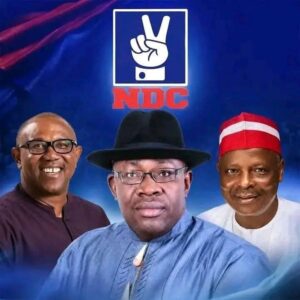
By Adesi Akpoebi PhD
Like him or not, His Excellency Henry Seriake Dickson (HSD) has evolved beyond being just another politician. He represents what I choose to describe as the Offrumapepe Movement.
Twice, he confronted the might of the Federal Government politically and prevailed—first in the 2015/2016 governorship election and again in 2019/2020 when his preferred successor emerged victorious. Those victories were not accidental; they reflected a political structure built on resilience, strategy and grassroots appeal.
I vividly recall when Dickson declared his intention to contest the Bayelsa governorship in 2011 along Isaac Boro Express Road in Yenagoa. Few believed he stood any realistic chance.
Yet, against the odds, he won. Today, despite the growing influence of the National Democratic Congress (NDC) in Nigeria’s political landscape, there are still sceptics who doubt its prospects in future elections. History, however, has shown that underestimating Dickson has often proved to be a mistake.
Many will also remember the moment on the floor of the Senate when the Senate President mockingly asked who would sign Dickson’s nomination form for the 2027 election, given the internal crisis that had engulfed the PDP, his party at the time.
That question has since become irrelevant as the political landscape has shifted significantly.
Back home in Bayelsa, some political actors had written off his future, believing his influence had waned.
The death of his close political ally, the late Deputy Governor, further deepened that perception.
Yet, it was only after his ally was laid to rest that the Offrumapepe Movement gathered momentum, culminating in the emergence of the NDC as a major opposition platform.
The credibility of the NDC has, in turn, attracted other political blocs, including the Obidient and Kwankwasiyya movements, strengthening its national outlook and broadening its appeal.
There is an old biblical saying that “a prophet is not without honour except in his own country.”
Few places illustrate this more than Ijawland. Despite the economic hardship many Nigerians attribute to President Bola Tinubu’s administration, many of his ethnic kinsmen continue to stand firmly behind him.
Whether one agrees with such loyalty or not, it demonstrates the importance of political solidarity and collective purpose.
The Offrumapepe Movement, therefore, should be seen as a collective Ijaw political project rather than the ambition of one individual.
Its supporters also believe the NDC provides an opportunity to address what they consider the political injustice suffered by Rivers State Governor Siminalayi Fubara and could reshape the state’s political direction should Dumo Lulu-Briggs emerge victorious in the 2027 governorship election.
For these reasons, there should be no room for petty political rivalries aimed at diminishing Henry Seriake Dickson’s place in contemporary Ijaw politics.
Whether one supports him or not, his influence on the region’s political evolution is difficult to ignore.
The Offrumapepe Movement has become more than a slogan; to its adherents, it is a statement of political identity, resilience and aspiration.
