


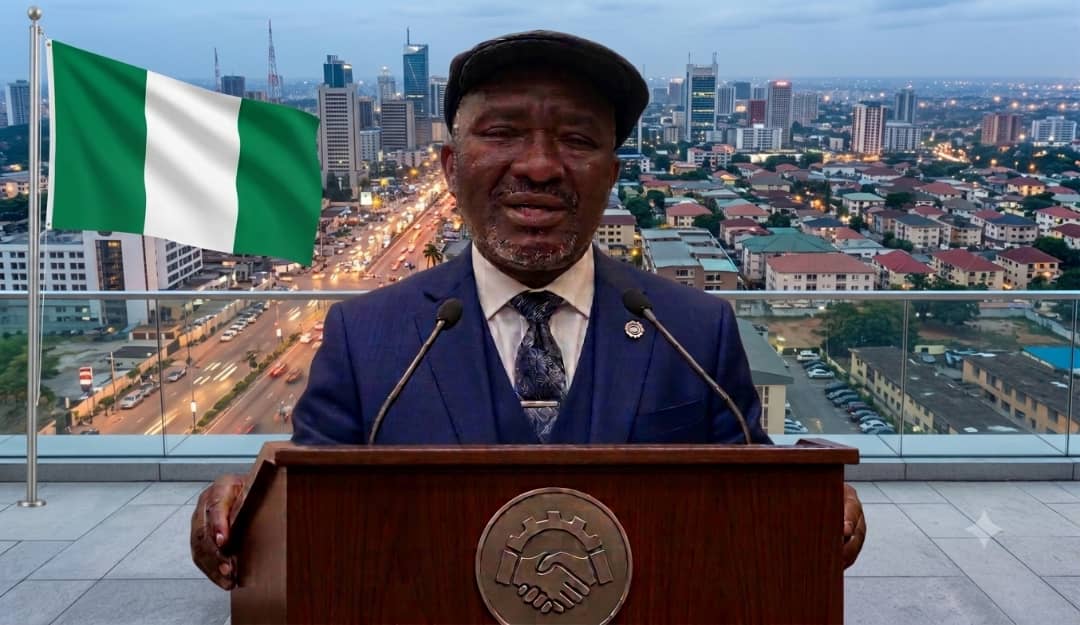
The Tyranny Of Thin Gods: When Men Decide To Reason For Others By Hon. Ofoni Daupuamo Williams
Lord Byron once wrote:
“Those who will not reason are bigots; those who cannot, are fools; and those who dare not, are slaves.”
The statement is both inspiring and instructive. It offers a powerful framework for understanding how societies can be restructured towards peaceful coexistence, justice and responsible citizenship.
Byron identified three categories. But in Nigeria today, and particularly in Bayelsa, there is arguably a fourth category that can be even more dangerous:
The Thin Gods — those who deliberately reason for others, often through exclusion.
Who Are the Thin Gods?
They are not elected by God. They are appointed by men. Yet they behave as though heaven has handed them the pen with which to write the destiny of others.
In government offices, they sign files and make decisions without recourse to the people those decisions will affect.
In political party meetings, they select candidates in back rooms and call it “party supremacy.”
In communities, they sit with a handful of people and make decisions affecting thousands.
In families, they silence younger voices with the familiar excuse: “We know better.”
They do not argue. They do not persuade. They exclude.
Then they tell you, “This is for your own good.”
Why Are They Dangerous?
A bigot can be debated. A fool can be taught. A slave can be encouraged to stand.
But a Thin God does not necessarily want debate, teaching or courage. He wants control.
Exclusion is the weapon.
When you are not in the room, your interests may not be considered in the decision. When your voice is not heard, your pain may not be counted.
This is how projects fail.
This is how young people are sidelined.
This is how women’s voices are muted.
This is how communities are short-changed.
And this is how societies gradually lose the culture of participation that sustains democracy.
The Byron Antidote:
Byron’s famous statement is ultimately a call to courage, intellectual independence and responsible citizenship. To break the spell of the Thin Gods, we must do three things:
Dare to reason. Ask questions. Demand inclusion. Insist on being part of decisions that affect your life and community.
Refuse to be fools.
Educate yourself. Read. Understand public policy, budgets, laws and your rights. An informed citizen is far more difficult to manipulate.
Listen, even when you disagree. Democracy is dialogue, not decree. It thrives when different perspectives are allowed to compete peacefully.
Beyond these, there is a need for well-thought-out and carefully tailored plans for the equitable redistribution of our commonwealth. Such policies must be designed to promote justice, improve welfare and stimulate measurable development.
There must also be a renewed commitment to accountability and transparency in the pursuit of our collective aspirations and desires.
Those entrusted with public responsibility must understand that leadership is not ownership. Public office is not a personal inheritance.
Authority is a trust.
To the Thin Gods
Power is borrowed.
The people who put you there can also take you out.
History is filled with men who once appeared invincible but became ordinary citizens overnight. No position, title or influence is permanent.
Major Jasper Boro refused to be a slave. He reasoned, he challenged the status quo and he acted. Till today, his name remains etched in the history of the Niger Delta.
His example reminds us that courage, conviction and the willingness to stand for justice can outlive political power.
Conclusion:
Nigeria and Bayelsa will not grow through the wisdom of a few Thin Gods.
We will grow through contributory participation — when every man and woman is allowed to reason, to speak and, to a meaningful extent, to participate in determining their own future.
Leadership has its layers, and societies require structures of authority. But layers of leadership must never become instruments of discrimination, exclusion or the denial of legitimate participation in a democratic setting.
A democracy cannot be sustained by people who believe they alone possess the wisdom to decide for everyone else.
The day we stop allowing others to reason for us is the day Nigeria begins to reason for herself.
