


By Peace Osigwe
For decades, life in many of Bayelsa State’s oil-producing communities has been defined by a strange contradiction: communities sitting on crude oil and other natural resources, yet struggling with poor roads, limited healthcare, inadequate water supply, unemployment and difficult access to basic services.
For residents of the coastal communities of Koluama, Ezetu, Foropa, Fish Town, Ekeni, Sangana and Opu-Okumbiri/Okumbiribeleu/Oginibiri, the debate over oil wealth is therefore not an abstract conversation.
It is about whether a road can finally connect a community to the outside world.
It is about whether a pregnant woman can reach medical care on time.
It is about whether children can learn in a decent school, whether young people can find a livelihood and whether the money generated from activities in their environment can translate into something they can actually touch and use.
That is the promise behind the Host Community Development Trusts established under the Petroleum Industry Act (PIA).
And in the KEFFESO communities, residents say they are beginning to see some of that promise take shape.
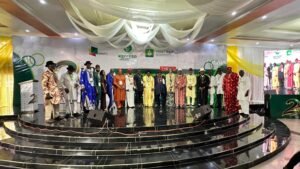
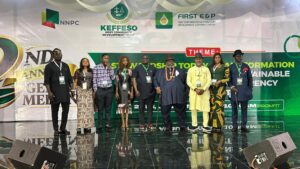
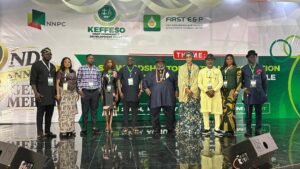
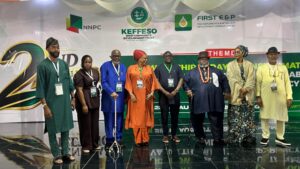
At the 2025 Annual General Meeting of the KEFFESO Host Communities Development Trust (KHCDT), held in Yenagoa, the Trust reported a 78 per cent execution rate across its project portfolio, alongside investments in roads, water, education, healthcare, skills development and social inclusion.
But perhaps the more important story lies beyond the percentage.
It lies in what those projects mean to the people who live in the communities.
‘They have shown us they can deliver’
For Ayibatonye Koki, a resident of Sangana, the biggest evidence of the Trust’s work is not contained in an annual report. It is visible in the community.
“So far, I can attest that the Trust is doing well. We have faith in them. They have shown us the capacity to deliver from records,” he said.
Koki pointed to road projects completed in Sangana and the regular medical outreaches organised for residents.
As he spoke, preparations were underway for another medical outreach in the community.
For people living in remote coastal settlements, such interventions can mean more than the provision of free drugs or eyeglasses.
They can mean an opportunity to see a doctor without travelling long distances or spending money that many families do not have.
According to the Trust, its partner, FIRST Exploration & Petroleum Development Company Limited (FIRST E&P), reached 3,871 beneficiaries through its 2025 medical outreach and distributed 916 pairs of eyeglasses.
The figures are significant, but the human value is perhaps easier to understand through the experience of the beneficiary who can finally receive treatment without worrying about the cost.
A road can mean much more than a road
Road construction is another area where residents say the difference can be felt directly.
Koki said two internal roads had been completed in Sangana, while another resident, Noel Ikonikumo, also pointed to road construction among the visible interventions.
The Trust itself reported that four legacy concrete-road projects inherited from the former Global Memorandum of Understanding (GMoU) framework were completed during the year.
Five solar-powered industrial boreholes were also delivered, while water facilities in four communities were maintained.
For communities surrounded by water but faced with difficulties accessing clean and reliable water, a functional water facility carries a significance that cannot easily be captured by a project description.
The same applies to a road.
A completed road can reduce the difficulty of moving people, farm produce and goods. It can make access to healthcare easier. It can also connect communities to opportunities that previously seemed distant.
The PIA experiment
The KEFFESO experience is also being watched closely because the Trust represents one of the early practical applications of the host community provisions of the PIA.
Under the Act, oil and gas companies are required to contribute three per cent of their annual operating expenditure to the development of their host communities through Host Community Development Trusts.
The policy was designed to provide a more structured mechanism for community development, replacing the uncertainty associated with depending solely on ad hoc corporate social responsibility projects.
For KEFFESO communities, the new system represents both an opportunity and a test.
Koki described the Trust as being at the forefront of the implementation of the PIA’s host community development framework.
But another community voice, Ikonikumo, offered a more cautious perspective.
While acknowledging that projects were being delivered, he said residents were still trying to understand the difference between the previous GMoU arrangement and the new PIA system.
His comments highlight an important reality: building projects is only one part of the equation.
Communities also want to understand how decisions are made, what they are entitled to, when projects will come and how they can participate in determining priorities.
Beyond roads and boreholes
The Trust’s 2025 report suggests that its work is gradually extending beyond physical infrastructure.
Chairman of the Board of Trustees, HRH Moses Theophilus, said 258 education, health and water-service personnel were supported during the year.
The Trust also profiled 229 persons living with disabilities to help guide more inclusive programmes and enabled 40 young people to access opportunities under the Federal Government’s technical and vocational education initiative.
Scholarship, employment and contractor-registration opportunities were also facilitated through relationships with industry stakeholders.
These interventions point to a broader question confronting host community development: should the success of the PIA be measured by the number of roads, buildings and boreholes delivered, or by whether those investments eventually help communities become less dependent on oil companies?
The KEFFESO leadership appears to recognise the latter challenge.
“The measure of success must go beyond the number of projects commissioned,” Theophilus told the AGM.
He said the Trust must determine whether its investments remain functional, improve lives, command community ownership and can be sustained for future generations.
The money must also be managed
Behind every road, borehole or health programme is a financial system that must be trusted.
That was a major part of the message delivered at the AGM.
Board Secretary, Dr Matthew Sele-Epri, said the Trust strengthened its financial and governance structures during 2025.
Forvis Mazars was appointed as an external auditor, while the Trust completed its registration with the Financial Reporting Council of Nigeria.
Vetiva Capital and FBNQuest were also appointed to manage approved naira and dollar reserve investments under the oversight of the Finance, Accounts, Audit and Risk Management Committee and the Board.
These developments may not generate the same excitement as the commissioning of a road, but they address one of the biggest questions surrounding community development funds: how can communities be assured that money meant for development is properly managed?
For KEFFESO, the answer being presented is stronger institutional governance, auditing, professional fund management and greater oversight.
The uncomfortable side of the story
Yet the AGM was not simply a celebration of achievements.
The Trust’s leadership acknowledged that there were still significant gaps.
Procurement took longer than expected. Contractor performance and health, safety and environmental compliance required stronger oversight.
Information flow between the various organs of the Trust needed improvement, while community expectations had to be managed through earlier and more consistent engagement.
That admission may be as important as the 78 per cent execution figure.
Host communities have historically complained about promises that do not translate into completed projects.
A project that is abandoned, poorly constructed or becomes unusable after commissioning does little to change the lives of residents.
The KEFFESO leadership therefore says it intends to strengthen monitoring, clarify institutional responsibilities, improve contractor accountability, digitise processes and develop sustainability plans for its projects.
A bigger test for the Niger Delta
Across the Niger Delta, the implementation of the PIA’s Host Community Development Trust model is creating a new chapter in the relationship between oil-producing communities and the petroleum industry.
Official disclosures from the Nigerian Upstream Petroleum Regulatory Commission have put the scale of HCDT funding in the hundreds of billions of naira, alongside a substantial dollar component, with more than 160 incorporated trusts and over 1,100 community projects reported across the country.
The numbers are large.
But for a woman in a remote coastal community, the real measure is much smaller and more personal.
Can she get clean water?
Can her child attend a functioning school?
Can she reach a health facility?
Can a young man acquire a skill instead of depending entirely on oil-related patronage?
Can a community road remain usable years after it is commissioned?
And, perhaps most importantly, can residents see themselves not merely as recipients of projects, but as participants in decisions about the resources generated from their environment?
Those are the questions that will ultimately determine how the PIA’s host community experiment is judged.
From stewardship to transformation
At the KEFFESO AGM, the theme was “Stewardship Today, Transformation Tomorrow: Delivering Sustainable Value Through Transparency and Impact.”
The phrase captures the challenge confronting the Trust.
Stewardship is about managing the money and institutions responsibly today.
Transformation is about what remains in the communities tomorrow.
For the people of the 11 KEFFESO communities, the difference between the two is visible in simple things: a road that no longer becomes impassable, a borehole that produces water, a health outreach that brings treatment closer, a scholarship that keeps a young person in school, or a skills opportunity that gives someone a pathway to earn a living.
That is where the story of the PIA ultimately leaves the boardroom and enters the lives of ordinary people.
For KEFFESO, the 78 per cent execution figure is therefore not the end of the story.
It is a progress report.
The harder test will be whether today’s projects become tomorrow’s lasting community assets—and whether the people for whom the Trust was created continue to have a voice in determining what that tomorrow looks like.
