


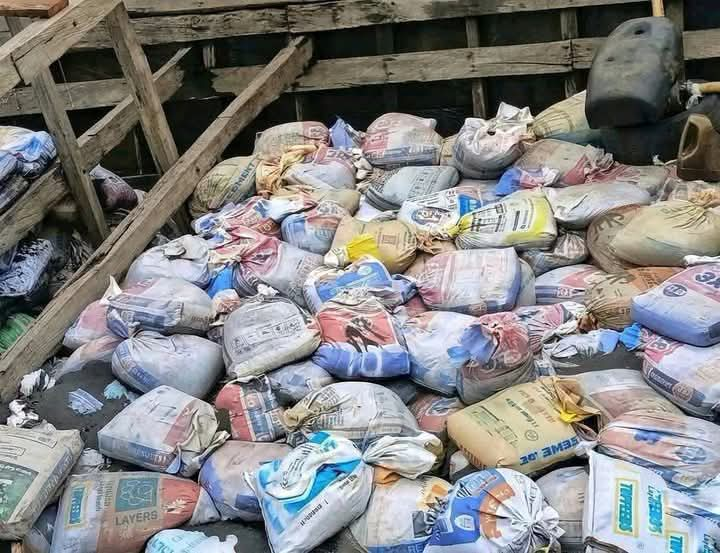
 Black Sand Rush: Bayelsa Communities Fear Another Oil-Style Environmental DisasterBy Our Correspondent
For generations, residents of Bayelsa State’s coastal communities have watched the Atlantic Ocean eat away at their ancestral lands.
Houses, farmlands and fishing grounds have gradually disappeared in some communities along the state’s coastline, leaving residents increasingly worried about what the next wave of environmental exploitation could bring.
Now, a new resource has emerged on the horizon — black sand.
And while the dark, mineral-rich sand could potentially bring jobs, investment and additional revenue to Bayelsa State, environmentalists and residents are asking a more fundamental question: will the state benefit from the resource without paying the same environmental price it has paid for decades of oil exploration?
For Morris Alagoa, an environmentalist and field officer with the Environmental Defenders Network, the answer lies in regulation.
Alagoa is calling on the Bayelsa State Government and other relevant authorities to urgently establish a clear regulatory framework for black-sand mining before commercial activities expand along the state’s coastline.
According to him, Bayelsa should not repeat what he described as the mistakes associated with the oil industry, where communities have complained for decades about environmental degradation and inadequate economic benefits from natural resources extracted from their areas.
He said the state government should ensure that communities, investors and government itself benefit from the emerging industry, while putting environmental protection at the centre of any mining arrangement.
Communities at the centre of the debate:
The concern is particularly significant for Bayelsa because of its extensive Atlantic coastline and the number of communities living along the fragile coastal belt.
Alagoa listed communities including Odioma, Sangana, Twon-Brass, Okpoma, Kulama, Foropa, Ekeni, Ezetu, Bilabiri and Amatu among those located along the coastal axis.
For people living in such communities, the coastline is more than a geographical boundary.
It is their home.
It provides fishing grounds, supports local livelihoods and connects communities that have depended on the waterways for generations.
But the coastline is also vulnerable.
Alagoa said many of the communities are already battling coastal erosion, making the prospect of poorly regulated commercial sand mining a source of concern.
His fear is that removing large quantities of sand from the coastline could alter the natural balance of the shoreline and potentially worsen erosion.
“If care is not taken,” he warned, black-sand mining could exacerbate the coastal erosion problem confronting Bayelsa communities.
That fear has given the debate a human dimension.
For a fisherman whose livelihood depends on the coastal ecosystem, environmental degradation could mean more than the loss of biodiversity. It could mean losing his fishing ground.
For a family living close to the shoreline, accelerated erosion could mean losing its home.
And for a community already struggling with poor access to infrastructure and economic opportunities, the disappearance of land could threaten its very existence.
From oil to black sand?
There is another concern hanging over the debate.
Residents of the Niger Delta have lived through the environmental consequences of oil production, and Alagoa believes the lessons from the petroleum industry should guide the development of the new resource.
He argued that Bayelsa should not allow a situation where resources are extracted from its environment while the communities that bear the environmental consequences receive little benefit.
This time, he said, government must establish the rules before the industry becomes deeply entrenched.
He cited the need to determine where mining can take place, how much sand can be removed, who can operate, how communities will benefit and what environmental safeguards must be observed.
The environmentalist also raised concerns over reports that some operators are already arriving in communities with licences purportedly issued from Abuja.
He said he could not confirm which federal ministry issued the licences, but questioned the propriety of mining activities taking place in Bayelsa without clear coordination with the state government.
The alleged presence of armed security personnel accompanying some mining operations has also added another layer to the controversy.
Alagoa said authorities should clarify who is behind the operations and whether any security escort is officially authorised.
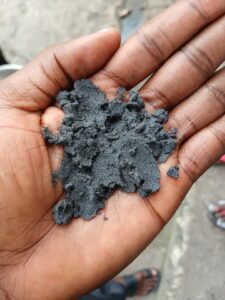
What exactly is black sand?
Unlike ordinary beach sand, black sand is typically dark and relatively dense because it can contain heavy minerals such as magnetite, ilmenite, rutile and zircon.
Some of these minerals have significant industrial value and are used in sectors ranging from steel production and ceramics to pigments and advanced manufacturing.
That economic value explains why black sand is attracting increasing attention.
For Bayelsa, however, the question is whether the state can turn that natural resource into an economic opportunity without sacrificing its coastline.
Alagoa believes it can. But he insists that exploitation must be tied to sustainable development.
Jobs or another environmental burden?
The economic argument is difficult to ignore.
Bayelsa has a large youth population and limited formal employment opportunities in many rural communities.
A properly regulated black-sand industry could potentially create
jobs in mining, transportation, processing, logistics and related services.
But Alagoa argues that Bayelsa should go beyond merely allowing companies to remove the raw material.
He wants processing facilities established within the state so that more of the economic value generated by the resource remains in Bayelsa.
That proposition raises another question: why should Bayelsa export raw black sand and later import products made from minerals extracted from its own coastline?
The argument echoes a long-standing concern in Nigeria’s oil industry — that producing regions often bear the environmental and social consequences of extraction while much of the value is realised elsewhere.
A black-sand processing plant along the state’s coastal axis, if found environmentally and economically viable, could potentially create additional employment and business opportunities.
But environmental safeguards would remain critical.
The communities want a voice
For the people living along Bayelsa’s coastline, the debate should not be left entirely to government officials and investors.
Communities that will live with the consequences of mining should have a voice in determining how the resource is exploited.
They would need answers to basic questions.
Where exactly will mining take place?
How much sand can safely be removed?
Will mining be allowed in areas already threatened by erosion?
What happens to fishing grounds?
Who monitors the operators?
How much revenue goes to government?
How much goes to host communities?
And who pays if mining damages the coastline?
These questions become even more important if reports of operators arriving with licences and security escorts are confirmed.
A resource opportunity — but at what cost?
The black-sand debate is therefore no longer simply about mining.
It is about whether Bayelsa can learn from its history.
The state has an opportunity to develop another natural resource, generate revenue, attract investment and create jobs.
But its coastal communities also have something to lose.
Alagoa believes the principle should be simple: development must meet the needs of people today without destroying the environment needed by future generations.
“The environment is not given to us,” he said in essence, stressing that people are only caretakers of the environment for generations yet unborn.
That is the central dilemma confronting Bayelsa.
Black sand may be a new economic opportunity. But for communities already fighting the Atlantic for survival, the fear is that another resource rush could turn an opportunity into another environmental crisis.
The choice of what happens next will depend largely on the regulatory framework established by government, the conduct of investors and, crucially, whether the voices of the communities on the frontline are heard before the mining expands.
