





 ‘Don’t Wait Until You’re Sick Before Going to Hospital’ — Don Tells BayelsansBy Praxw Osigwe
For many Nigerians, the hospital is often the last place they think of visiting until illness becomes unbearable.
But Dr. Eledo Benjamin, a Senior Lecturer in the Faculty of Medical Laboratory Science at the Federal University Otuoke, has challenged Bayelsans to change that attitude, urging them to make routine hospital visits and health checks part of their lifestyle.
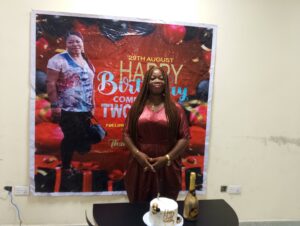
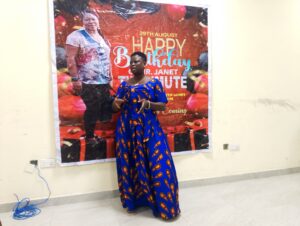
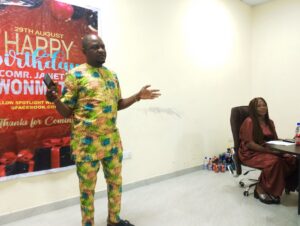
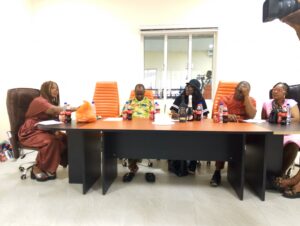
Benjamin spoke recently in Yenagoa during a birthday celebration organised for Janet Twomute, where he used the occasion to draw attention to the importance of preventive healthcare and early detection of diseases.
According to him, people should not wait until they become seriously ill or are carried to the hospital before seeking medical attention.
He said: “Nigeria is the only country where people are taken to the hospital. They don’t visit hospitals. Hospitals are meant to be visited.”
The medical laboratory scientist explained that the World Health Organisation (WHO) definition of health goes beyond merely being free from disease, stressing that physical, mental and social well-being are important components of a healthy life.
He urged members of the public to periodically check vital health parameters such as blood pressure and blood levels, saying abnormalities could serve as early warnings that something was wrong with the body.
Using haemoglobin level as an example, Benjamin said an adult’s haemoglobin level is generally expected to fall within an appropriate reference range, noting that a result below the expected range should prompt further medical assessment.
“If you check your HB and you are having 11 or 10, something should tell you that something is not right,” he said.
He advised people with abnormal results to work with healthcare professionals to identify possible causes and make necessary lifestyle or medical changes before repeating the tests.
Benjamin also explained the importance of patients being able to describe what they are experiencing when they visit a hospital.
He distinguished between signs, which can be observed, and symptoms, which are experiences reported by the patient, noting that such information helps doctors determine the appropriate investigations.
“When somebody rushes you to the hospital, something is missing. The person cannot know what you are feeling,” he said.
He therefore called on the media to intensify public enlightenment on preventive healthcare and encourage people to visit hospitals for routine checks rather than waiting for emergencies.
Recounting a personal encounter with Twomute, Benjamin said he first met her while he was on night duty at about midnight when she came to donate blood for someone she did not know.
As the head of a blood bank, he said he had encountered situations where relatives, including husbands, were reluctant to donate blood for their loved ones because of various concerns.
He recalled that Twomute’s willingness to donate blood for an unknown person made an impression on him.
“I wish her a wonderful birthday today. That’s why I left whatever I was doing to come and talk about health,” he said.
Speaking on the use of digital/ social media, the South-South Zonal Leader of the Nigeria Union of Journalists (NUJ), John Amgasse, said social media had transformed communication by allowing people to interact across geographical boundaries from the comfort of their homes.
He said the platforms could be used for business, communication, entertainment, sharing ideas and promoting cultures, noting that content created by an individual at home could reach audiences across the world.
However, Amgasse warned against excessive use of social media, saying it could also create social and family problems.
He cited situations where couples living under the same roof could become more engrossed in conversations with people in other countries than communicating with each other.
He also expressed concern over young people’s exposure to harmful online content, including drug-related material, satanic platforms and other content capable of encouraging harmful behaviour.
According to him, the spread of disinformation, including the use of artificial intelligence to manipulate or distort information, is another major challenge.
He urged members of the public to be careful about the information they consume and share online, stressing the need for moderation.
The event also featured discussions on the opportunities and dangers associated with social media.
Another speaker, Diseye Erebo of Radio Bayelsa, focused on personal hygiene, urging parents to pay greater attention to the hygiene of their children.
Erebo particularly advised mothers to consider the impact of certain beauty practices, including the type and length of artificial nails they fix, noting that poor hygiene could expose children to infections.
She urged parents to take simple hygiene practices seriously to avoid preventable illnesses and unnecessary hospital bills.
Also speaking at the event, Janet’s in-law and colleague, Janet Renner, described her as someone who constantly encouraged others to improve themselves and excel in their chosen professions.
Renner congratulated Twomute on her birthday and expressed appreciation for her contributions to those around her.
For Twomute, the birthday celebration was more than an opportunity to cut a cake and receive greetings.
She said she deliberately invited people to speak on issues that would leave her guests with useful knowledge to take home.
“I decided to bring people to come and speak to the guests so that they will go home with something meaningful,” she said.
As she celebrated another year, Twomute said her wish was for greater enjoyment, good health and the opportunity to live long enough to see her great-grandchildren.
She also expressed her aspiration to become “a good boss” someday.
