


Natufe cautions traditional rulers against endorsing Tinubu, Oborevwori…Recalls Babangida’s efforts to define their constitutional role
…Commends Makinde for urging traditional rulers to shun partisan politics
By Our Correspondent
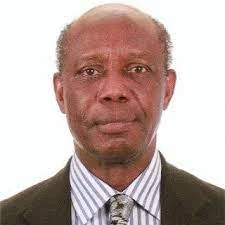
The President-General of Okpe Union, Prof. Igho Natufe, has cautioned traditional rulers against endorsing political parties and candidates, saying such endorsements could undermine the neutrality and prestige of the traditional institution.
Natufe was reacting to the recent endorsement of President Bola Tinubu and some governors by traditional rulers in parts of Southern Nigeria, including Delta State.
In a statement issued in Lagos, he described the development as unfortunate, arguing that traditional rulers should represent all members of their kingdoms irrespective of their political affiliations.
According to him, the traditional institution has struggled to define its place within Nigeria’s republican political system, particularly since the advent of colonial rule.
He recalled that traditional rulers, who wielded considerable authority in their respective kingdoms before British colonial rule, were later incorporated into the colonial administration through the system of indirect rule.
Natufe also recalled efforts by the military administration of former Head of State, General Ibrahim Babangida, to examine the role of traditional rulers in Nigeria’s political system.
He said the Political Bureau established by Babangida had recommended that traditional rulers should have no specific role in government beyond the local government level, where they were considered relevant.
According to him, the bureau questioned the suitability of hereditary status as a qualification for political authority in a democratic system.
Natufe said the issue remained unresolved, despite successive civilian and military administrations making promises to define a constitutional role for traditional rulers.
Turning to Delta State, he linked the endorsement of Governor Sheriff Francis Oborevwori by traditional rulers to the relationship between the governor and the traditional institution.
He cited Oborevwori’s description of traditional rulers as “tools of service” and “vital intermediaries between government and the people at the grassroots.”
Natufe also referred to the distribution of 60 brand-new Prado vehicles and five Land Cruisers to traditional rulers in Delta State, questioning whether there was any connection between the provision of the vehicles and the subsequent political endorsement by some traditional rulers.
He recalled that the Chairman of the Delta State Council of Traditional Rulers and Orodje of Okpe Kingdom, HRM Orhue I, had assured the governor of the traditional institution’s “unwavering support” for his administration.
Natufe asked whether the support expressed by traditional rulers represented an appropriate role for the institution in a democratic society.
He, however, praised Oyo State Governor, Seyi Makinde, for urging traditional rulers to stay away from partisan politics and maintain relationships with political actors across party lines.
According to Natufe, traditional rulers should serve as unifying figures within their kingdoms rather than campaign for particular political parties or candidates.
“A throne that campaigns for any political party or candidate automatically betrays the rest of the citizens of that given nationality,” he said.
He argued that when a traditional ruler openly campaigns for a political party or candidate, the palace could be perceived as a campaign headquarters, thereby affecting the neutrality and prestige of the throne.
“This is injurious to the reputation of the throne as the traditional ruler becomes a messenger, an errand man of the government. Prestige is lost, and the reputation of the kingdom is compromised,” he said.
