


Nigeria, Congo Explore Partnership on Oil, Gas Local Conten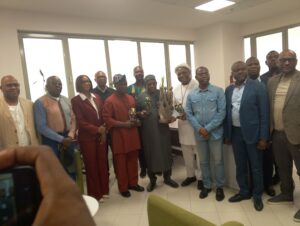
Peaxe Osigwe
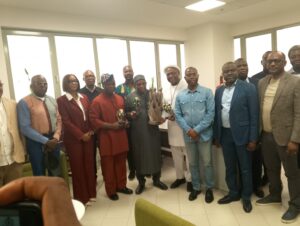
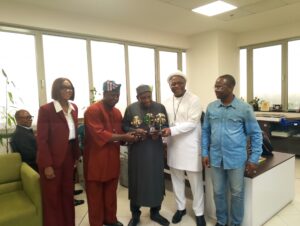
The management of Nigeria Content Department and Monitoring Board has assured the Republic of Congo Team that Nigeria was prepared to share its experience and provide the necessary support to enable it develop an effective local content framework for its oil and gas industry.
Speaking on behalf of the NCDMB Executive Secretary, Engr. Felix Omatsola Ogbe on Wednesday at the tower when a delegation from Congo who was a fact finding mission vosoted, the Director of Corporate Services, Abdumalik Halilu, explained that Congo chose Nigeria because of the country’s long history in oil and gas production and its more than 15 years of experience in implementing local content policies.
According to him, Nigeria’s experience dates back to the discovery of commercial quantities of crude oil in the 1960s, adding that the country had gradually moved from treating oil mainly as a source of government revenue to using the sector as an instrument for industrialisation and national development.
He said the shift informed the development of Nigeria’s local content programme, which eventually became law in 2010 with the enactment of the Nigerian Oil and Gas Industry Content Development Act.
He said, “Oil was discovered in the 60s in Nigeria in commercial quantity. So, we have a rich history of developing our hydrocarbon reserves, from when we focused on hydrocarbon as a commodity for revenue generation to meet our budgetary obligations and developmental needs, to when, in the early 2000s, we decided to strike a balance between oil as a source of revenue and oil as also a commodity for industrialization.
“That was the essence of the local content programme. We started as a policy, and then we evolved into legislation in 2010 through the enactment of the Nigerian Oil and Gas Industry Content Development Act.”
Halilu said the success recorded under Nigeria’s local content framework had attracted interest from other African countries seeking to develop their own indigenous capacity in the petroleum industry.
He said the Congolese delegation was being exposed to the entire oil and gas ecosystem, including the regulatory framework created under the Petroleum Industry Act (PIA), as well as the roles of key institutions such as the Nigerian Upstream Petroleum Regulatory Commission (NUPRC) and the Petroleum Technology Development Fund (PTDF).
He explained that the NCDMB also took the delegation through its operating model, particularly the legal provisions that give first consideration to Nigerians with the requisite capacity, the board’s capacity-building programmes, its dedicated funding mechanism and its support for research and development.
According to him, Nigeria’s experience shows that local content should serve as an enabler of investment and industrial development rather than becoming a bureaucratic obstacle to investors.
“We also explained to them the role of research and development in promoting local content, and the fact that local content is an enabler; it shouldn’t be a bureaucratic layer that stifles investments,” he said.
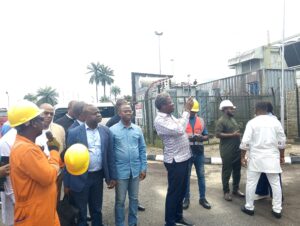
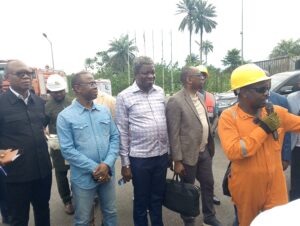
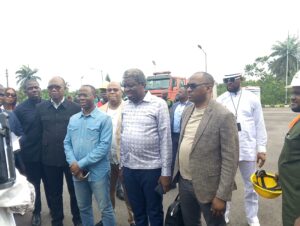
The NCDMB director added that the delegation would also visit major oil and gas service facilities and companies to obtain firsthand knowledge of how Nigeria’s local content framework has influenced investment decisions and the establishment of service centres.
He said the delegation would visit the Nigerian Oil and Gas Park in Bayelsa, the Lagos Deep Offshore Logistics Base (LADOL) Integration Yard and other strategic facilities as part of the learning process.
Halilu said the Nigerian Oil and Gas Park would provide an opportunity for the Congolese delegation to understand the incentives available to companies operating within the park.
He added that Nigeria was interested not only in helping Congo develop its local content framework but also in creating opportunities for businesses from both countries to invest in each other.
“We want to see service companies in Congo going to set up business in our Nigerian oil and gas park. That’s why we took them to the park, as we also presented to them the necessary incentive levers that we are offering to those that settle in the park.
“We also want to see Nigerian companies setting up in Brazzaville to set up their own business through joint venture partnerships under the Brazzaville Accord that was signed last year,” he said.
The NCDMB official said the planned partnership was expected to move beyond knowledge-sharing to actual commercial cooperation between companies in both countries.
He further disclosed that the Minister of State for Petroleum Resources (Oil), Sen. Heineken Lokpobiri, had also received the Congolese delegation and emphasised the importance of local content as part of the Federal Government’s development agenda.
The Democratic Republic of Congo (DRC) has expressed readiness to deepen collaboration with Nigeria in the oil and gas sector, following its ongoing study of Nigeria’s local content development model.
Responding, Frank Muzabagani Director-General of Upstream Hydrocarbon, said the Congolese delegation had been impressed with what it had seen during its visits to Nigeria, describing the experience as an important opportunity to connect the theoretical presentations received in Abuja with practical examples of local content implementation.
He said the delegation had visited the Nigerian Oil and Gas Park, a gas-to-power facility and the NCDMB headquarters in Yenagoa.
“After two days of presentation in Abuja, we started this morning side visits by visiting first your park, Capacity Development Park. After that, we visited one of the gas plants, gas-to-power plants, which is basically an example of local content because we studied that it’s operated by local companies and the gas is supplied by another local producer,” he said.
Muzabagani said the visits had enabled the delegation to see practical examples of how Nigeria was implementing local content across different segments of the oil and gas value chain.
“We are really in our thematic, which is the local content development, which is basically the aim or the purpose of our visit here,” he said.
According to him, the delegation was particularly impressed by the NCDMB headquarters and the facilities it had seen during the tour.
“We are very impressed and we are very happy about the visits. The visit was very helpful.
“Now we have a full picture connecting the presentation from day one and two to the day three, basically dedicated to the visits. We are now touching the reality of local content development in Nigeria. Congratulations to Nigeria,” he said.
Asked what lessons the delegation would take back to Congo and how soon the country would begin implementing them, Muzabagani said it was too early to make definitive pronouncements because the delegation was still studying Nigeria’s experience.
He, however, said the visit would enable Congo to identify key areas that could be adapted to its own oil and gas environment.
“I think we have a lot to take away. It’s too early for me to express exactly what we are going to implement in our country,” he said.
He explained that the delegation still had additional visits to undertake before returning to Congo, adding that the lessons gathered from the entire exercise would subsequently be reviewed.
“At the end of the visit, we will wrap up and we will certainly identify some pillars to be implemented in our country,” he said.
Muzabagani said Congo deliberately chose Nigeria as the starting point for its local content development study because of Nigeria’s internationally recognised experience.
“We chose Nigeria because Nigeria is well known as one of the champions in terms of local content.
“Over 15 years of hard work, tremendous work has been done. We know. It’s internationally recognised. So that’s why we decided to start with Nigeria,” he said.
The Congolese delegation’s visit is expected to provide a platform for both countries to strengthen cooperation in local content development, technical capacity building, investment and oil and gas services, while creating opportunities for companies from Nigeria and the Democratic Republic of Congo to participate in each other’s petroleum industry.
The visit is expected to pave the way for stronger technical and commercial relations between both countries, including opportunities for Nigerian oil and gas companies to establish businesses in the Democratic Republic of Congo and for Congolese service companies to invest in Nigeria.
The delegation however visited the NCDMB Oil and Gas Industrial Park at Emeyal and the Gas Plant at Elebele.
.The Congolese delegation’s visit is expected to strengthen cooperation between Nigeria and Congo in local content development, technical capacity building, investment and oil and gas services.
It could also create opportunities for Nigerian oil and gas companies to establish businesses in the Republic of Congo, while providing avenues for Congolese service companies to invest and operate in Nigeria’s petroleum industry.
