


Tinubu Demands Two Permanent UN Security Council Seats, Veto Power for Afric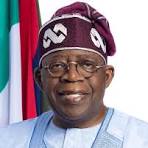
…Says 2026 world cannot remain captive to 1945 power structure
Peace Osigwe
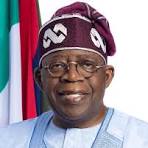
President Bola Ahmed Tinubu has called for a radical reform of the United Nations Security Council, demanding at least two permanent seats for Africa with full veto rights.
Tinubu also demanded that Africa be allocated five non-permanent seats, arguing that the continent can no longer continue to influence the UN agenda from the margins while remaining excluded from permanent membership of the Council.
The President made the demands in an address delivered by Vice President Kashim Shettima at the General Debate of the ongoing 81st Session of the United Nations General Assembly (UNGA) in New York, United States.
He said the current structure of the Security Council reflected the distribution of global power at the end of World War II and was no longer representative of the realities of 2026.
“The reform of this institution must begin with the reconstitution of the Security Council, for the world of 2026 cannot remain captive to the distribution of power in 1945.
“Africa cannot continue to fill the Council’s agenda while remaining absent from its permanent membership.”
Tinubu said Nigeria’s demand was consistent with the Ezulwini Consensus and Sirte Declaration, which call for greater African representation on the Security Council.
“Nigeria demands, in accordance with the Ezulwini Consensus and the Sirte Declaration, at least two permanent seats for Africa, with all the rights and responsibilities of permanent membership, including the veto for as long as it exists, and five non-permanent seats in total,” he said.
Calls for end to global conflicts
The President also called for an immediate end to armed conflicts around the world, urging nations to return to the principles of the UN Charter.
He warned that continuing wars and unilateral actions were undermining confidence in the multilateral system and called for renewed commitment to dialogue, international law and collective responsibility.
According to him, Nigeria remained committed to a global order in which diplomacy takes precedence over coercion and international law over arbitrary exercise of power.
“The persistence of conflict across the world recalls the purpose for which the United Nations was founded: to spare succeeding generations the devastation of war.
“We must therefore return to the founding principles of dialogue, mutual respect and collective responsibility.”
Tinubu cited Nigeria’s contributions to peacekeeping and conflict resolution across Africa, including in Liberia, Sierra Leone, Darfur, Mali and The Gambia, saying the country remained prepared to shoulder greater responsibility in promoting peace and stability.
He also highlighted Nigeria’s engagement through ECOWAS, the African Union and Gulf of Guinea partnerships, particularly in mediation, democratic governance, counter-terrorism and maritime security.
Demands overhaul of global financial system
The President further called for a fundamental restructuring of the international financial system to give developing countries, particularly African nations, a more equitable voice in global economic decision-making.
He linked the demand to Nigeria’s own economic reform programme, which he said was being driven by stronger institutions, disciplined macroeconomic management, private-sector growth and strategic public investment.
Tinubu also called for greater fairness for Africa in climate financing, while reaffirming Nigeria’s commitment to the Paris Agreement and a fair energy transition that takes into account Africa’s development needs.
He maintained that Africa should not be expected to pursue climate goals without adequate access to financing and technology needed to achieve a sustainable transition.
