


2027: Bayelsa’s Electoral Test Goes Beyond 52,225 PVC
By Pauline Onyibe, Yenagoa
As Nigeria moves towards the 2027 general elections, the political conversation in Bayelsa State is increasingly shifting from party mobilisation and campaign promises to a more fundamental question: how many eligible citizens will be able to participate effectively in choosing their leaders?
The reported figure of 52,225 Permanent Voter Cards (PVCs) awaiting collection has brought this question into sharper focus. At a stakeholders’ meeting in Yenagoa, the Independent National Electoral Commission (INEC), security agencies, political parties and civil society organisations called for peaceful campaigns, credible elections and increased voter participation.
However, beneath the appeal for peaceful conduct lies a broader electoral challenge involving voter access, political competition, geographical inequality and public confidence in the electoral process.
The figures released at the meeting suggest that these challenges may not be evenly distributed across the state’s eight local government areas.
PVCs and the politics of voter participation
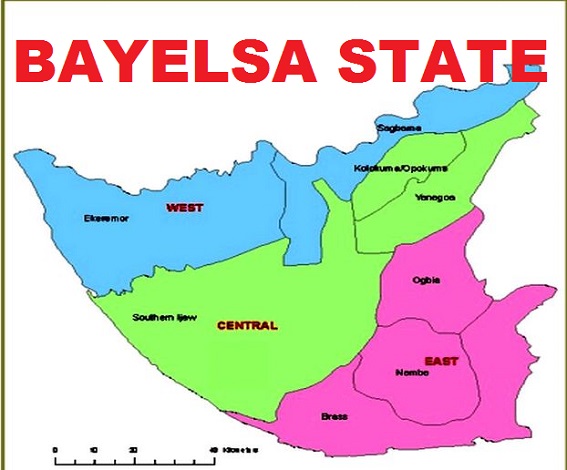
Ekeremor, with 12,023 reported uncollected PVCs, accounts for the largest share of the figure, followed by Sagbama with 10,080 and Southern Ijaw with 7,115.
Together, the three local government areas account for 29,218 cards, representing approximately 56 per cent of the reported total.
This concentration makes voter mobilisation in these areas particularly important. It also raises questions about the practical difficulties confronting residents who must travel considerable distances, sometimes by water, to access electoral services.
For a state where riverine geography affects transportation, the collection of PVCs cannot be treated merely as an administrative exercise. It is also a question of accessibility and equal opportunity to participate in the democratic process.
The challenge for INEC is to establish precisely why the cards remain uncollected and determine whether the reasons include transportation costs, inadequate information, distance to collection centres or other difficulties.
Without such an assessment, mobilisation efforts may fail to address the actual obstacles preventing eligible voters from obtaining their cards.
There is also an important distinction between registered voters who have not collected their PVCs and people who have not registered at all. Both categories matter, but they require different interventions.
The political significance of the riverine communities
The distribution of the reported figures across Bayelsa’s local government areas gives the issue an important geographical dimension.
Ekeremor, Sagbama and Southern Ijaw collectively account for more than half of the reported PVC figure. Brass and Nembe also face the logistical realities associated with riverine settlements.
These circumstances place additional responsibility on electoral administrators to ensure that residents of remote communities are not disadvantaged by the cost and difficulty of reaching collection centres.
The PDP representative’s appeal for alternative arrangements for riverine residents therefore raises a practical question about electoral administration: can voter access be improved without compromising the security, verification and accountability requirements governing PVC distribution?
INEC could address this concern through targeted public information, transparent collection schedules, accessible help desks and properly authorised arrangements that bring electoral services closer to eligible registrants where permitted by law.
Traditional rulers, community leaders, women’s organisations, youth groups and civil society organisations can also help identify residents who need assistance navigating the collection process.
Such efforts should be non-partisan. Voter education must help citizens participate freely rather than become a mechanism for directing them towards particular candidates or political parties.
Voter numbers and political competition
PVC collection figures are politically significant because elections depend not only on the strength of political parties but also on the ability of eligible citizens to exercise their franchise.
However, the number of uncollected cards in a local government area does not automatically translate into votes for or against any party. Nor does a high number of uncollected cards establish which political camp would benefit from increased collection.
The political implications depend on several factors, including the reasons for non-collection, the distribution of registered voters, the effectiveness of voter education and the willingness of eligible citizens to participate.
For political parties, the figures provide an opportunity to demonstrate their commitment to democratic participation. They can encourage supporters and other eligible citizens to collect their cards while ensuring that mobilisation is conducted peacefully and without intimidation.
For INEC, the challenge is to provide accurate, regularly updated information that allows stakeholders to understand where assistance is needed most.
Publishing comparable figures for registration, PVC production, distribution and collection would also help prevent confusion and discourage the manipulation of electoral statistics for partisan purposes.
Peaceful campaigns and the responsibility of political actors
The warning by the Bayelsa State Commissioner of Police, CP Ajao Saka Adewale, against statements and actions capable of provoking violence highlights another important dimension of the approaching elections.
Electoral peace is not secured simply because political actors attend meetings and publicly endorse non-violence. It depends on how parties conduct their campaigns, how supporters respond to political disagreements and how security agencies handle threats and complaints.
INEC Resident Electoral Commissioner Isah Shaka Ehimeakhe’s appeal for issue-based campaigns is therefore relevant to the quality of political competition in the state.
Bayelsa’s political actors have an opportunity to place development questions at the centre of public debate. These include the condition of roads and waterways, youth employment, access to healthcare and education, environmental degradation, electricity, local economic development and the use of public resources.
Candidates should be challenged to explain what they intend to do about these issues, how their proposals would be financed and how their performance would be measured.
Personal attacks, inflammatory rhetoric and the circulation of unverified claims can distract from these questions while increasing tensions among supporters.
Security agencies, for their part, must enforce the law impartially, protect lawful political activities and respond to credible threats without discrimination.
Women and young people must be more than campaign audiences
The participation of women, young people and persons with disabilities, highlighted at the stakeholders’ meeting, also deserves attention.
These groups are frequently targeted during political mobilisation, yet their participation should extend beyond attendance at rallies and support for candidates.
Women’s organisations can contribute to voter education, conflict prevention and the monitoring of barriers to participation. Young people can help counter misinformation and promote issue-based political discussion, particularly through digital platforms.
Persons with disabilities must also be able to access electoral information and polling arrangements that accommodate their needs in accordance with the law.
The contribution of organisations such as the National Council of Women Societies, Women Organized for Mentorship and Advocacy Network (WOMAN) and Do Foundation could be particularly useful if their commitments translate into sustained community-level programmes.
Such initiatives should be measured by their reach, accessibility and practical results, rather than by the number of public declarations made.
INEC’s credibility will depend on logistics and transparency
The recruitment of ad hoc election personnel, highlighted at the meeting, is another important element of preparations for the polls.
Electoral workers require adequate training, clear procedures and effective supervision. Political parties and observers must also have confidence that electoral materials will be handled securely and that polling arrangements will be communicated in good time.
In Bayelsa, these responsibilities are complicated by the need to transport personnel and materials to communities that may be accessible mainly by water.
Poor planning, delayed transportation or inadequate communication could disrupt voting and create avoidable tensions.
INEC and the security agencies therefore need to coordinate their preparations well before election day, with particular attention to remote polling locations.
Transparent communication is equally important. When logistical problems occur, prompt and factual explanations can help prevent rumours from filling the information gap.
The larger question facing Bayelsa
The 2027 elections will test more than the organisational capacity of INEC. They will also test the commitment of political parties, security agencies, community leaders and civil society groups to a process in which citizens can participate without fear or unnecessary obstacles.
The 52,225 PVC figure should consequently serve as a starting point for investigation and action, rather than merely a headline.
INEC must clarify the status of the cards, intensify voter education and identify the specific barriers confronting registrants in different communities. Political parties must encourage participation without attempting to control citizens’ choices, while security agencies must protect the electoral process impartially.
Most importantly, Bayelsa’s political debate should focus on the issues that affect the daily lives of residents and on the evidence candidates provide to support their promises.
The credibility of an election cannot be measured by peaceful campaign rallies alone. It also depends on whether eligible voters can obtain the necessary documents, reach polling locations, cast their ballots freely and have confidence in the administration of the process.
As preparations for 2027 continue, Bayelsa’s electoral challenge is therefore clear: to turn calls for peace and participation into practical arrangements that protect the rights of every eligible voter, regardless of location, political affiliation, gender or social status.
