


BMU’s Mission 2029: Can AI, Research and Skills Transform Medical Education in Bayelsa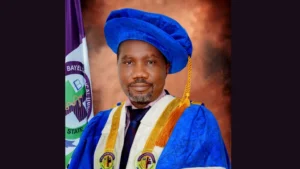
By Peace Osigwe
In a world where medical education is rapidly evolving through artificial intelligence, digital learning, scientific research and technological innovation, Bayelsa Medical University (BMU), Yenagoa, is setting its sights on a future that could redefine the training of healthcare professionals in the Niger Delta.
With an ambitious four-year strategic roadmap tagged Mission 2029, the university is targeting 10,000 students, 300 annual research publications, increased internally generated revenue and a stronger position among Nigeria’s leading universities.
But beyond the numbers and technological innovations, the roadmap raises a fundamental question about the future of medical education in Bayelsa State:
Can a relatively young university build the academic capacity, research culture and infrastructure required to become a nationally respected and internationally recognised institution?
The answer will depend not only on the university’s ability to embrace emerging technologies, but also on its commitment to quality teaching, adequate clinical facilities, sustainable funding and the production of competent healthcare professionals.
From a State Medical University to a Centre of Excellence
Established by the Bayelsa State Government in 2018, Bayelsa Medical University was created to expand access to specialised education in medicine, nursing, allied health sciences and other health-related disciplines.
Located in Yenagoa, with academic facilities extending to Sagbama, the institution represents part of the state’s effort to strengthen human capital development and address the demand for skilled healthcare professionals.
Its establishment also reflects the wider need to develop local capacity in a state where geographical challenges, the spread of riverine communities and pressure on healthcare services make the availability of trained medical personnel particularly important.
For Bayelsa, developing doctors, nurses, pharmacists, laboratory scientists, radiographers and other health professionals locally offers an opportunity to strengthen the healthcare system while reducing dependence on personnel trained elsewhere.
However, the success of a medical university cannot be measured by enrolment figures or the number of academic programmes alone.
Its reputation ultimately depends on the quality of its graduates, the strength of its research, the adequacy of its clinical training and its contribution to solving real health problems.
It is against this background that BMU’s Mission 2029 roadmap assumes significance.
Mission 2029: Turning Vision into Measurable Results
Unveiling the strategic roadmap in Yenagoa on Monday, Vice-Chancellor Professor Demie Ogoina explained that the initiative was designed to translate the university’s ASPIRE transformation agenda into specific targets, priority programmes, implementation responsibilities and performance indicators.
The plan seeks to move the institution beyond short-term administrative achievements towards a sustainable system of development that successive university administrations can build upon.
“Great institutions are not built by one person or one administration. Each generation must build upon the achievements of those before it,” Ogoina said.
The ASPIRE agenda provides the institutional framework for academic excellence, sustainability, partnership and engagement, innovation and technology, research excellence, and empowerment, leadership development and welfare.
The underlying message is that institutional growth must be deliberate, measurable and sustained.
Rather than depending solely on the vision of an individual vice-chancellor, BMU intends to establish a development framework that defines what the university should achieve and how its progress will be assessed.
This approach is particularly important for universities seeking to establish credibility in a competitive academic environment where accreditation, research productivity, graduate quality and international collaboration increasingly influence institutional standing.
The 10,000-Student Ambition
One of the most striking targets in the roadmap is the plan to increase student enrolment from approximately 2,000, using the university’s 2024 baseline, to 10,000 by 2029.
The target represents a fivefold increase in student population and signals the university’s intention to expand access to medical and health sciences education.
For young people in Bayelsa and neighbouring states, the expansion could create additional opportunities to study healthcare-related disciplines closer to home.
It could also support the development of a stronger local workforce at a time when healthcare systems require professionals with the skills to respond to changing disease patterns, technological advances and growing public health needs.
Nevertheless, expansion in medical education requires more than additional lecture halls and admission spaces.
A larger student population will place greater demands on laboratories, libraries, accommodation, teaching staff, clinical placements, equipment and student support services.
Medical and allied health programmes also require appropriate practical training and supervised clinical experience.
Without sufficient facilities and qualified personnel, rapid expansion could undermine the quality of education the university seeks to promote.
Consequently, the success of the 10,000-student target will depend on whether infrastructure, staffing and clinical training opportunities grow alongside enrolment.
Research as a Measure of Academic Strength
BMU also aims to increase its annual research output to 300 published papers by 2029, compared with more than 70 peer-reviewed publications reported by Ogoina as part of the university’s recent progress.
The vice-chancellor disclosed that the institution had attracted competitive research funding, including a grant of approximately £1.2 million from the Wellcome Trust.
These achievements provide a foundation for the university’s ambition to develop a stronger research profile.
Research is central to medical education because it enables universities to generate new knowledge, improve clinical practices and develop evidence-based responses to public health challenges.
For a state such as Bayelsa, research opportunities extend to issues including malaria, maternal and child health, infectious diseases, environmental pollution, occupational health and the consequences of living in oil-producing and riverine communities.
A stronger research culture could enable BMU academics and students to investigate these challenges and contribute findings that inform healthcare delivery and public policy.
However, the target of 300 publications should be accompanied by attention to research quality, originality, ethical standards, collaboration and practical impact.
The ultimate value of academic research lies not simply in the number of papers produced, but in whether the findings advance knowledge, improve healthcare outcomes and provide solutions to problems affecting society.
BMU’s ability to sustain research funding, establish partnerships with other institutions and support early-career researchers will therefore be crucial to achieving its ambition.
Artificial Intelligence Enters the Classroom
Perhaps the most visible aspect of the Mission 2029 initiative is the introduction of artificial intelligence and digital learning technologies.
At the unveiling, the university showcased six digital initiatives: an AI robotic tutor, an AI academic adviser, a university AI assistant, a virtual AI tutor, a digital twin of the campus and a virtual reality anatomy environment.
Ogoina said five of the six digital assets were developed by the university’s own staff, describing the achievement as evidence of BMU’s growing ability to adapt global technologies to local needs.
The initiatives could introduce new approaches to teaching, learning, student guidance and institutional management.
An AI tutor, for instance, could help students revise difficult concepts, access learning support and practise answering questions outside normal classroom hours.
An academic adviser could assist students with information about programmes, academic requirements and learning pathways.
A virtual reality anatomy environment could allow students to explore three-dimensional representations of the human body, offering an additional learning resource for understanding anatomical structures.
Similarly, a digital twin of the campus could support the visualisation and management of university facilities, depending on how the system is designed and deployed.
These technologies could prove particularly useful in medical education, where students must understand complex concepts and develop the knowledge needed for practical application. Yet their introduction also brings responsibilities.
AI-generated information can be inaccurate, incomplete or misleading. Students must therefore be taught to verify information against authoritative textbooks, scientific literature and guidance from qualified lecturers and clinicians.
Privacy, cybersecurity, access to reliable internet services and the responsible use of student data must also be considered.
Most importantly, digital tools cannot replace the supervised practical experience, professional judgement, empathy and ethical training required of healthcare professionals.
The challenge for BMU will be to ensure that technology strengthens the learning process rather than becoming a substitute for sound teaching.
Governor Diri’s Warning: Technology Must Not Replace Teachers
Bayelsa State Governor Douye Diri, who commended the university for embracing emerging technologies, reinforced this point by warning lecturers against using AI as an excuse to neglect their responsibilities.
“There is no technology, I repeat, no technology, that can replace dedicated lecturers,” the governor said.
His intervention highlights an important debate in modern education: how institutions can adopt technological innovation without weakening the relationship between teachers and students.
While AI can assist with explanations, personalised learning and access to educational materials, effective teaching also requires human interaction, mentorship, assessment and the ability to identify when a student is struggling.
In medical education, lecturers and clinical supervisors have an additional responsibility to model professional conduct, communication, compassion and ethical decision-making.
Diri urged lecturers to remain punctual and committed to their teaching duties, stressing that technology should be used wisely to enrich learning and prepare students for a changing world.
He also challenged the university management to match its technological ambitions with measurable improvements in infrastructure and the implementation of its strategic plan.
His remarks place responsibility on both sides: lecturers must remain dedicated to their work, while university management must provide the conditions necessary for effective teaching and learning.
From White-Collar Aspirations to Practical Skills
The governor also used the occasion to restate his administration’s commitment to science-based, technical and vocational education.
According to him, Bayelsa’s educational policy is shifting away from excessive dependence on the pursuit of white-collar employment towards practical skills, innovation and entrepreneurship.
He said the development of science and technical schools across the state would help lay the foundation for producing doctors, nurses, pharmacists, radiologists, engineers and other professionals needed for development.
The policy direction reflects a wider educational challenge in Nigeria: ensuring that schooling prepares young people not only to obtain certificates but also to acquire the knowledge and practical competencies required in the workplace.
For BMU, this means that university education must connect scientific knowledge with laboratory work, clinical practice, research, innovation and entrepreneurship.
The introduction of digital health initiatives could support this objective by exposing students to emerging technologies that are increasingly relevant to healthcare delivery.
However, such exposure must be accompanied by sound scientific foundations and opportunities to apply knowledge in real-world settings.
Funding the Vision Beyond Government Allocations
Another major component of Mission 2029 is the university’s plan to increase annual revenue from external sources from approximately N200 million to N1 billion.
The strategy is intended to diversify the institution’s funding base, strengthen its financial sustainability and reduce dependence on government funding.
Ogoina said the university would pursue stronger internally generated revenue, strategic partnerships and other sustainable financing mechanisms.
For a university seeking to expand enrolment, increase research output and deploy sophisticated learning technologies, financial sustainability is essential.
Modern laboratories, medical equipment, research grants, digital infrastructure, staff development and clinical training all require continuous investment.
Potential avenues for additional support include competitive research grants, partnerships with healthcare institutions, industry collaboration, alumni contributions, philanthropic support and carefully designed professional training programmes.
Such arrangements, however, must protect academic independence and ensure that revenue generation does not compromise the institution’s educational mission or make access unnecessarily difficult for students.
The university’s financial target will therefore be meaningful only if additional resources translate into improved teaching, research, facilities and student welfare.
Accreditation and the Foundation for Growth
Ogoina reported that BMU had secured accreditation for nine academic programmes, including six that underwent their own accreditation exercises.
He also disclosed that nursing sciences students recorded a 96 per cent pass rate in their professional examination, while the degree programme achieved what he described as Diamond Pass recognition.
The vice-chancellor further stated that BMU’s College of Medicine had attained a leadership position in the Consortium of Medical Schools of Africa and that the university was selected as one of 18 medical schools in Nigeria for a high-impact intervention programme.
These developments, alongside the reported research funding and publications, provide important context for the university’s expansion plans.
Accreditation and professional examination performance are significant indicators of academic progress.
Sustaining those achievements, however, requires continuous investment in teaching staff, learning resources, curriculum development and facilities.
As BMU expands, maintaining quality across existing programmes while introducing new ones will be a major test of its academic management.
The university intends to expand its academic offerings to between 10 and 15 programmes by 2029, according to the roadmap outlined by Ogoina.
Its ability to achieve this target while maintaining relevant professional standards will help determine whether its growth is accompanied by lasting academic credibility.
Infrastructure, Partnerships and Institutional Continuity
Ogoina attributed part of the university’s progress to investments by the Bayelsa State Government in infrastructure at its campuses in Yenagoa and Sagbama.
He said the developments would support future academic expansion, research, student accommodation and clinical training.
The governor, meanwhile, called for proper documentation of the university’s history and acknowledged the contributions of past administrations and individuals who helped lay the foundation for the institution, including the late former governor Diepreye Alamieyeseigha and his successor, Seriake Dickson.
His remarks reinforced the importance of continuity in public education projects.
Universities require long-term planning because the development of academic programmes, research facilities, teaching hospitals and professional training systems often extends beyond the tenure of individual office holders.
Diri expressed optimism that Mission 2029 would strengthen BMU’s position in medical education and contribute to Bayelsa State’s development aspirations.
Ogoina also urged development partners, industry leaders, alumni and other stakeholders to collaborate with the university in research, innovation, scholarships, infrastructure and entrepreneurship.
Such partnerships could help the institution access expertise, equipment, funding and research opportunities that might otherwise be difficult to secure through public funding alone.
The Road to 2029: Ambition Must Translate into Results
BMU’s Mission 2029 roadmap presents an ambitious vision for a university seeking to establish itself through academic expansion, research excellence, technological innovation and financial sustainability.
Its targets—10,000 students, 300 annual research publications, revenue growth to N1 billion and a place among Nigeria’s top 13 universities—provide measurable benchmarks against which progress can be assessed.
The university’s digital transformation initiatives also demonstrate an effort to prepare students and staff for an educational environment increasingly influenced by AI and other emerging technologies.
Nevertheless, the real test will lie in implementation.
By 2029, the university will need to demonstrate not only increased enrolment and publication numbers, but also sustained accreditation, competent graduates, stronger research impact, effective clinical training, improved facilities and responsible use of technology.
For students, parents and the people of Bayelsa, the most important measure of success will be whether the university produces healthcare professionals equipped to serve communities, conduct credible research and contribute to the improvement of health services.
For the state government and development partners, the roadmap presents an opportunity to turn investments in education into measurable social and economic benefits.
For the university’s management, it is a call to build systems that will endure beyond individual administrations.
As Ogoina put it: “Mission 2029 is our destination. ASPIRE is our pathway, and the strategic plan is our roadmap.”
The statement captures the central challenge before BMU: to move from an ambitious institutional vision to tangible results.
If the university can match its technological ambitions with quality teaching, sustained research, adequate infrastructure and accountable leadership, Mission 2029 could become more than a strategic document.
It could mark an important stage in the development of medical education and healthcare capacity in Bayelsa State and the wider Niger Delta.
