


Political Tolerance as a Catalyst for Development in Third-World Countrie
By Hon. Ofoni Daupuamo Williams
Political parties are platforms through which individuals and groups compete for political power and seek to implement their visions for governance.
Although parties may differ in ideology, priorities and policy approaches, their ultimate responsibility should be to promote the welfare of the people and advance societal development.
Ideological differences are therefore not necessarily inimical to development.
Rather, they are natural features of democratic governance. However, when political disagreements are driven by falsehood, hatred, intolerance, personal ambition and sectional interests, they can become destructive forces that undermine national progress.
This calls for a critical examination of the relationship between political differences, political parties and development, particularly in developing countries where ethnicity, religion, regional loyalties and the desperation to acquire political power often influence political behaviour.
Political Differences:
A Threat or an Opportunity for Development?
Political differences are inevitable in every democratic society. Citizens hold varying opinions about leadership, public policies, resource allocation and the direction of governance.
Such differences can strengthen democracy by encouraging healthy competition, accountability, innovation and the exchange of ideas.
Political parties provide citizens with alternative platforms through which they can articulate their interests, scrutinise government policies and offer different approaches to solving societal problems.
When properly managed, political competition encourages governments to improve infrastructure, create employment opportunities, strengthen public institutions and provide essential services.
Opposition parties also play a vital role in holding governments accountable, exposing corruption and questioning policies that may not serve the public interest. In this regard, political diversity can become a valuable instrument for democratic consolidation and sustainable development.
The challenge arises when political actors abandon constructive engagement in favour of hostility, bitterness and deliberate obstruction.
When Political Differences Become Counterproductive
Political differences become inimical to development when partisan interests take precedence over the collective welfare of the people.
One common example is the abandonment of viable projects initiated by a previous administration simply because the succeeding government belongs to a different political party.
Such decisions can waste public resources, delay essential infrastructure and deprive communities of the benefits of completed or nearly completed projects.
Similarly, political intolerance can discourage cooperation between governments, weaken public institutions and create divisions among citizens.
Ethnic and religious sentiments are sometimes exploited for political advantage, while public appointments and contracts may be influenced more by party loyalty than by competence and merit.
Legislative obstruction also presents a challenge when political representatives reject beneficial policies merely to embarrass their opponents.
Conversely, ruling parties must not dismiss legitimate criticism simply because it comes from the opposition.
In all these circumstances, the people bear the consequences of political rivalry.
The fundamental question, therefore, is whether the development of a community should depend on the political party controlling the government at any given time.
The answer should be an unequivocal no. Development must be driven by the needs of the people, the priorities of society and the long-term public interest.
The Nigerian Experience
Nigeria’s democratic experience since 1999 demonstrates both the opportunities and challenges associated with multiparty politics.
Political competition has created opportunities for citizens to choose their leaders, while opposition parties and civil society organisations have continued to demand accountability and better governance.
Nevertheless, partisan rivalries sometimes undermine cooperation among political actors and institutions.
Disagreements between governments controlled by different parties can affect the implementation of policies and programmes, while changes in administration may lead to the discontinuation of worthwhile projects.
These challenges reinforce the need for political maturity, institutional independence and a commitment to continuity in governance.
Political parties should be regarded as vehicles for public service rather than instruments for settling personal scores or excluding perceived opponents.
Managing Political Differences for Sustainable Development
The effective management of political differences requires deliberate efforts by political leaders, institutions and citizens.
First, political tolerance must be strengthened. Political leaders should recognise that disagreement is a legitimate component of democracy.
Opponents should be treated as fellow citizens with different perspectives, not as enemies who must be destroyed.
Second, the national interest must take precedence over partisan considerations.
Policies and programmes that benefit the public should receive support regardless of the political party that initiated them.
Third, democratic institutions must be strengthened. Independent courts, credible electoral institutions and effective oversight mechanisms are essential for ensuring accountability and respect for democratic principles.
Fourth, continuity in governance should be encouraged. Successor administrations should objectively assess existing projects and retain those that are beneficial, economically viable and consistent with public priorities.
Fifth, civic education must be promoted. Citizens should be equipped to distinguish legitimate political disagreement from propaganda, blackmail, betrayal, hate speech and deliberate misinformation.
Sixth, opposition parties must embrace constructive engagement. Their responsibility is not merely to criticise the government but also to present credible alternatives that can improve the lives of the people.
Finally, dialogue, negotiation and compromise should replace political intimidation, discrimination and violence as instruments for resolving disagreements.
Political Disagreement Versus Political Hostility
A critical distinction must be drawn between political disagreement and political hostility.
Political disagreement can be productive because it challenges established assumptions, exposes weaknesses in public policy and creates opportunities for improvement.
Political hostility, on the other hand, becomes destructive when it prevents political actors from working towards common objectives.
A society in which nobody questions the government may appear politically stable, but the absence of constructive criticism can encourage authoritarianism, corruption and poor decision-making.
Equally, political diversity does not automatically guarantee development, just as political uniformity does not necessarily produce stability or prosperity.
What matters is the quality of leadership, the strength of institutions and the willingness of political actors to subordinate personal and partisan interests to the common good.
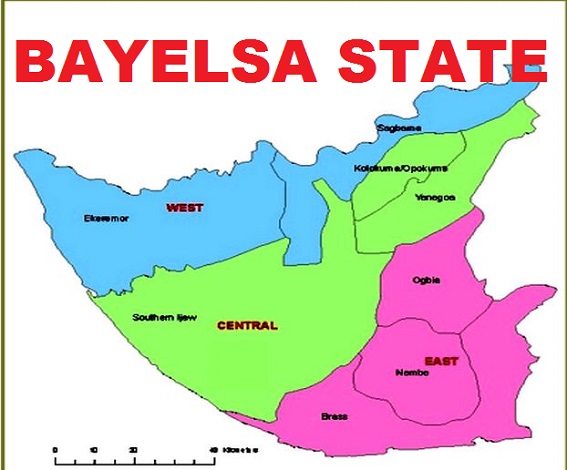
Bayelsa State: Political Tolerance and the Imperative of Coexistence
Against this backdrop, attention must be drawn to Bayelsa State, where the administration of Senator Douye Diri has been presented by Hon. Ofoni Daupuamo Williams as an example of political tolerance and the pursuit of peaceful coexistence among people with differing political ideologies.
According to this perspective, the Diri-led government has sought to move beyond unnecessary political antagonism and promote an atmosphere in which differences can be managed without sacrificing the broader interests of the state.
This approach underscores the importance of recognising that governance is a responsibility to all citizens, irrespective of their political affiliations.
The administration’s approach, as characterised by Williams, also highlights the significance of cooperation and institutional capacity in translating political tolerance into practical governance outcomes.
He specifically acknowledges the role of the Deputy Governor, Hon. Peter Peretubo Akpe, PhD, whom he describes as a capable and supportive partner in the administration’s governance efforts.
Political tolerance, however, should not be understood as the elimination of opposition or the abandonment of ideological convictions.
Rather, it should provide a framework within which the government and opposition can disagree constructively while maintaining a shared commitment to the development of Bayelsa State.
For the opposition parties and political blocs in the state, the challenge is to recognise and reciprocate any genuine gestures towards political maturity, peaceful coexistence and constructive engagement.
Such recognition should not mean surrendering their constitutional responsibility to scrutinise government policies. Instead, it should encourage them to distinguish between legitimate opposition and antagonism that serves no meaningful public purpose.
The opposition can support policies that benefit the people while challenging those it considers ineffective or contrary to the public interest.
Similarly, the government should remain open to constructive criticism and alternative ideas.
This reciprocal relationship can help create a political environment in which competition strengthens governance rather than undermines it.
A Call for Political Maturity in Bayelsa
For Bayelsa State to achieve sustainable development, political tolerance must extend beyond public declarations and become a consistent feature of political conduct.
Government officials, opposition leaders, lawmakers, party stakeholders and community leaders all have a responsibility to promote peaceful engagement and place the welfare of citizens above partisan considerations.
Political differences should not become barriers to cooperation on issues such as education, healthcare, infrastructure, employment, environmental protection and economic development.
Where disagreements arise, political actors should resolve them through dialogue, constitutional processes and evidence-based debate.
The Diri administration, opposition parties and other political stakeholders have an opportunity to demonstrate that a state’s progress need not be sacrificed on the altar of political rivalry.
Conclusion
Political differences are not inherently inimical to development. They become destructive when personal ambition, party loyalty, ethnic considerations and sectional interests overshadow the welfare of the people.
A progressive society does not seek to eliminate political differences; it builds the institutions, leadership culture and democratic values necessary to manage them constructively.
In the Bayelsa context, the emphasis on political tolerance attributed to the administration of Senator Douye Diri offers an opportunity for reflection on how political actors can coexist without abandoning their ideological convictions or democratic responsibilities.
The opposition parties and political blocs should be encouraged to engage constructively, just as the government should continue to demonstrate openness, fairness and a commitment to the common good.
Ultimately, the measure of political maturity is not the absence of disagreement but the ability to disagree without destroying the foundations of collective progress.
Citizens may differ on the road to development, but they should not destroy the destination simply because they disagree about the route.
The central question remains: Can Bayelsa’s political actors place the collective interest of the state above partisan rivalry and transform political tolerance into lasting development?
The answer will depend not on declarations alone, but on the actions, choices and shared responsibilities of all stakeholders.
