


Politics, Leadership and Governance: The Three Pillars of a Modern Stat
By Hon. Ofoni Daupuamo Williams
Many people use the words politics, leadership and governance interchangeably, as though they mean the same thing.
They do not. Each represents a distinct concept, yet all three must work together to achieve meaningful progress, build a stable society and strengthen nationhood.
In a modern state, politics, leadership and governance are inseparable. They are partners in the development process, and when one is disconnected from the others, the consequences can be disastrous.
A state that gets its politics wrong, lacks purposeful leadership or fails in governance risks instability, underdevelopment and the erosion of public confidence.
To understand their relationship, it is important to examine each concept individually and how they complement one another.
POLITICS: THE PROCESS OF ACQUIRING POWER
Politics is the process through which individuals and groups compete, negotiate and mobilise support to acquire political power within established laws and democratic institutions.
Political parties, campaigns, manifestoes, elections, lobbying and alliances are all instruments through which political actors seek public support and the authority to govern.
Historically, the acquisition of political power was often determined by military conquest, the strength of armies and the dominance of powerful individuals or groups.
In contemporary democratic societies, however, political power is expected to derive from popular consent, credible elections, persuasion and the strength of ideas.
The modern political contest should therefore be about who has the best ideas, the strongest connection with the people, the most credible programme of action and the capacity to earn public trust.
Electoral reforms and technological innovations can also help improve the transparency and credibility of the electoral process.
Politics answers two fundamental questions: Who gets power, and how is that power acquired?
Without politics, there would be no established mechanism for choosing leaders in a complex society characterised by diverse interests, cultures, religions and competing expectations.
However, acquiring power is not an end in itself. Politics must be complemented by leadership, because winning an election does not automatically confer the qualities required to govern effectively.
LEADERSHIP: THE CHARACTER AND VISION OF THE PERSON WHO ACQUIRES POWER
If politics is the road to power, leadership is the capacity to direct that power towards a meaningful destination.
Many politicians win elections but fail to translate their victories into effective leadership.
This is because leadership goes beyond occupying an office or exercising authority. It requires character, vision, courage, integrity, accountability, compassion and sacrifice.
A true leader possesses the ability to recognise challenges, anticipate opportunities and inspire people to work towards a shared future.
Such a leader must sometimes make difficult decisions in the public interest, even when those decisions are not immediately popular.
A modern state does not merely need rulers who command or politicians who make grand speeches. It needs leaders who build institutions, unite communities, protect public resources and improve the lives of citizens.
Politics may produce an elected chairman, governor or president, but the quality of leadership determines whether that office holder becomes a genuine agent of development.
Figures such as Chief Obafemi Awolowo and Nelson Mandela are often remembered for their leadership legacies.
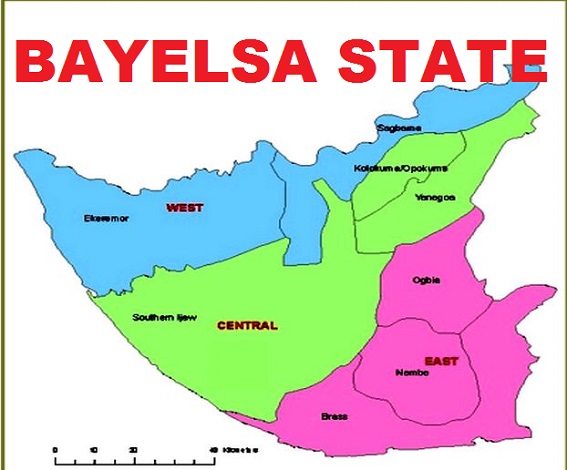
In Bayelsa State, Governor Douye Diri is also invoked in discussions about leadership and the pursuit of prosperity.
Leadership answers the question: What kind of person holds power, and what values guide its exercise?
Ultimately, the legitimacy of leadership is strengthened not merely by electoral victory but by the character, competence and responsibility demonstrated in office.
GOVERNANCE: WHAT LEADERS DO WITH THE POWER ENTRUSTED TO THEM
Governance is the practical expression of political authority and leadership.
It concerns how public institutions are managed, how policies are implemented, how resources are allocated and how decisions are made in the interest of the people.
Its impact is visible in schools, hospitals, roads, markets, courts, public utilities and other institutions that shape everyday life.
Governance is not measured simply by the grandeur of Government House or the number of public officials appointed.
It is measured by whether children receive quality education, patients have access to healthcare, traders can conduct their businesses in a conducive environment and citizens can obtain justice without discrimination.
Good governance also requires transparency, accountability, respect for the rule of law, prudent management of public funds and effective institutions that serve citizens regardless of their political affiliations.
Governance answers a critical question: What is being done with political power to improve the lives of the people?
A government may enjoy electoral legitimacy and have a charismatic leader, yet fail to deliver meaningful development if its institutions are weak, its policies are poorly implemented or its resources are mismanaged.
This explains why governance must be judged by measurable outcomes rather than political promises alone.
THE MARRIAGE: HOW POLITICS, LEADERSHIP AND GOVERNANCE COMPLEMENT ONE ANOTHER
The relationship among politics, leadership and governance is fundamental to the stability and development of a modern state.
Each depends on the others, and the failure of one can undermine the effectiveness of the entire system.
Politics without leadership produces a struggle for power without responsibility.
When elections are characterised by vote-buying, intimidation, blackmail, electoral manipulation and violence, political power may be acquired without a corresponding commitment to public service.
The result is a system in which personal ambition takes precedence over the welfare of citizens.
Leadership without effective governance produces promises without tangible results.
A politician may speak eloquently, make impressive appearances on television and articulate an attractive vision.
However, if that vision does not translate into functional schools, accessible healthcare, improved infrastructure, economic opportunities and accountable institutions, the people will continue to suffer.
Governance without democratic politics risks authoritarianism.
Even where a government delivers infrastructure and other public services, the suppression of opposition, the weakening of the legislature and the exclusion of citizens from decision-making undermine democratic legitimacy.
Development cannot be sustained by silencing dissent or replacing public participation with the preferences of one individual. A modern state requires both effective administration and democratic accountability.
The lesson is clear: political power must be acquired legitimately, exercised responsibly and translated into results that benefit the people.
WHAT A MODERN STATE NEEDS
For politics, leadership and governance to function harmoniously, each must be guided by principles that protect the public interest.
First, politics must be clean and issue-based.
Political competition should focus on policies, development plans, accountability and the welfare of citizens rather than blackmail, intimidation, personal attacks or the deliberate creation of crises.
In Bayelsa State, Governor Douye Diri has consistently been associated with the Prosperity agenda. For that aspiration to produce lasting benefits, political competition must remain peaceful and focused on the state’s development priorities.
Second, leadership must be based on service, not personal supremacy.
Public office should be regarded as a responsibility entrusted to individuals by the people, not a personal possession.
Leaders must demonstrate humility, compassion, vision and a willingness to listen to constructive criticism.
The reported establishment of an advisory council comprising experienced individuals in Bayelsa State reflects an approach that can broaden the pool of expertise available to government.
Its ultimate value, however, will depend on the quality of its advice and the extent to which that advice translates into effective policies and measurable public benefits.
Third, governance must be institutional, not dependent on one individual.
Strong institutions, an independent judiciary, an effective legislature, a professional civil service and transparent public financial management are essential to sustainable development.
Institutions must be able to function beyond the tenure of an individual governor or president. Policies should be designed to deliver lasting benefits, while public officials must remain accountable under the law.
When these three pillars work together, the results can include peace rather than legislative crises, development rather than wasteful destruction, prosperity rather than persistent deprivation, and the rule of law rather than the rule of political strongmen.
As the author aptly puts it:
“Politics is how you enter the house. Leadership is how you behave in the house. Governance is what you give to those inside the house. If one fails, the house collapses.”
— Hon. Ofoni Daupuamo Williams, Pinaoge Series (12091987).
CONCLUSION: BAYELSA AND NIGERIA CANNOT AFFORD A DIVORCE
Bayelsa State, like the rest of Nigeria, cannot afford a breakdown in the relationship between politics, leadership and governance, either now or in the foreseeable future.
A society cannot embrace political bitterness and expect the dividends of peaceful and effective governance. Neither can it sow discord in the legislature and expect to reap the benefits of stable institutions and sustainable development.
Political disagreements are inevitable in a democracy, but they must be managed through dialogue, constitutional procedures and respect for the rule of law.
The legislature, executive and judiciary must perform their respective responsibilities without undermining the institutions that sustain democratic government.
For Bayelsa, the pursuit of prosperity requires more than political slogans.
It demands credible political processes, purposeful and accountable leadership, and governance that delivers tangible improvements in the lives of citizens.
Nigeria faces the same challenge on a national scale. Its democratic future and development prospects depend, in part, on the ability of political actors to place national interest above personal ambition and translate electoral mandates into effective public service.
The marriage of clean politics, servant leadership and institutional governance is therefore not merely desirable; it is essential to building a stable, prosperous and democratic society.
For Bayelsa and Nigeria, that is the pathway to assured prosperity.
